THE ADVENTURE COLLECTIVE® · Independent discovery and booking for outdoor travel

Fly from Aswan to Abu Simbel for a focused, private visit to the Great Temple of Ramses II and the Temple of Hathor. Save travel time and spend more moments beneath the colossi with an Egyptologist guide.
Fly from Aswan to Abu Simbel for a focused, private visit to the Great Temple of Ramses II and the Temple of Hathor. Save travel time and spend more moments beneath the colossi with an Egyptologist guide.
A low-wing plane banks over the ochre desert and Lake Nasser, and the two great seated kings of Abu Simbel rise out of the cliff like anchors holding back time. From the cabin you can already pick out the colossi of Ramses II and the smaller, jewel-like temple of Hathor cut directly into sandstone—granular faces smoothed by millennia of wind and sun.
Verified experiences and guided adventures in the surrounding area.
Operated by Egypt Unlimited Tours · Abu Simbel, Aswan Governorate
A low-wing plane banks over the ochre desert and Lake Nasser, and the two great seated kings of Abu Simbel rise out of the cliff like anchors holding back time. From the cabin you can already pick out the colossi of Ramses II and the smaller, jewel-like temple of Hathor cut directly into sandstone—granular faces smoothed by millennia of wind and sun.
The temples date to the 13th century BCE, carved to assert Egyptian power in Nubia and later moved stone-by-stone in the 1960s to save them from the High Dam’s rising waters. Geologically they’re part of the Nubian sandstone escarpment; culturally they speak to royal cult, solar alignments and the prominence of Nefertari alongside Ramses.
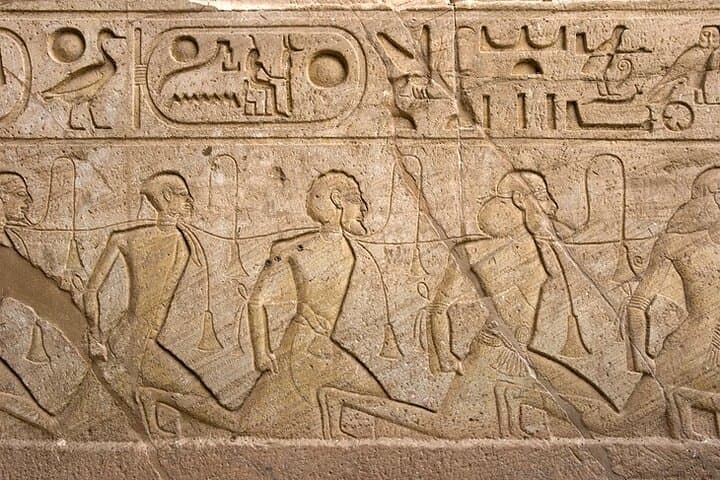
On a guided visit an Egyptologist will point out the sunlit reliefs, the lineup of deities, and the curious carved baboons higher on the rock face. The flight from Aswan trims what would be a multi-hour drive, giving you concentrated time inside both temples and an intimate look at the relocation engineering.
Practicalities: bring sun protection, bottled water (provided), and a camera with a modest telephoto. Dress conservatively for temple interiors and be ready for short stair sections; the site notes wheelchair access but expect uneven surfaces. Timing matters—mornings are cooler and less crowded; late afternoon casts warm side light on the facades. Passports are required for ticketing; most tours run 4–5 hours including transfers. Respect barriers—these reliefs are fragile—listen to your guide and keep hands off carved surfaces.
easy.
4–5 hours.
Minimal walking required but participants should be able to climb short temple steps and stand for guided explanations.
Expect about 4–5 hours total including hotel pickup, round-trip flights, and time touring both temples.
The site lists wheelchair access, but uneven ground and stairs inside can limit mobility—contact the operator ahead to arrange assistance.
Photography is generally allowed in exteriors and some interior spaces, but follow the Egyptologist’s guidance and avoid flash if requested to protect pigments.
You must carry your passport for airport transfers and ticketing; any visa requirements depend on your nationality and should be arranged before travel.
Built under Ramses II in the 13th century BCE and relocated in the 1960s to avoid the Aswan High Dam’s reservoir, Abu Simbel is both a royal monument and a UNESCO-era engineering success story.
Visitor numbers are managed and touching reliefs is prohibited to protect fragile stone and pigments; follow guide instructions and stay behind barriers.
Egypt Unlimited Tours operates guided outdoor trips and adventures with an emphasis on safety, stewardship, and memorable experiences.
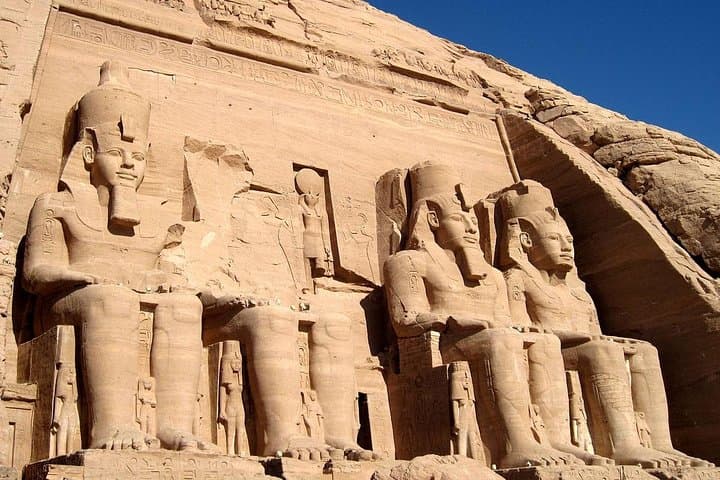
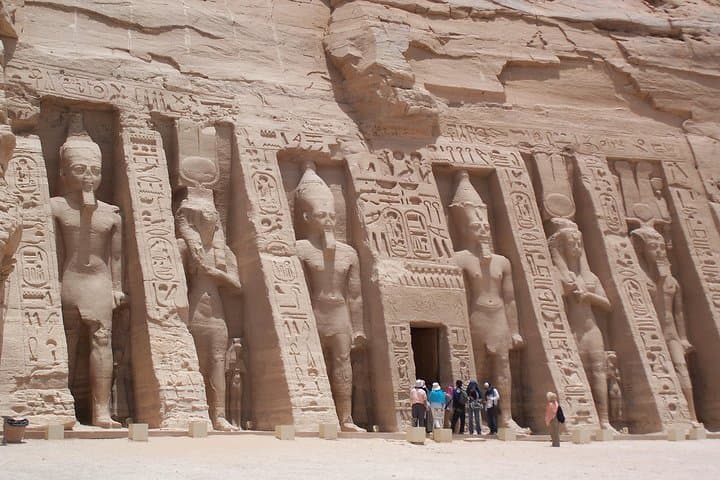
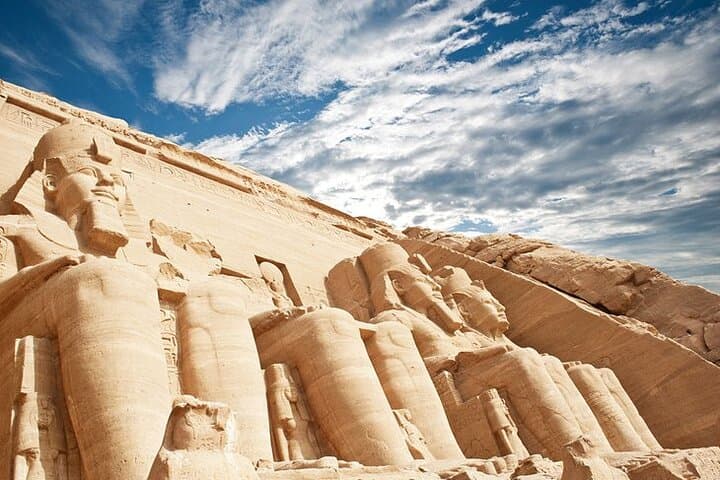
A low-wing plane banks over the ochre desert and Lake Nasser, and the two great seated kings of Abu Simbel rise out of the cliff like anchors holding back time. From the cabin you can already pick out the colossi of Ramses II and the smaller, jewel-like temple of Hathor cut directly into sandstone—granular faces smoothed by millennia of wind and sun.
A low-wing plane banks over the ochre desert and Lake Nasser, and the two great seated kings of Abu Simbel rise out of the cliff like anchors holding back time. From the cabin you can already pick out the colossi of Ramses II and the smaller, jewel-like temple of Hathor cut directly into sandstone—granular faces smoothed by millennia of wind and sun.
The temples date to the 13th century BCE, carved to assert Egyptian power in Nubia and later moved stone-by-stone in the 1960s to save them from the High Dam’s rising waters. Geologically they’re part of the Nubian sandstone escarpment; culturally they speak to royal cult, solar alignments and the prominence of Nefertari alongside Ramses.
On a guided visit an Egyptologist will point out the sunlit reliefs, the lineup of deities, and the curious carved baboons higher on the rock face. The flight from Aswan trims what would be a multi-hour drive, giving you concentrated time inside both temples and an intimate look at the relocation engineering.
Practicalities: bring sun protection, bottled water (provided), and a camera with a modest telephoto. Dress conservatively for temple interiors and be ready for short stair sections; the site notes wheelchair access but expect uneven surfaces. Timing matters—mornings are cooler and less crowded; late afternoon casts warm side light on the facades. Passports are required for ticketing; most tours run 4–5 hours including transfers. Respect barriers—these reliefs are fragile—listen to your guide and keep hands off carved surfaces.