THE ADVENTURE COLLECTIVE® · Independent discovery and booking for outdoor travel

Fly from Aswan for a private, 4-hour day trip to Abu Simbel and walk among the colossal carved faces of Ramses II. Efficient logistics and an Egyptologist guide make it an excellent option for travelers short on time.
Fly from Aswan for a private, 4-hour day trip to Abu Simbel and walk among the colossal carved faces of Ramses II. Efficient logistics and an Egyptologist guide make it an excellent option for travelers short on time.
You step off a short domestic flight and the desert opens like a slow-breathing horizon. The colossal stone faces of Ramses II loom over the approach road, their gaze holding the heat and the silence. Wind moves the dust in thin ribbons; the temple façade cuts a precise silhouette against the blue.
Verified experiences and guided adventures in the surrounding area.
Operated by Reflections Travel · Abu Simbel, Aswan Governorate
You step off a short domestic flight and the desert opens like a slow-breathing horizon. The colossal stone faces of Ramses II loom over the approach road, their gaze holding the heat and the silence. Wind moves the dust in thin ribbons; the temple façade cuts a precise silhouette against the blue.
The twin rock-cut temples at Abu Simbel were carved in the 13th century BCE and later moved, block by block, in the 1960s to escape rising waters from the Aswan High Dam. Geology here is stark — Nubian sandstone and granite beds exposed to relentless sun — giving the monuments both their permanence and the erosion patterns that archaeologists study today. The sites are as much an engineering story as a religious one: the Great Temple was oriented to catch the sun twice a year and still does, illuminating the statues inside on select dates.
A private air transfer from Aswan compresses a long road journey into an efficient morning, maximizing time on site with an Egyptologist guide. Expect 3–4 hours door-to-door: airport transfers, the flight, guided exploration of the Ramses II temple and the smaller Hathor temple of Nefertari, plus time to photograph the façades.
Practicalities: bring sun protection and layers for early-morning desert wind, carry your passport for airport check-in, and plan hotel or Nile cruise pickup in Aswan. Photography is allowed but watch for shaded interior lighting and respectful behavior inside sanctuaries. This trip delivers both cinematic scale and concentrated history — a compact, high-impact way to see one of Egypt’s best-preserved New Kingdom monuments.
easy.
4 hours.
Suitable for all fitness levels; involves short walks and low-impact steps inside the temples.
The scheduled flight time is roughly 45–60 minutes one way, though total travel time includes airport transfers and security.
Yes — the tour is classified as physically easy; however, airport procedures and short walks inside temples should be considered for those with mobility concerns.
The solar illumination of statues occurs on specific dates (around February and October); standard tours rarely coincide with those dates unless scheduled specially.
Yes — the listed tour includes admission to Abu Simbel temples as part of the package.
Built by Ramses II in the 13th century BCE and relocated in the 1960s during a UNESCO-led operation to save monuments from the Aswan High Dam’s reservoir.
Visitor management and UNESCO oversight limit wear on sensitive stone surfaces; stick to marked paths and avoid touching carved reliefs to reduce erosion.
Reflections Travel operates guided outdoor trips and adventures with an emphasis on safety, stewardship, and memorable experiences.
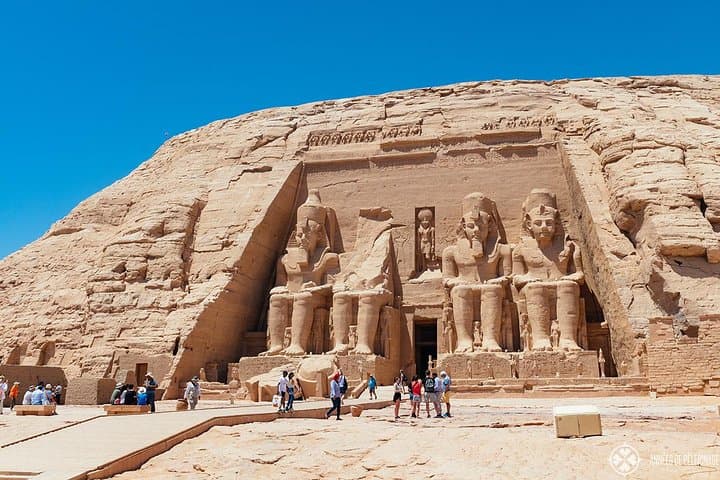
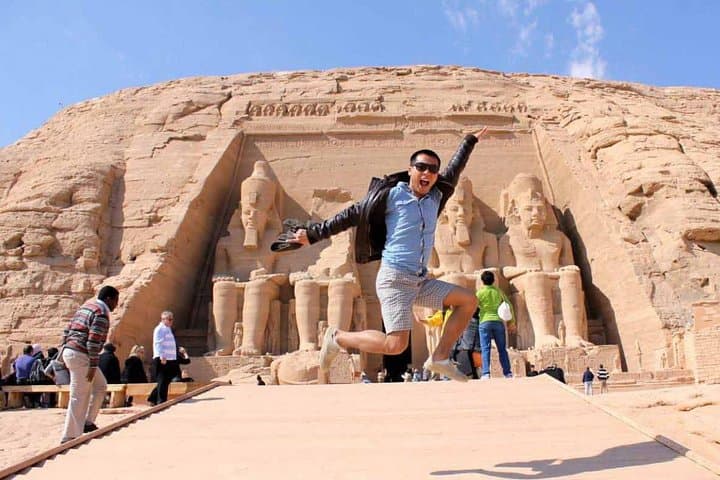
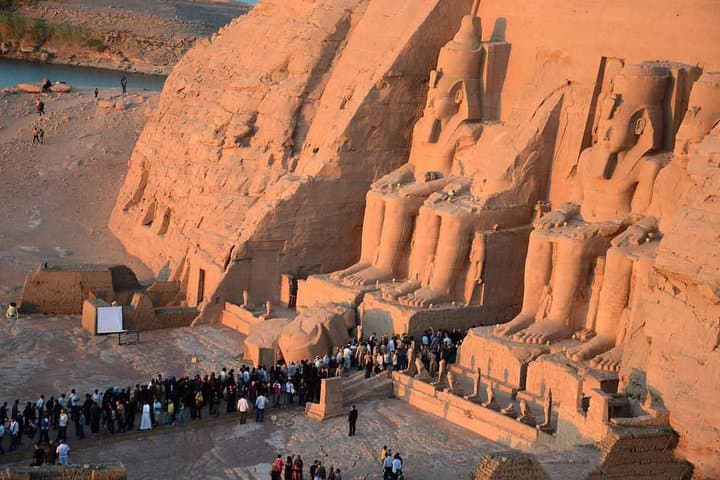
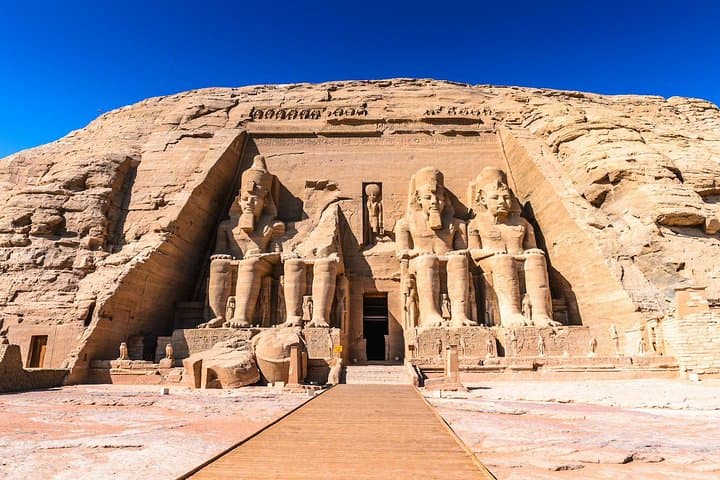
You step off a short domestic flight and the desert opens like a slow-breathing horizon. The colossal stone faces of Ramses II loom over the approach road, their gaze holding the heat and the silence. Wind moves the dust in thin ribbons; the temple façade cuts a precise silhouette against the blue.
You step off a short domestic flight and the desert opens like a slow-breathing horizon. The colossal stone faces of Ramses II loom over the approach road, their gaze holding the heat and the silence. Wind moves the dust in thin ribbons; the temple façade cuts a precise silhouette against the blue.
The twin rock-cut temples at Abu Simbel were carved in the 13th century BCE and later moved, block by block, in the 1960s to escape rising waters from the Aswan High Dam. Geology here is stark — Nubian sandstone and granite beds exposed to relentless sun — giving the monuments both their permanence and the erosion patterns that archaeologists study today. The sites are as much an engineering story as a religious one: the Great Temple was oriented to catch the sun twice a year and still does, illuminating the statues inside on select dates.
A private air transfer from Aswan compresses a long road journey into an efficient morning, maximizing time on site with an Egyptologist guide. Expect 3–4 hours door-to-door: airport transfers, the flight, guided exploration of the Ramses II temple and the smaller Hathor temple of Nefertari, plus time to photograph the façades.
Practicalities: bring sun protection and layers for early-morning desert wind, carry your passport for airport check-in, and plan hotel or Nile cruise pickup in Aswan. Photography is allowed but watch for shaded interior lighting and respectful behavior inside sanctuaries. This trip delivers both cinematic scale and concentrated history — a compact, high-impact way to see one of Egypt’s best-preserved New Kingdom monuments.