THE ADVENTURE COLLECTIVE® · Independent discovery and booking for outdoor travel

A focused two-day run from Luxor to Aswan and Abu Simbel that pairs island temples, a Nubian felucca ride and the monumental rock-cut faces of Ramesses II. Expect early mornings, long drives and layered history—from quarry marks to UNESCO relocations.
A focused two-day run from Luxor to Aswan and Abu Simbel that pairs island temples, a Nubian felucca ride and the monumental rock-cut faces of Ramesses II. Expect early mornings, long drives and layered history—from quarry marks to UNESCO relocations.
Dawn on the desert road feels like slow motion: headlights carve a ribbon through ochre hills while the Nile’s green band recedes in the rearview. By midmorning the stone facades of Philae appear, columns rising from an island that seems to float on the river; later a felucca slips past Nubian houses painted in bright blocks, the oars ticking the hours.
Verified experiences and guided adventures in the surrounding area.
Operated by Eyes On Egypt · Abu Simbel, Aswan Governorate
Dawn on the desert road feels like slow motion: headlights carve a ribbon through ochre hills while the Nile’s green band recedes in the rearview. By midmorning the stone facades of Philae appear, columns rising from an island that seems to float on the river; later a felucca slips past Nubian houses painted in bright blocks, the oars ticking the hours.
This private, two-day itinerary moves from Luxor to Aswan and on to Abu Simbel, combining Ptolemaic-era Philae, Aswan’s ancient granite quarries and the monumental twin temples of Ramesses II and Nefertari. Geologically, the region is bedrock—Aswan granite—sculpted by millennia of Nile action and human quarrying; you’ll pass the Unfinished Obelisk and the modern High Dam, both pivotal to Egypt’s 20th-century transformation and the creation of Lake Nasser.
Culturally the trip touches Nubian hospitality—villages on Elephantine Island retain language, craft and color distinct from the surrounding desert. Historically the star is Abu Simbel: in the 1960s UNESCO led an international operation to lift and reassemble the temples to save them from inundation when the High Dam raised the waterline.
Practical notes: expect long drives and early starts (the Abu Simbel run commonly begins before sunrise). Wear closed, comfortable walking shoes for uneven temple grounds, sun protection and a light layer for early-morning wind. The tour includes one night hotel accommodation in Aswan (bed & breakfast), guided transfers, and lunch; confirm entrance fees with the operator before travel. Hydrate, carry local currency for small purchases in Nubian markets, and move deliberately through the sites—photograph, but leave nothing behind.
easy.
2 days (approx. 48 hours).
Suitable for travelers in average condition; requires getting on/off vehicles and walking on uneven temple surfaces.
Entrance fees are not explicitly listed as included—confirm with the operator before booking, as some packages cover site admissions while others do not.
The drive from Aswan to Abu Simbel is roughly 280–300 km and takes about 3–4 hours each way, depending on stops and traffic; departures are typically timed for an early start.
The operator lists wheelchair-accessible transportation and surfaces; however, many temple areas have steps and uneven ground—bring a companion for assistance and confirm specific accessibility needs in advance.
This itinerary includes breakfast at the Aswan hotel and two lunches during the trip; confirm any dietary requirements when booking.
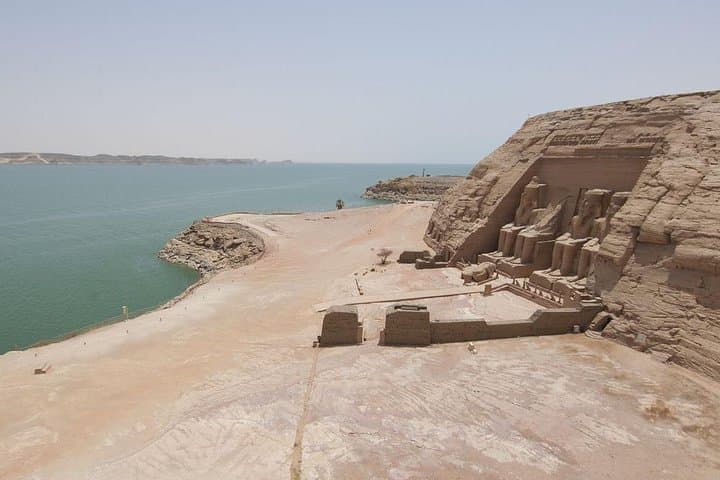
Abu Simbel’s rock temples were painstakingly dismantled and relocated in the 1960s to save them from inundation after the Aswan High Dam created Lake Nasser—a landmark UNESCO effort.
The sites are sensitive to foot traffic and climate; stay on designated paths, avoid touching reliefs, and support local guides and community-run businesses to ensure tourism benefits the region.
Eyes On Egypt operates guided outdoor trips and adventures with an emphasis on safety, stewardship, and memorable experiences.



Dawn on the desert road feels like slow motion: headlights carve a ribbon through ochre hills while the Nile’s green band recedes in the rearview. By midmorning the stone facades of Philae appear, columns rising from an island that seems to float on the river; later a felucca slips past Nubian houses painted in bright blocks, the oars ticking the hours.
Dawn on the desert road feels like slow motion: headlights carve a ribbon through ochre hills while the Nile’s green band recedes in the rearview. By midmorning the stone facades of Philae appear, columns rising from an island that seems to float on the river; later a felucca slips past Nubian houses painted in bright blocks, the oars ticking the hours.
This private, two-day itinerary moves from Luxor to Aswan and on to Abu Simbel, combining Ptolemaic-era Philae, Aswan’s ancient granite quarries and the monumental twin temples of Ramesses II and Nefertari. Geologically, the region is bedrock—Aswan granite—sculpted by millennia of Nile action and human quarrying; you’ll pass the Unfinished Obelisk and the modern High Dam, both pivotal to Egypt’s 20th-century transformation and the creation of Lake Nasser.
Culturally the trip touches Nubian hospitality—villages on Elephantine Island retain language, craft and color distinct from the surrounding desert. Historically the star is Abu Simbel: in the 1960s UNESCO led an international operation to lift and reassemble the temples to save them from inundation when the High Dam raised the waterline.
Practical notes: expect long drives and early starts (the Abu Simbel run commonly begins before sunrise). Wear closed, comfortable walking shoes for uneven temple grounds, sun protection and a light layer for early-morning wind. The tour includes one night hotel accommodation in Aswan (bed & breakfast), guided transfers, and lunch; confirm entrance fees with the operator before travel. Hydrate, carry local currency for small purchases in Nubian markets, and move deliberately through the sites—photograph, but leave nothing behind.