THE ADVENTURE COLLECTIVE® · Independent discovery and booking for outdoor travel

Fly from Aswan to Abu Simbel for a private, time-efficient visit to Ramses II’s monumental temples. This air tour combines short flights, private transfers, and guided access to one of Egypt’s most dramatic archaeological sites.
Fly from Aswan to Abu Simbel for a private, time-efficient visit to Ramses II’s monumental temples. This air tour combines short flights, private transfers, and guided access to one of Egypt’s most dramatic archaeological sites.
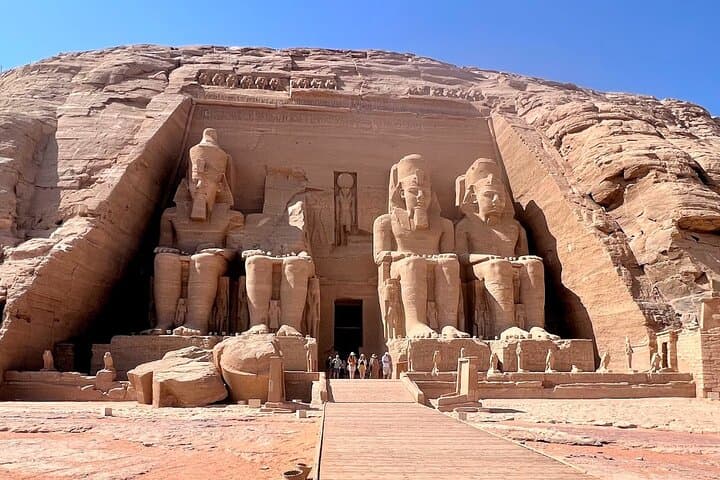
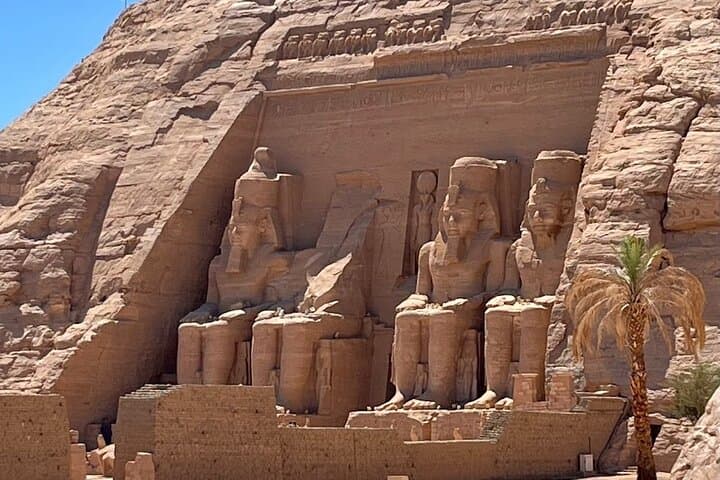
You lift from the Nile-studded city of Aswan and, in under an hour, the desert flattens into a horizon of ochre and blue. The plane eases over Lake Nasser and Abu Simbel’s four colossal stone faces come into view—silent, enormous, and impossibly close.
Verified experiences and guided adventures in the surrounding area.
Operated by Eyes of Egypt · Abu Simbel, Aswan Governorate
You lift from the Nile-studded city of Aswan and, in under an hour, the desert flattens into a horizon of ochre and blue. The plane eases over Lake Nasser and Abu Simbel’s four colossal stone faces come into view—silent, enormous, and impossibly close.
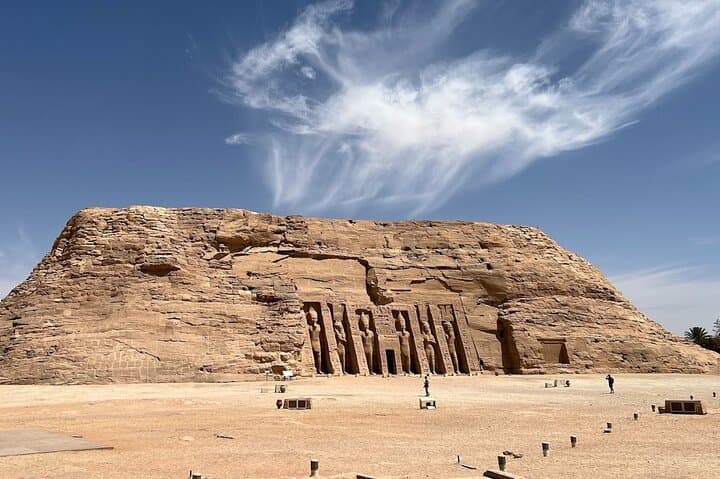
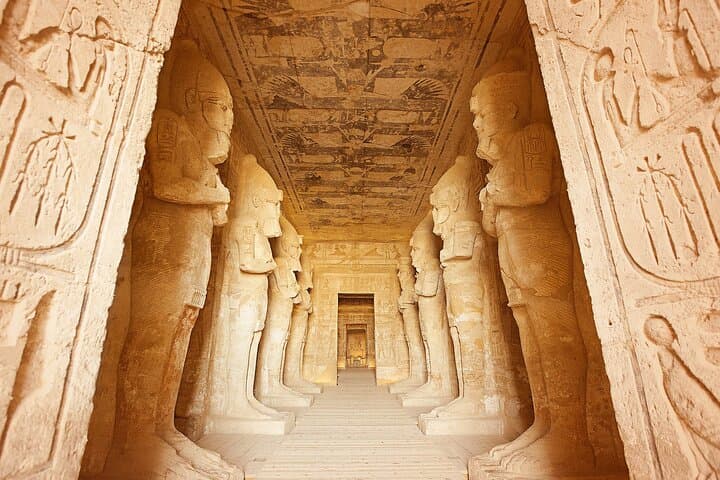
Carved in the 13th century BCE under Ramses II, the Great Temple and the Temple of Hathor (Queen Nefertari) are masterpieces of New Kingdom stonework. Geologically the site sits on sandstone cut into the escarpment above ancient floodplains; archaeologically it became one of the most dramatic conservation efforts of the 20th century when the temples were dismantled and relocated in the 1960s to save them from the rising waters of the Aswan High Dam. Local guides—often Aswan-based Egyptologists—link the architecture to solar alignments and regional Nubian histories, and you’ll hear how modern engineering rewrote the landscape to preserve antiquity.
Practically, the air package condenses travel time: hotel pickup in Aswan, quick regional flight, private transfer at Abu Simbel airport, and a 90–120 minute guided visit with entry included in the full package. Expect bright sun, strong reflections off sand and stone, and minimal shade around the temples. Security and ticket checks are routine; photography is allowed but follow your guide.
Pack sun protection, carry ample water, and plan for light walking at the site. For travelers wanting a streamlined, high-impact cultural day trip, the air option trades longer road hours for concentrated time with one of Egypt’s most unforgettable monuments.
easy.
5–6 hours.
Suitable for most travelers in light to moderate physical condition; requires short, easy walks and standing during the guided visit.
Flight time is typically about 40–50 minutes each way; the full excursion including transfers lasts roughly 5–6 hours.
The Air Tour Package includes round-trip flights and temple entrance tickets; other packages may offer transfer-only or guide add-ons.
The tour lists wheelchair-accessible options; however, some uneven stone surfaces at the temples can be challenging—check specifics with the operator when booking.
Infants and small children can be accommodated and infant seats are available; notify the operator in advance for arrangements.
The temples were carved during Ramses II’s reign and famously relocated block-by-block in the 1960s to save them from inundation by Lake Nasser after the Aswan High Dam was built.
UNESCO oversight and local conservation teams manage visitor flows; stay on paths, avoid touching carvings, and follow your guide to reduce impact.
Eyes of Egypt operates guided outdoor trips and adventures with an emphasis on safety, stewardship, and memorable experiences.
You lift from the Nile-studded city of Aswan and, in under an hour, the desert flattens into a horizon of ochre and blue. The plane eases over Lake Nasser and Abu Simbel’s four colossal stone faces come into view—silent, enormous, and impossibly close.
You lift from the Nile-studded city of Aswan and, in under an hour, the desert flattens into a horizon of ochre and blue. The plane eases over Lake Nasser and Abu Simbel’s four colossal stone faces come into view—silent, enormous, and impossibly close.
Carved in the 13th century BCE under Ramses II, the Great Temple and the Temple of Hathor (Queen Nefertari) are masterpieces of New Kingdom stonework. Geologically the site sits on sandstone cut into the escarpment above ancient floodplains; archaeologically it became one of the most dramatic conservation efforts of the 20th century when the temples were dismantled and relocated in the 1960s to save them from the rising waters of the Aswan High Dam. Local guides—often Aswan-based Egyptologists—link the architecture to solar alignments and regional Nubian histories, and you’ll hear how modern engineering rewrote the landscape to preserve antiquity.
Practically, the air package condenses travel time: hotel pickup in Aswan, quick regional flight, private transfer at Abu Simbel airport, and a 90–120 minute guided visit with entry included in the full package. Expect bright sun, strong reflections off sand and stone, and minimal shade around the temples. Security and ticket checks are routine; photography is allowed but follow your guide.
Pack sun protection, carry ample water, and plan for light walking at the site. For travelers wanting a streamlined, high-impact cultural day trip, the air option trades longer road hours for concentrated time with one of Egypt’s most unforgettable monuments.