THE ADVENTURE COLLECTIVE® · Independent discovery and booking for outdoor travel

Explore Abu Dhabi’s history and statecraft on a semi-private guided tour that pairs Qasr Al Hosn’s fortress story with the architectural splendor of Qasr Al Watan and a traditional Arabic lunch. Small groups, included entrances and a coffee ceremony make this a concise cultural primer.
Explore Abu Dhabi’s history and statecraft on a semi-private guided tour that pairs Qasr Al Hosn’s fortress story with the architectural splendor of Qasr Al Watan and a traditional Arabic lunch. Small groups, included entrances and a coffee ceremony make this a concise cultural primer.
You step out of the minivan and the Gulf air opens up the city: a low horizon of white domes, glass facades and sand that still remembers tides. The tour begins at Qasr Al Hosn, whose thick white walls once watched over a fishing settlement; inside, voice-guides and artifacts sketch Abu Dhabi’s leap from pearling and date palms to oil-era capital.
Verified experiences and guided adventures in the surrounding area.
Operated by TUI Musement · Abu Dhabi, Abu Dhabi
You step out of the minivan and the Gulf air opens up the city: a low horizon of white domes, glass facades and sand that still remembers tides. The tour begins at Qasr Al Hosn, whose thick white walls once watched over a fishing settlement; inside, voice-guides and artifacts sketch Abu Dhabi’s leap from pearling and date palms to oil-era capital.
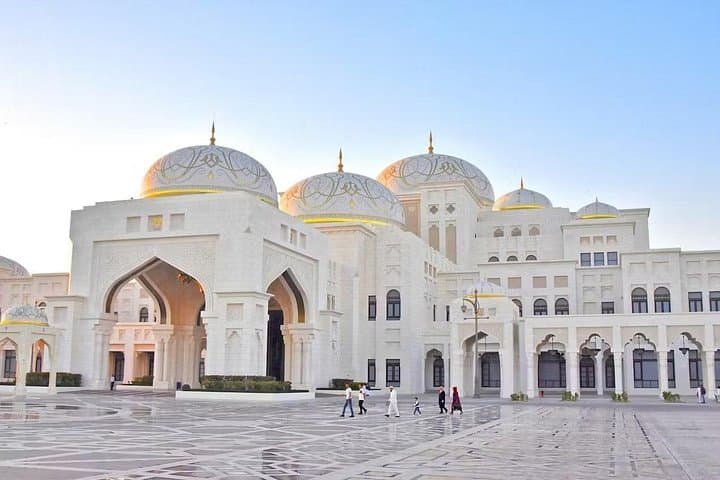
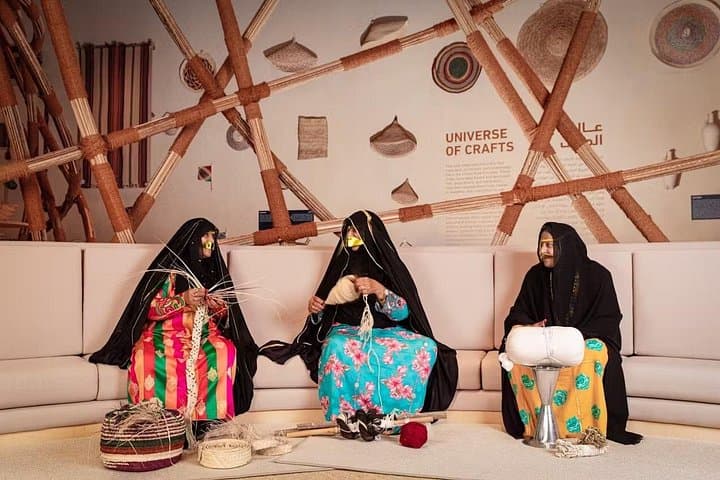
Geology and geography matter here—Abu Dhabi sits on a coastal plain of wind-redistributed sand and tidal flats, which shaped settlement patterns and the defensive siting of forts like Al Hosn. Culture arrives through small details: the House of Artisans’ reed-work, the coffee ceremony at Bait Al Gahwa, and geometric motifs in Qasr Al Watan—opened to the public in recent years as a working presidential palace and cultural showcase.
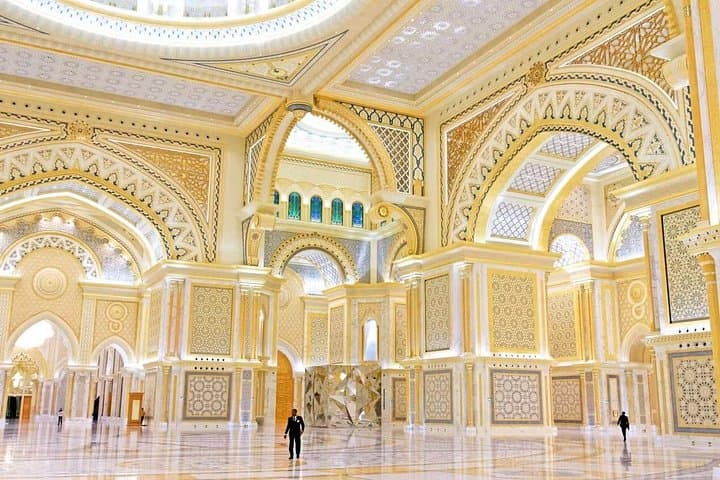
Expect calm, mostly paved walking and architecture as the main attraction. The guide explains historical layers, shows the Grand Hall and the palace library, and stops for a traditional lunch at a local restaurant. Groups are small (up to 15), so there’s time to ask about design, symbolism and local customs.
Practical guidance: dress modestly (shoulders and knees covered) and wear comfortable closed-toe shoes for paved courtyards. Carry water, sun protection and a small bag for security checks. Allow 5 hours for the Abu Dhabi start (8–9 hours if picked up in Dubai). Photography rules vary—follow signage inside the palace. This is a low-effort cultural day that rewards curiosity and respectful observance of local norms.
easy.
5 hours (Abu Dhabi pickup); 8–9 hours (Dubai pickup).
Minimal fitness required: primarily walking on paved surfaces and standing during tours and lunch.
Qasr Al Watan has regular visiting hours but may close for state events; the tour includes entrance so your operator will confirm availability.
Lunch is included in the tour price; small cash for tips or extra purchases at artisan stalls is useful but not required.
Qasr Al Watan and Qasr Al Hosn have accessible routes and facilities, but check with the operator ahead of booking for specific assistance needs.
Yes—pick-up is offered in Dubai but adds travel time; expect a full-day schedule if you choose Dubai pickup.
Qasr Al Hosn began as a defensive watchtower and evolved into the emirate’s oldest stone building; Qasr Al Watan opened to the public in recent years to share governance heritage and design.
Visitors are asked to respect indoor climate controls and limit water waste; cultural sites manage flow to protect delicate finishes and interiors.
TUI Musement operates guided outdoor trips and adventures with an emphasis on safety, stewardship, and memorable experiences.
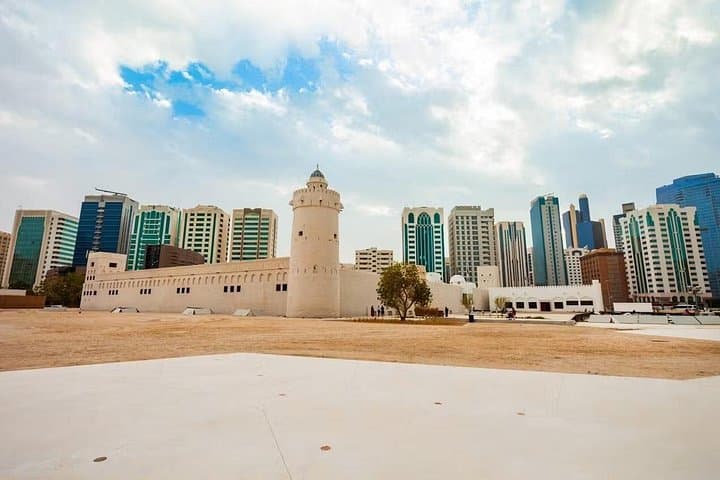
You step out of the minivan and the Gulf air opens up the city: a low horizon of white domes, glass facades and sand that still remembers tides. The tour begins at Qasr Al Hosn, whose thick white walls once watched over a fishing settlement; inside, voice-guides and artifacts sketch Abu Dhabi’s leap from pearling and date palms to oil-era capital.
You step out of the minivan and the Gulf air opens up the city: a low horizon of white domes, glass facades and sand that still remembers tides. The tour begins at Qasr Al Hosn, whose thick white walls once watched over a fishing settlement; inside, voice-guides and artifacts sketch Abu Dhabi’s leap from pearling and date palms to oil-era capital.
Geology and geography matter here—Abu Dhabi sits on a coastal plain of wind-redistributed sand and tidal flats, which shaped settlement patterns and the defensive siting of forts like Al Hosn. Culture arrives through small details: the House of Artisans’ reed-work, the coffee ceremony at Bait Al Gahwa, and geometric motifs in Qasr Al Watan—opened to the public in recent years as a working presidential palace and cultural showcase.
Expect calm, mostly paved walking and architecture as the main attraction. The guide explains historical layers, shows the Grand Hall and the palace library, and stops for a traditional lunch at a local restaurant. Groups are small (up to 15), so there’s time to ask about design, symbolism and local customs.
Practical guidance: dress modestly (shoulders and knees covered) and wear comfortable closed-toe shoes for paved courtyards. Carry water, sun protection and a small bag for security checks. Allow 5 hours for the Abu Dhabi start (8–9 hours if picked up in Dubai). Photography rules vary—follow signage inside the palace. This is a low-effort cultural day that rewards curiosity and respectful observance of local norms.