THE ADVENTURE COLLECTIVE® · Independent discovery and booking for outdoor travel

Experience two of Abu Dhabi's most striking places of worship in one private half‑day: the vast white expanse of Sheikh Zayed Grand Mosque and the carved elegance of the BAPS Hindu Mandir. This guide explains what to expect, how to prepare, and practical tips for timing, dress, and accessibility.
Experience two of Abu Dhabi's most striking places of worship in one private half‑day: the vast white expanse of Sheikh Zayed Grand Mosque and the carved elegance of the BAPS Hindu Mandir. This guide explains what to expect, how to prepare, and practical tips for timing, dress, and accessibility.
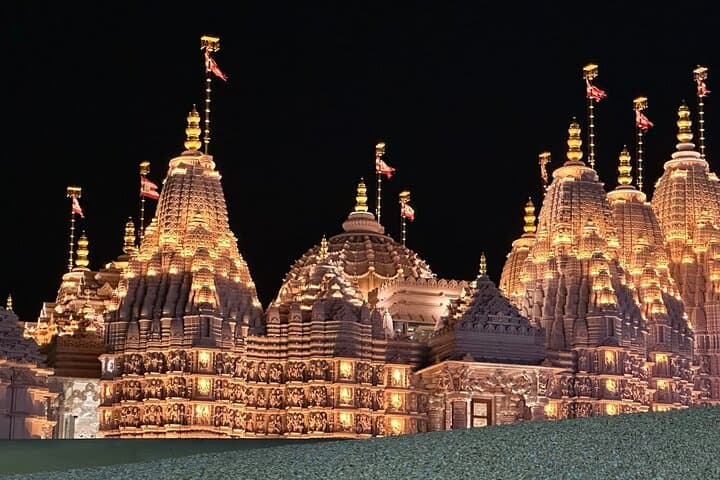
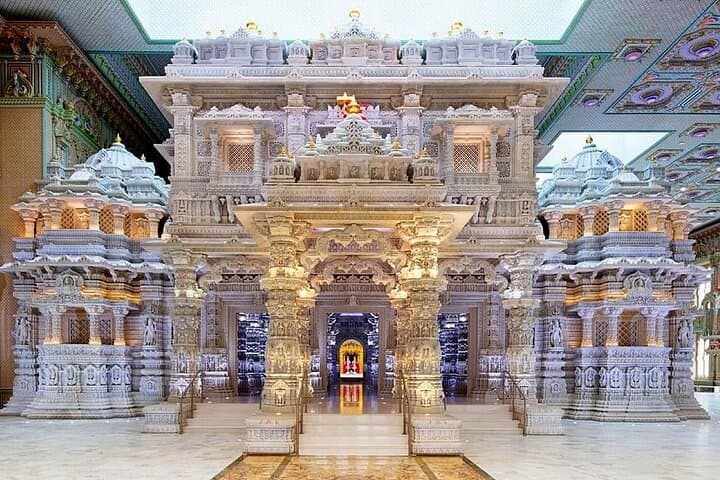
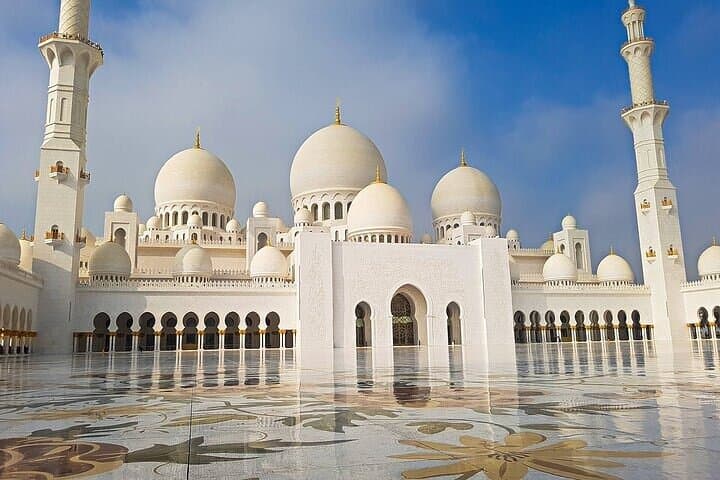
The morning light on Abu Dhabi's waterfront hits white marble and carved stone differently: at the Grand Mosque it glows, at the BAPS Hindu Mandir it warms the cream-coloured carvings. Visitors step from an air-conditioned vehicle into cool colonnades, move past reflective pools that seem to hold the sky, and trace the fine handwork of craftsmen whose motifs cross continents.
Verified experiences and guided adventures in the surrounding area.
Operated by Sham Al Marjan Tours LLC · Abu Dhabi, Abu Dhabi
The morning light on Abu Dhabi's waterfront hits white marble and carved stone differently: at the Grand Mosque it glows, at the BAPS Hindu Mandir it warms the cream-coloured carvings. Visitors step from an air-conditioned vehicle into cool colonnades, move past reflective pools that seem to hold the sky, and trace the fine handwork of craftsmen whose motifs cross continents.
Sheikh Zayed Grand Mosque (completed 2007) draws on Ottoman, Mamluk and Mughal influences to create a modern expression of Islamic architecture; the site sits on compacted coastal sands where imported marble and reinforced foundations stabilize its vast domes. The BAPS Hindu Mandir—built with traditional Indian carving techniques—brings marble and sandstone sculpture and living ritual to the city's mosaic of cultural life.
Culturally, the two sites offer complementary encounters: quiet ritual and guided reverence at the mosque, vibrant iconography and community hospitality at the mandir. Both encourage respectful observation more than tourist spectacle, and both are curated spaces—photography rules, dress codes and set visiting windows apply.
Practical guidance: this private, 6‑hour excursion typically allows ~90 minutes at each site with travel in between; wear shoulder- and knee-covering clothing (mosque enforces stricter rules), slip-on shoes for quick entry, and bring sun protection and water for short walks between parking and entrances. Mornings and late afternoons avoid the harshest heat; allow extra time for security screening. With accessible transport provided and clear rules up front, the tour is an efficient way to experience two distinct religious architectures and the cultural layering of modern Abu Dhabi.
easy.
6 hours.
Suitable for most fitness levels; requires short walks and stairs but transportation does most of the work.
Yes—shoulders and knees must be covered; the mosque has strict rules against transparent, sleeveless, tight-fitting, or short clothing and may provide coverings in some cases.
Yes; the itinerary notes wheelchair-accessible transportation and surfaces, though some areas may have steps—staff can advise on accessible routes.
Photography is allowed in most public areas but is restricted in certain interior prayer spaces and during worship—follow signage and staff guidance.
The tour typically allows about 90 minutes per site; that covers main highlights but not exhaustive exploration—arrive with prioritized interests.
Sheikh Zayed Grand Mosque (completed 2007) was built to represent Islamic architecture from multiple regions; the BAPS Hindu Mandir follows traditional Indian temple techniques brought to Abu Dhabi by the Hindu diaspora.
Both sites maintain regulated visitor flows to protect delicate stonework and mosaics; visitors are asked to follow rules on touching or collecting materials to minimize wear.
Sham Al Marjan Tours LLC operates guided outdoor trips and adventures with an emphasis on safety, stewardship, and memorable experiences.

The morning light on Abu Dhabi's waterfront hits white marble and carved stone differently: at the Grand Mosque it glows, at the BAPS Hindu Mandir it warms the cream-coloured carvings. Visitors step from an air-conditioned vehicle into cool colonnades, move past reflective pools that seem to hold the sky, and trace the fine handwork of craftsmen whose motifs cross continents.
The morning light on Abu Dhabi's waterfront hits white marble and carved stone differently: at the Grand Mosque it glows, at the BAPS Hindu Mandir it warms the cream-coloured carvings. Visitors step from an air-conditioned vehicle into cool colonnades, move past reflective pools that seem to hold the sky, and trace the fine handwork of craftsmen whose motifs cross continents.
Sheikh Zayed Grand Mosque (completed 2007) draws on Ottoman, Mamluk and Mughal influences to create a modern expression of Islamic architecture; the site sits on compacted coastal sands where imported marble and reinforced foundations stabilize its vast domes. The BAPS Hindu Mandir—built with traditional Indian carving techniques—brings marble and sandstone sculpture and living ritual to the city's mosaic of cultural life.
Culturally, the two sites offer complementary encounters: quiet ritual and guided reverence at the mosque, vibrant iconography and community hospitality at the mandir. Both encourage respectful observation more than tourist spectacle, and both are curated spaces—photography rules, dress codes and set visiting windows apply.
Practical guidance: this private, 6‑hour excursion typically allows ~90 minutes at each site with travel in between; wear shoulder- and knee-covering clothing (mosque enforces stricter rules), slip-on shoes for quick entry, and bring sun protection and water for short walks between parking and entrances. Mornings and late afternoons avoid the harshest heat; allow extra time for security screening. With accessible transport provided and clear rules up front, the tour is an efficient way to experience two distinct religious architectures and the cultural layering of modern Abu Dhabi.