THE ADVENTURE COLLECTIVE® · Independent discovery and booking for outdoor travel

Escape Abu Dhabi’s glare and watch the desert sky come alive. This private stargazing outing combines dune driving, a small campfire, and guided viewing for clear, unpolluted vistas of the Milky Way.
Escape Abu Dhabi’s glare and watch the desert sky come alive. This private stargazing outing combines dune driving, a small campfire, and guided viewing for clear, unpolluted vistas of the Milky Way.
The sun drops behind a row of wind-sculpted dunes and the desert exhales a cooler breath. You settle onto a low blanket around a small campfire; embers glow while the first stars prick the dark. With city lights far behind you, the sky unrolls: constellations sharpen, planets hold steady, and the Milky Way arcs like a pale river above the sand.
Verified experiences and guided adventures in the surrounding area.
Operated by Visitors Destination Tours & Safari · Abu Dhabi, Abu Dhabi
The sun drops behind a row of wind-sculpted dunes and the desert exhales a cooler breath. You settle onto a low blanket around a small campfire; embers glow while the first stars prick the dark. With city lights far behind you, the sky unrolls: constellations sharpen, planets hold steady, and the Milky Way arcs like a pale river above the sand.
This landscape is part of the Arabian Desert—sand seas shaped by wind and time, where ancient Bedouin used stellar navigation and oral astronomy to cross vast distances. Geologically the dunes are mobile, composed of calcium carbonate and quartz blown from coastal flats and inland plains. Culturally, night in the desert remains a space for storytelling, quiet reflection, and traditional tea served around low seating.
Practical guidance: expect minimal infrastructure—most of the experience centers on a single camp site reached by a short dune-drive. Dress in layers: desert nights can drop sharply after sunset. Bring a headlamp with a red-filter, a tripod for long-exposure star photos, and water; leave large suitcases behind. Operators often include bottled water, a guide, and dune driving; tours typically run about 3–4 hours and are suitable for most fitness levels.
Timing matters—winter months deliver crisper skies, while summer brings heat and higher humidity that can reduce clarity. Respect the environment: stay on established tracks, take all trash with you, and avoid bright white lights during viewing. Here, the desert and sky converse; your role is simple: listen and look.
easy.
3–4 hours.
Suitable for most fitness levels; involves short walks on sand and minimal bending or kneeling.
Most bookings include pickup and drop-off from Abu Dhabi; confirm pickup point and time during booking.
Tours may proceed in light cloud or wind—operators rarely cancel for marginal weather, but star visibility can be reduced on overcast nights.
Families are welcome; specialized infant seats are available, but the tour is not recommended for those with serious spinal, cardiovascular, or pregnancy-related concerns.
Yes—long exposures work well; bring a tripod and remote shutter. Avoid bright lights and use red light for setup to preserve night vision.
The dunes around Abu Dhabi were traversed by Bedouin tribes for centuries; stars and celestial navigation played a central role in oral traditions and travel routes.
Stay on designated tracks to limit dune erosion. Many operators follow low-impact camping practices—pack out what you bring and avoid disturbing wildlife.
Visitors Destination Tours & Safari operates guided outdoor trips and adventures with an emphasis on safety, stewardship, and memorable experiences.
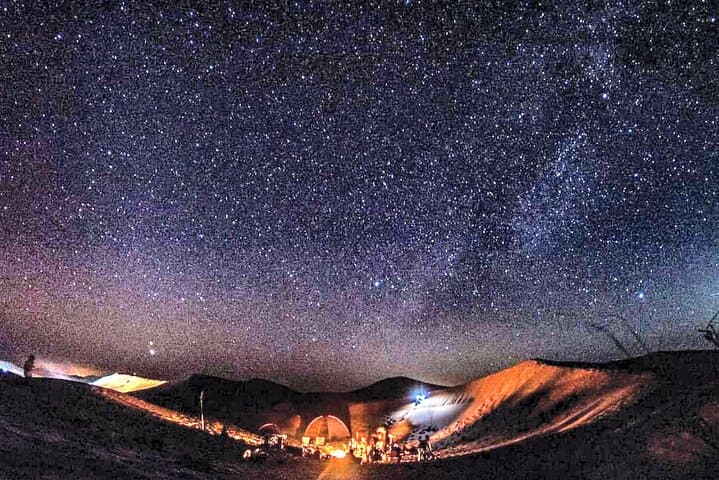
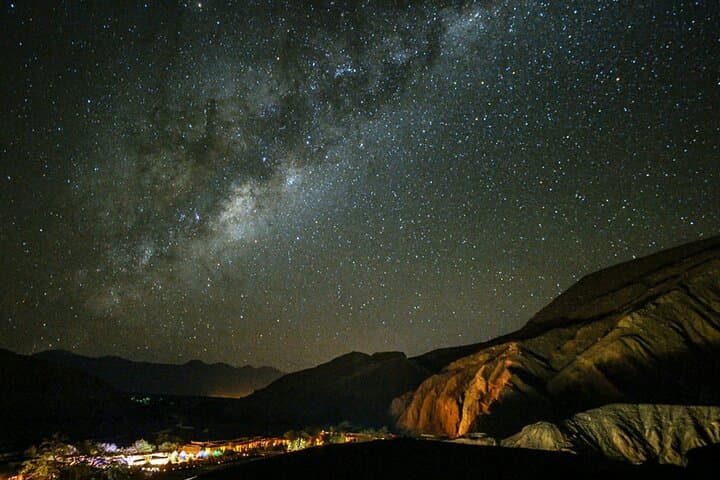
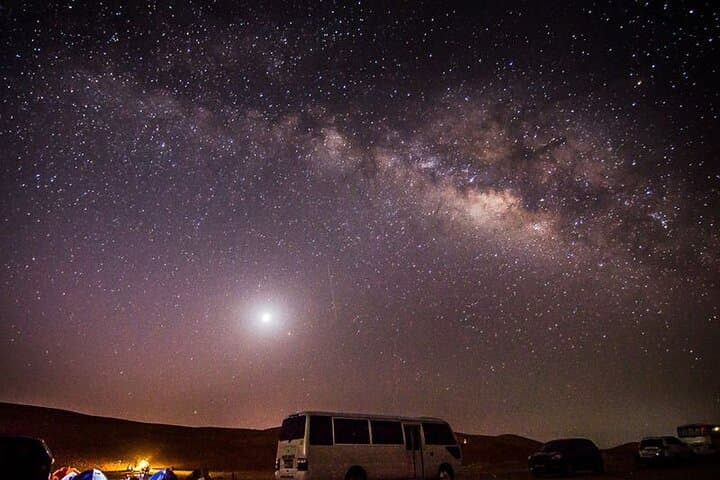
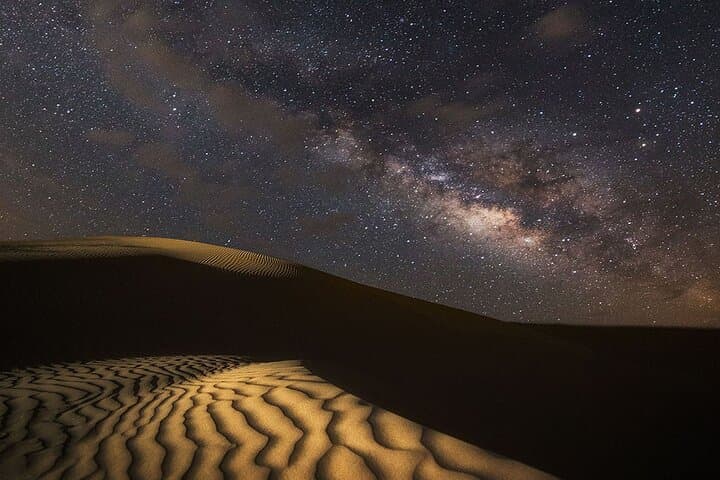
The sun drops behind a row of wind-sculpted dunes and the desert exhales a cooler breath. You settle onto a low blanket around a small campfire; embers glow while the first stars prick the dark. With city lights far behind you, the sky unrolls: constellations sharpen, planets hold steady, and the Milky Way arcs like a pale river above the sand.
The sun drops behind a row of wind-sculpted dunes and the desert exhales a cooler breath. You settle onto a low blanket around a small campfire; embers glow while the first stars prick the dark. With city lights far behind you, the sky unrolls: constellations sharpen, planets hold steady, and the Milky Way arcs like a pale river above the sand.
This landscape is part of the Arabian Desert—sand seas shaped by wind and time, where ancient Bedouin used stellar navigation and oral astronomy to cross vast distances. Geologically the dunes are mobile, composed of calcium carbonate and quartz blown from coastal flats and inland plains. Culturally, night in the desert remains a space for storytelling, quiet reflection, and traditional tea served around low seating.
Practical guidance: expect minimal infrastructure—most of the experience centers on a single camp site reached by a short dune-drive. Dress in layers: desert nights can drop sharply after sunset. Bring a headlamp with a red-filter, a tripod for long-exposure star photos, and water; leave large suitcases behind. Operators often include bottled water, a guide, and dune driving; tours typically run about 3–4 hours and are suitable for most fitness levels.
Timing matters—winter months deliver crisper skies, while summer brings heat and higher humidity that can reduce clarity. Respect the environment: stay on established tracks, take all trash with you, and avoid bright white lights during viewing. Here, the desert and sky converse; your role is simple: listen and look.