THE ADVENTURE COLLECTIVE® · Independent discovery and booking for outdoor travel

A single day that moves from burning hills to ancient rock art and bubbling muddomes—this private Absheron Peninsula tour condenses Azerbaijan’s fire-and-stone story into a 7–9 hour loop from Baku. Expect dramatic geology, layered history, and practical tips for exploring uneven, windswept terrain.
A single day that moves from burning hills to ancient rock art and bubbling muddomes—this private Absheron Peninsula tour condenses Azerbaijan’s fire-and-stone story into a 7–9 hour loop from Baku. Expect dramatic geology, layered history, and practical tips for exploring uneven, windswept terrain.
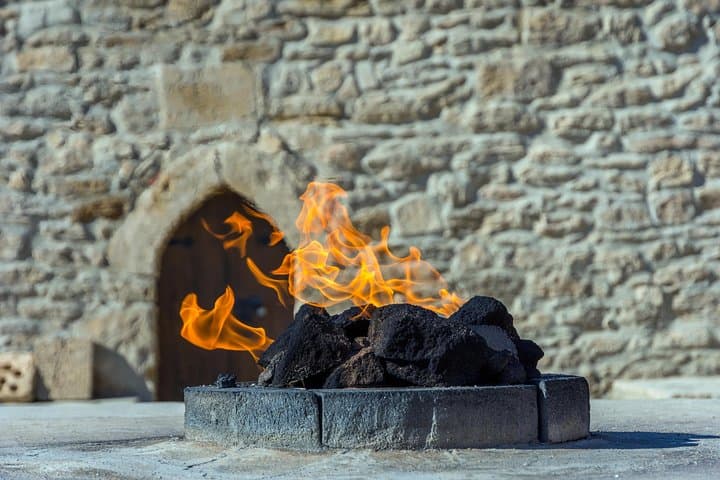
You step out of an air-conditioned van into a wind that seems to know the stories of the earth. Ahead, a low slope spits an orange tongue of flame—Yanar Dag’s eternal fire daring the sky to smother it. The smell is faintly mineral; the heat, immediate. This is where Azerbaijan’s “land of fire” nickname stops being a phrase and becomes a place that stares back.
Verified experiences and guided adventures in the surrounding area.
Operated by Travelaze Tourism Services · Baku, Absheron
You step out of an air-conditioned van into a wind that seems to know the stories of the earth. Ahead, a low slope spits an orange tongue of flame—Yanar Dag’s eternal fire daring the sky to smother it. The smell is faintly mineral; the heat, immediate. This is where Azerbaijan’s “land of fire” nickname stops being a phrase and becomes a place that stares back.
The day folds outward from that ember. Eastwards, Ateshgah temple opens like a courtyard from a different map: a square pavilion with a central altar where natural gas once fed a constant blaze and pilgrims left offerings. The stones here bear Sanskrit inscriptions and Indian motifs—evidence of trade and migration across the Caspian centuries ago.
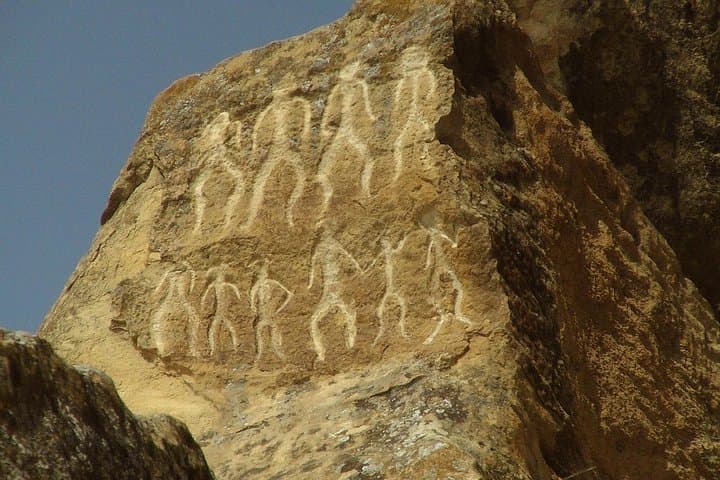
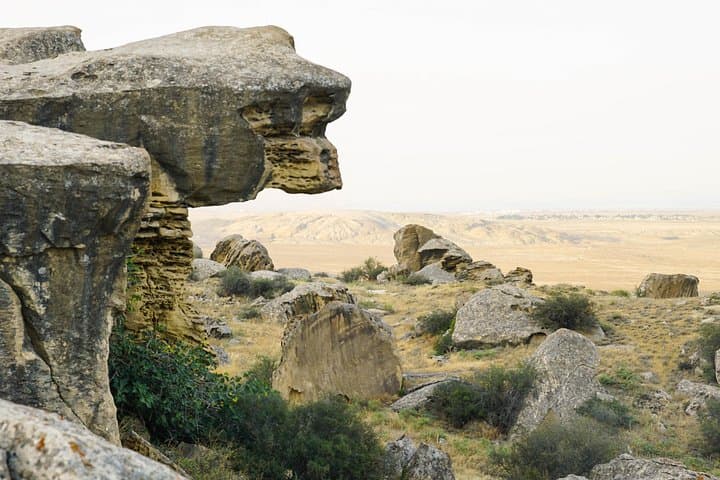
Drive south and the landscape changes to a semi-desert of gullies and wind-carved flats: Gobustan. Here, cliffs and rock faces keep time in petroglyphs, grooves and horse figures scratched 10,000 years ago. Archaeologists still read these panels as field notes of ancient life—boats, hunters, ritual scenes—etched across millennia.
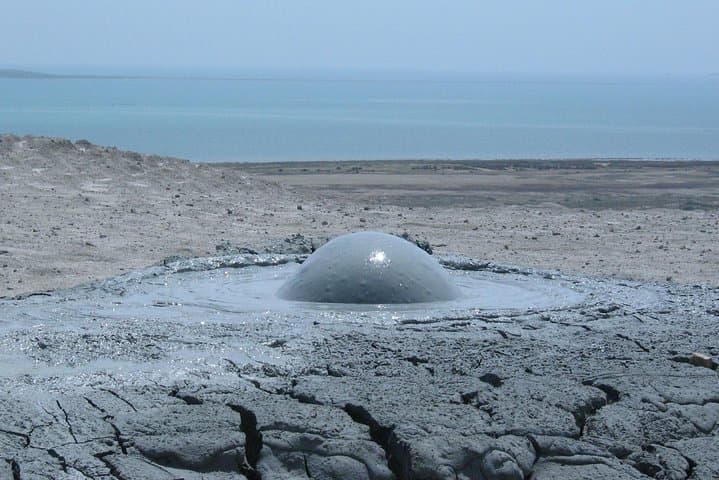
Later, the mud volcanoes stage their own slow theatre. Pools of gray churn and belch; domes collapse into wet avalanches, and when a larger eruption sings, a fountain of pasty earth arcs into the air. Nearly half of the planet’s mud volcanism happens in Azerbaijan—these features are geological pages written over 30–35 million years. The scale and oddness of it stay with you: landscape not only sculpted, but actively protesting the quiet.
History and geology are stitched together on this private day tour: prehistoric rock art, Zoroastrian and later Hindu connections at Ateshgah, modern sparks at Yanar Dag, and Gobustan’s UNESCO-recognized record of human presence. Bibi-Heybat Mosque, included as a short urban stop on return, offers a quieter, spiritual counterpoint.
Practical edge: expect a 7–9 hour loop from central Baku with pickup and drop-off in an air-conditioned vehicle, short walks on uneven terrain (stout footwear recommended), and brief stops at each site—30–120 minutes per point. Bring sun protection, layers for wind and cooler evenings near the Caspian, and a fully charged camera battery; the light shifts quickly across open plains. Respect fenced areas at Gobustan and follow guides on where to stand near mud volcanoes—the eruptions can be unpredictable.
For travelers who want a compact, layered introduction to Azerbaijan’s natural and cultural spine, this private tour compresses the highlights into a single, surprisingly rich day. It’s a route for curious people who want to touch the geology and read the human marks on a landscape that still refuses to be ordinary.
easy.
7–9 hours.
Suitable for travelers in normal physical condition; involves mostly short walks and standing periods.
The tour lasts about 7–9 hours with hotel or airport pickup in Baku; exact pickup time is confirmed at booking.
Most site admissions are included according to the itinerary, but confirm at booking for any optional stops or donations.
The operator notes it’s suitable for children in strollers, but it’s not recommended for pregnant travelers due to uneven terrain and active sites.
Photography is allowed at Yanar Dag, Ateshgah and Gobustan; avoid using drones without prior permission from authorities.
Expect short, 10–30 minute walks at each stop; Gobustan panels may require stepping on uneven ground but no long hikes.
Restrooms and a small tea house are available near Yanar Dag and at some visitor centers; bring snacks if you prefer specific dietary items.
The region’s flames tied into Zoroastrian fire worship and later Indian merchant communities; Gobustan’s petroglyphs document human activity stretching back to the Stone Age.
Gobustan is a protected UNESCO site—stay on marked paths to preserve fragile rock art; mud volcano fields are geologically active and should be treated with caution.
Travelaze Tourism Services operates guided outdoor trips and adventures with an emphasis on safety, stewardship, and memorable experiences.
You step out of an air-conditioned van into a wind that seems to know the stories of the earth. Ahead, a low slope spits an orange tongue of flame—Yanar Dag’s eternal fire daring the sky to smother it. The smell is faintly mineral; the heat, immediate. This is where Azerbaijan’s “land of fire” nickname stops being a phrase and becomes a place that stares back.
You step out of an air-conditioned van into a wind that seems to know the stories of the earth. Ahead, a low slope spits an orange tongue of flame—Yanar Dag’s eternal fire daring the sky to smother it. The smell is faintly mineral; the heat, immediate. This is where Azerbaijan’s “land of fire” nickname stops being a phrase and becomes a place that stares back.
The day folds outward from that ember. Eastwards, Ateshgah temple opens like a courtyard from a different map: a square pavilion with a central altar where natural gas once fed a constant blaze and pilgrims left offerings. The stones here bear Sanskrit inscriptions and Indian motifs—evidence of trade and migration across the Caspian centuries ago.
Drive south and the landscape changes to a semi-desert of gullies and wind-carved flats: Gobustan. Here, cliffs and rock faces keep time in petroglyphs, grooves and horse figures scratched 10,000 years ago. Archaeologists still read these panels as field notes of ancient life—boats, hunters, ritual scenes—etched across millennia.
Later, the mud volcanoes stage their own slow theatre. Pools of gray churn and belch; domes collapse into wet avalanches, and when a larger eruption sings, a fountain of pasty earth arcs into the air. Nearly half of the planet’s mud volcanism happens in Azerbaijan—these features are geological pages written over 30–35 million years. The scale and oddness of it stay with you: landscape not only sculpted, but actively protesting the quiet.
History and geology are stitched together on this private day tour: prehistoric rock art, Zoroastrian and later Hindu connections at Ateshgah, modern sparks at Yanar Dag, and Gobustan’s UNESCO-recognized record of human presence. Bibi-Heybat Mosque, included as a short urban stop on return, offers a quieter, spiritual counterpoint.
Practical edge: expect a 7–9 hour loop from central Baku with pickup and drop-off in an air-conditioned vehicle, short walks on uneven terrain (stout footwear recommended), and brief stops at each site—30–120 minutes per point. Bring sun protection, layers for wind and cooler evenings near the Caspian, and a fully charged camera battery; the light shifts quickly across open plains. Respect fenced areas at Gobustan and follow guides on where to stand near mud volcanoes—the eruptions can be unpredictable.
For travelers who want a compact, layered introduction to Azerbaijan’s natural and cultural spine, this private tour compresses the highlights into a single, surprisingly rich day. It’s a route for curious people who want to touch the geology and read the human marks on a landscape that still refuses to be ordinary.