THE ADVENTURE COLLECTIVE® · Independent discovery and booking for outdoor travel

A compact, 5–6 hour circuit from Baku that stitches together Gobustan’s bubbling mud volcanoes, millennia-old petroglyphs and the ritual fires of Ateshgah and Yanar Dag. Ideal for first-time visitors who want geology, history and spectacle in one day.
A compact, 5–6 hour circuit from Baku that stitches together Gobustan’s bubbling mud volcanoes, millennia-old petroglyphs and the ritual fires of Ateshgah and Yanar Dag. Ideal for first-time visitors who want geology, history and spectacle in one day.
You step out of Baku’s bustle into a wind that smells faintly of salt and gas; the coastal plain opens wide and the road unspools toward low, stony hills. Within an hour the asphalt gives way to scattered scrub and the land begins to tell a different story — one of ancient fire and slow, oily eruptions. At Gobustan, the ground huffs and bubbles like a living thing, while weather-darkened rocks hold petroglyphs that look back at you across millennia.
Verified experiences and guided adventures in the surrounding area.
Operated by Baku Holidays · Baku, Absheron
You step out of Baku’s bustle into a wind that smells faintly of salt and gas; the coastal plain opens wide and the road unspools toward low, stony hills. Within an hour the asphalt gives way to scattered scrub and the land begins to tell a different story — one of ancient fire and slow, oily eruptions. At Gobustan, the ground huffs and bubbles like a living thing, while weather-darkened rocks hold petroglyphs that look back at you across millennia.
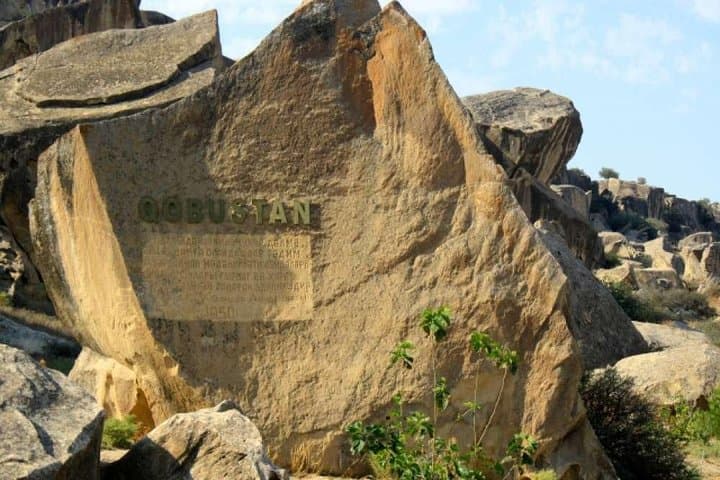
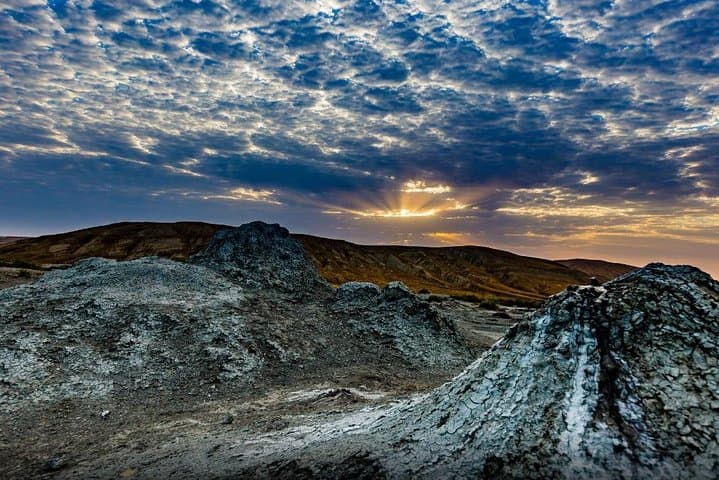
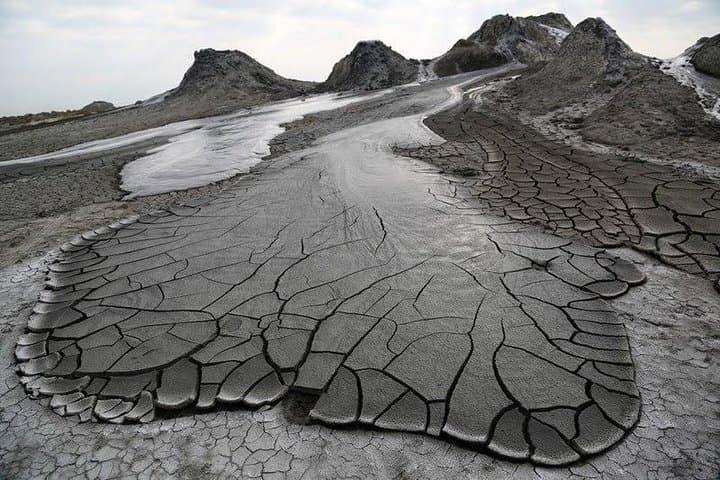
Gobustan National Reserve is the day’s geological anchor. About 65 km from Baku, the reserve packs volcanic oddities, prehistoric rock art and a compact museum into a landscape of wind-swept stone. Mud volcanoes here are not theatrical cones so much as chunky, bubbling pools — some gently oozing, others sputtering and hissing — created by subterranean pockets of gas and mud that push to the surface. Nearby, tens of thousands of petroglyphs recorded hunting scenes, ritual figures and boats; they are the human counterpart to the raw, elemental geology around them.
The cultural leg of the tour shifts the mood from primeval to ritual. Ateshgah (the Fire Temple) in Surakhany sits where natural gas once flared constantly, attracting Zoroastrian worship centuries ago. Built and modified by mercantile communities, the temple complex maps a crossroads of trade and faith — Persian, Indian and local Azeri elements meet in its inscriptions and architecture.
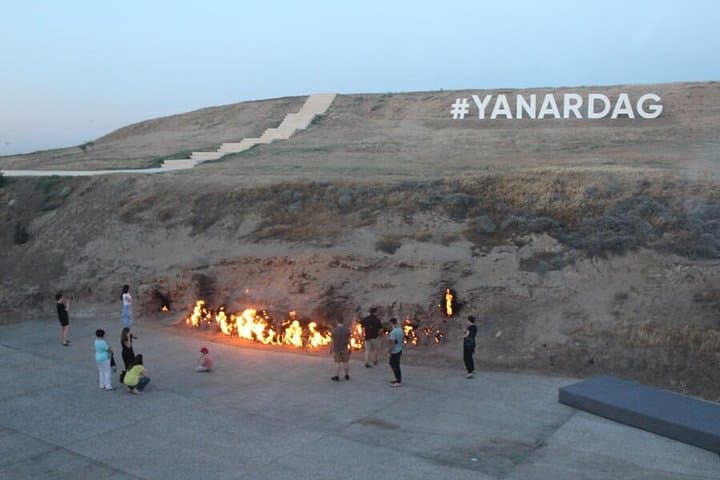
A short drive farther east brings you to Yanar Dag, the Blazing Mountain, where a thin seam of gas feeds steady flames that lick a sandstone slope. Unlike mud volcanoes, the burn here is persistent and predictable — an outdoor demonstration of why the region has been called the "land of fire."
Practical edge: the full-day itinerary runs 5–6 hours with hotel pickup and drop-off in an air-conditioned vehicle. Expect short, easy walks on uneven trails and stone steps to reach petroglyph panels and viewpoint platforms; the physical demand is low but sun exposure is high. Wear sturdy closed shoes, carry 2 liters of water, and bring sun protection — the Absheron plain is open and exposed. Cameras with polarizing filters do well here (reduce glare on rock surfaces and capture the flame at Yanar Dag). Entry to Gobustan and the temple is typically included; guides provide local context and help read the rock art.
Safety and etiquette: keep a respectful distance from active mud pits and lit gas vents; the terrain can be brittle and hot. Support local conservation by staying on designated paths and leaving no trace of your visit. On a clear afternoon, the route makes a compact and revealing slice through Azerbaijan’s geologic and spiritual history — where earth and flame still push against the sky and invite you to look and listen.
easy.
5–6 hours.
Suitable for most fitness levels; expect short walks of up to 15–20 minutes on uneven ground and stairs.
The tour lasts about 5–6 hours and includes Gobustan National Reserve (petroglyphs and mud volcanoes), Ateshgah Fire Temple and Yanar Dag, with hotel pickup and drop-off from Baku.
Yes — admission to Gobustan, Ateshgah and Yanar Dag is listed as included in the itinerary.
Gobustan is roughly 60–70 km from central Baku; expect about a 1–1.5 hour drive depending on traffic.
Basic facilities and a small museum café exist at Gobustan; other stops have limited or no amenities, so plan accordingly.
Yes — the tour is classified as suitable for all fitness levels, but note short walks on uneven ground; bring assistance if mobility is limited.
They can be hazardous if you get too close: surfaces may be hot or unstable and gas vents are unpredictable. Stay within marked areas and follow your guide’s instructions.
The Absheron peninsula has long been associated with natural gas seepage; Ateshgah and local flame sites attracted Zoroastrian and later Hindu worshippers drawn to the ‘eternal’ fires.
Gobustan is a protected reserve—stay on trails to prevent erosion of fragile rock art and avoid disturbing volcanic features; local guides help enforce responsible visitation.
Baku Holidays operates guided outdoor trips and adventures with an emphasis on safety, stewardship, and memorable experiences.
You step out of Baku’s bustle into a wind that smells faintly of salt and gas; the coastal plain opens wide and the road unspools toward low, stony hills. Within an hour the asphalt gives way to scattered scrub and the land begins to tell a different story — one of ancient fire and slow, oily eruptions. At Gobustan, the ground huffs and bubbles like a living thing, while weather-darkened rocks hold petroglyphs that look back at you across millennia.
You step out of Baku’s bustle into a wind that smells faintly of salt and gas; the coastal plain opens wide and the road unspools toward low, stony hills. Within an hour the asphalt gives way to scattered scrub and the land begins to tell a different story — one of ancient fire and slow, oily eruptions. At Gobustan, the ground huffs and bubbles like a living thing, while weather-darkened rocks hold petroglyphs that look back at you across millennia.
Gobustan National Reserve is the day’s geological anchor. About 65 km from Baku, the reserve packs volcanic oddities, prehistoric rock art and a compact museum into a landscape of wind-swept stone. Mud volcanoes here are not theatrical cones so much as chunky, bubbling pools — some gently oozing, others sputtering and hissing — created by subterranean pockets of gas and mud that push to the surface. Nearby, tens of thousands of petroglyphs recorded hunting scenes, ritual figures and boats; they are the human counterpart to the raw, elemental geology around them.
The cultural leg of the tour shifts the mood from primeval to ritual. Ateshgah (the Fire Temple) in Surakhany sits where natural gas once flared constantly, attracting Zoroastrian worship centuries ago. Built and modified by mercantile communities, the temple complex maps a crossroads of trade and faith — Persian, Indian and local Azeri elements meet in its inscriptions and architecture.
A short drive farther east brings you to Yanar Dag, the Blazing Mountain, where a thin seam of gas feeds steady flames that lick a sandstone slope. Unlike mud volcanoes, the burn here is persistent and predictable — an outdoor demonstration of why the region has been called the "land of fire."
Practical edge: the full-day itinerary runs 5–6 hours with hotel pickup and drop-off in an air-conditioned vehicle. Expect short, easy walks on uneven trails and stone steps to reach petroglyph panels and viewpoint platforms; the physical demand is low but sun exposure is high. Wear sturdy closed shoes, carry 2 liters of water, and bring sun protection — the Absheron plain is open and exposed. Cameras with polarizing filters do well here (reduce glare on rock surfaces and capture the flame at Yanar Dag). Entry to Gobustan and the temple is typically included; guides provide local context and help read the rock art.
Safety and etiquette: keep a respectful distance from active mud pits and lit gas vents; the terrain can be brittle and hot. Support local conservation by staying on designated paths and leaving no trace of your visit. On a clear afternoon, the route makes a compact and revealing slice through Azerbaijan’s geologic and spiritual history — where earth and flame still push against the sky and invite you to look and listen.