THE ADVENTURE COLLECTIVE® · Independent discovery and booking for outdoor travel

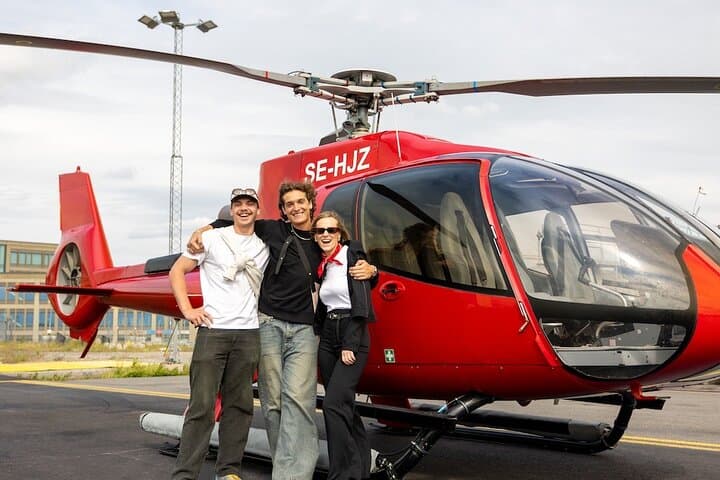
See Stockholm from a new angle on a private helicopter flight — up to five passengers, sweeping views of Gamla Stan, Djurgården and the archipelago. Fast, weather-dependent, and ideal for photographers who want a compact aerial overview before exploring on foot.
See Stockholm from a new angle on a private helicopter flight — up to five passengers, sweeping views of Gamla Stan, Djurgården and the archipelago. Fast, weather-dependent, and ideal for photographers who want a compact aerial overview before exploring on foot.
You lift off from the city and Stockholm unfurls beneath you — the old town’s ochre roofs shrink, the Royal Palace sits like an architectural comma, and the archipelago’s dark islands prick the sea. The rotor’s pulse becomes a steady companion as the pilot threads a route over Gamla Stan, across Djurgården where Gröna Lund’s rides glint, and out toward the first ring of islands.
Verified experiences and guided adventures in the surrounding area.
Operated by Fly Over Stockholm · Stockholm, Stockholm County
You lift off from the city and Stockholm unfurls beneath you — the old town’s ochre roofs shrink, the Royal Palace sits like an architectural comma, and the archipelago’s dark islands prick the sea. The rotor’s pulse becomes a steady companion as the pilot threads a route over Gamla Stan, across Djurgården where Gröna Lund’s rides glint, and out toward the first ring of islands.
Stockholm’s layout is the product of history and water: a medieval core on Stadsholmen, royal parks on Djurgården, and an archipelago carved from post-glacial rebound and granite bedrock. From the air you see centuries of urban planning meet the slow geology of the Baltic — bridges, quays, and narrow waterways that once defined trade and defense.
Culturally the view ties together museums, waterfront cafés, and naval yards; the Vasa Museum and Skansen are visible markers of a maritime city. Operators run private flights for up to five passengers, typically short-duration hops that prioritize sightseeing and photo windows.
Practical notes: flights are weather-dependent and may be canceled for safety. Bring a government ID, confirm passenger weight at booking, and expect to spend additional time on check-in and safety briefings. Dress in layers — wind at altitude feels colder than ground temperature — and aim for morning or late afternoon light for the best contrast between city stone and sea.
This is an efficient, high-impact way to read Stockholm’s geography: a quick ride that gives context to the streets you’ll walk later, with the archipelago daring you to return and explore it from the shore.
easy.
20–60 minutes.
No special fitness required; passengers should be able to board a small aircraft and sit unassisted for the flight
Yes — flights are operated as private charters for your group, up to five passengers, with a dedicated pilot and seating arranged per booking.
The advertised tour is a short sightseeing flight (commonly around 20 minutes of airborne time), though operators may list longer total durations to include briefing and transfers.
Flights can be canceled for safety; operators typically offer a full refund if you cancel at least 24 hours ahead or if the operator cancels due to weather or insufficient travelers.
Infants can fly on laps and specialized infant seats are available; the operation notes wheelchair accessibility for surfaces, but confirm any mobility needs with the operator before booking.
Stockholm grew where the lake met the sea; Gamla Stan preserves medieval streets and the Royal Palace while Djurgården became a royal hunting park turned cultural district.
Helicopter flights operate within regulated corridors to limit noise and disturbance; choose operators who follow local flight-path rules and minimize low passes over wildlife areas.
Fly Over Stockholm operates guided outdoor trips and adventures with an emphasis on safety, stewardship, and memorable experiences.

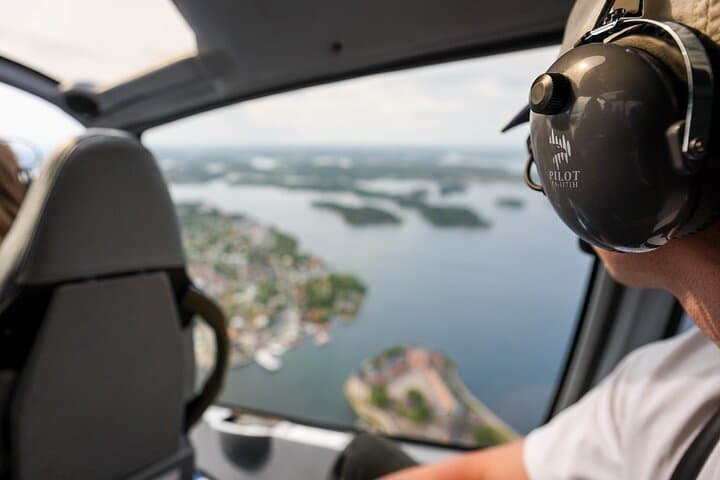

You lift off from the city and Stockholm unfurls beneath you — the old town’s ochre roofs shrink, the Royal Palace sits like an architectural comma, and the archipelago’s dark islands prick the sea. The rotor’s pulse becomes a steady companion as the pilot threads a route over Gamla Stan, across Djurgården where Gröna Lund’s rides glint, and out toward the first ring of islands.
You lift off from the city and Stockholm unfurls beneath you — the old town’s ochre roofs shrink, the Royal Palace sits like an architectural comma, and the archipelago’s dark islands prick the sea. The rotor’s pulse becomes a steady companion as the pilot threads a route over Gamla Stan, across Djurgården where Gröna Lund’s rides glint, and out toward the first ring of islands.
Stockholm’s layout is the product of history and water: a medieval core on Stadsholmen, royal parks on Djurgården, and an archipelago carved from post-glacial rebound and granite bedrock. From the air you see centuries of urban planning meet the slow geology of the Baltic — bridges, quays, and narrow waterways that once defined trade and defense.
Culturally the view ties together museums, waterfront cafés, and naval yards; the Vasa Museum and Skansen are visible markers of a maritime city. Operators run private flights for up to five passengers, typically short-duration hops that prioritize sightseeing and photo windows.
Practical notes: flights are weather-dependent and may be canceled for safety. Bring a government ID, confirm passenger weight at booking, and expect to spend additional time on check-in and safety briefings. Dress in layers — wind at altitude feels colder than ground temperature — and aim for morning or late afternoon light for the best contrast between city stone and sea.
This is an efficient, high-impact way to read Stockholm’s geography: a quick ride that gives context to the streets you’ll walk later, with the archipelago daring you to return and explore it from the shore.