THE ADVENTURE COLLECTIVE® · Independent discovery and booking for outdoor travel

Head into the Arctic night from Abisko on a guided 4x4 aurora hunt with a pro photographer, dinner included and photos supplied after the tour. Expect short icy walks, practical camera tuition, and up to six hours of aurora-focused scouting.
Head into the Arctic night from Abisko on a guided 4x4 aurora hunt with a pro photographer, dinner included and photos supplied after the tour. Expect short icy walks, practical camera tuition, and up to six hours of aurora-focused scouting.
A cold hush settles over the tundra as the van eases away from Abisko’s lights and the sky widens above you.
Verified experiences and guided adventures in the surrounding area.
Operated by Northern Wilds Expeditions · Abisko, Norrbotten County
A cold hush settles over the tundra as the van eases away from Abisko’s lights and the sky widens above you.
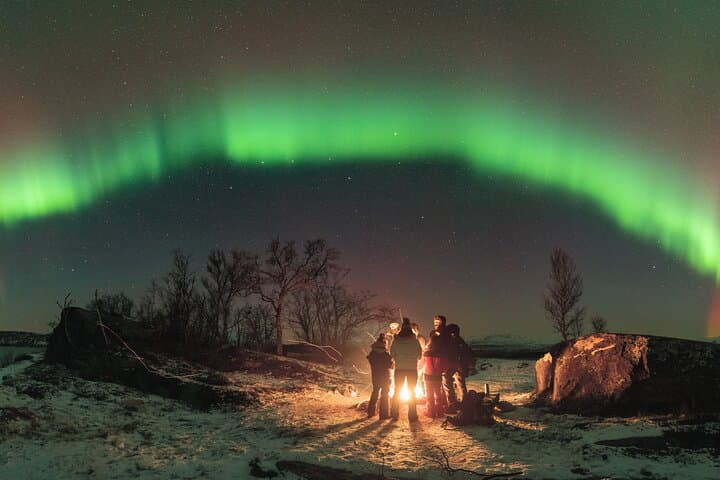
On this guided photo expedition you’ll move into the Arctic night in search of the aurora borealis, following forecasts and local knowledge to locations up to 300 km from base. The guide — a professional photographer with credentials in major outlets — balances meteorology, astronomy and composition coaching while you wait under an open sky. Dinner in a local restaurant starts the evening, then you head out in a 4x4 to minimize light pollution and maximize viewing windows.
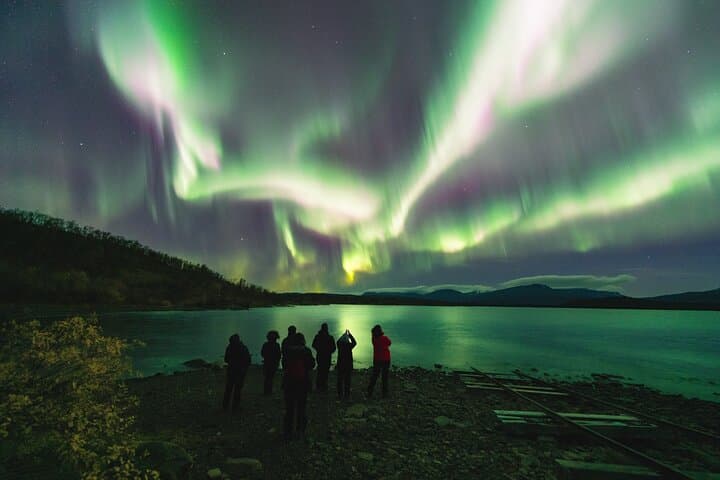
Geology here is shaped by glaciers and ancient rock: plateaus, the long shoreline of Lake Torneträsk and the U-shaped valleys that channel weather and auroral visibility. Culturally, this is Sápmi — Sámi people have lived on these lands for millennia — and modern research outposts nearby study the same skies that photographers chase.
Practically: expect 4–6 hours, short walks on icy ground, and long exposures that demand a steady tripod and cold-weather battery care. Dress in insulated layers, bring a tripod and spare batteries, and mute lights when the show starts. If the aurora is active, your guide will help set camera aperture, shutter speed and ISO; if you prefer to watch, the operator supplies the photos afterwards. Weather can change fast; cancellations for poor conditions are standard. Timing is key: prime months are late autumn through early spring when nights are longest and skies darkest.
easy.
4–6 hours.
Suitable for most fitness levels; requires short walks on icy or uneven ground and the ability to stand outdoors in cold for extended periods.
Yes—the professional guide will process and send the photos taken during the tour so you can keep high-quality images without mastering post-processing.
Late September through March offers the longest nights and best chances, with clear, cold winter nights often ideal for aurora visibility.
The tour is marketed as suitable for all fitness levels with short, accessible walks, but participants should be able to stand outdoors in cold conditions and notify operators of any mobility needs in advance.
Operators commonly cancel or reschedule due to poor weather or low auroral activity; the booking terms typically allow refund if cancelled at least 24 hours before departure.
This region of northern Sweden sits within Sápmi, the traditional territory of the Sámi people; scientific stations in the area have long tracked Arctic weather and solar activity.
Light pollution is minimal; visitors are asked to minimize artificial light, stay on established roads and carry out all waste to protect fragile tundra ecosystems.
Northern Wilds Expeditions operates guided outdoor trips and adventures with an emphasis on safety, stewardship, and memorable experiences.


A cold hush settles over the tundra as the van eases away from Abisko’s lights and the sky widens above you.
A cold hush settles over the tundra as the van eases away from Abisko’s lights and the sky widens above you.
On this guided photo expedition you’ll move into the Arctic night in search of the aurora borealis, following forecasts and local knowledge to locations up to 300 km from base. The guide — a professional photographer with credentials in major outlets — balances meteorology, astronomy and composition coaching while you wait under an open sky. Dinner in a local restaurant starts the evening, then you head out in a 4x4 to minimize light pollution and maximize viewing windows.
Geology here is shaped by glaciers and ancient rock: plateaus, the long shoreline of Lake Torneträsk and the U-shaped valleys that channel weather and auroral visibility. Culturally, this is Sápmi — Sámi people have lived on these lands for millennia — and modern research outposts nearby study the same skies that photographers chase.
Practically: expect 4–6 hours, short walks on icy ground, and long exposures that demand a steady tripod and cold-weather battery care. Dress in insulated layers, bring a tripod and spare batteries, and mute lights when the show starts. If the aurora is active, your guide will help set camera aperture, shutter speed and ISO; if you prefer to watch, the operator supplies the photos afterwards. Weather can change fast; cancellations for poor conditions are standard. Timing is key: prime months are late autumn through early spring when nights are longest and skies darkest.