THE ADVENTURE COLLECTIVE® · Independent discovery and booking for outdoor travel

A full-day journey from Caye Caulker that leads deep into Actun Tunichil Muknal’s subterranean rooms, where water, stone and Maya ritual converge. Expect river crossings, tight passages and the haunting Crystal Maiden in the main chamber.
A full-day journey from Caye Caulker that leads deep into Actun Tunichil Muknal’s subterranean rooms, where water, stone and Maya ritual converge. Expect river crossings, tight passages and the haunting Crystal Maiden in the main chamber.
The boat eases away from Caye Caulker and the low-profile silhouette of the Belize coast grows wider, greener and more immediate. By the time you step onto the mainland at Belize City your feet already crave terra firma; the real descent begins after the 90-minute drive inland, through sugarcane flats and low jungle ridges. At the ranger outpost the guide fits you with a helmet and headlamp, and for a moment the jungle exhales: the watershed that feeds Actun Tunichil Muknal (ATM) is about to take you inside itself.
Verified experiences and guided adventures in the surrounding area.
Operated by Private Belize Adventure · San Ignacio, Cayo District
The boat eases away from Caye Caulker and the low-profile silhouette of the Belize coast grows wider, greener and more immediate. By the time you step onto the mainland at Belize City your feet already crave terra firma; the real descent begins after the 90-minute drive inland, through sugarcane flats and low jungle ridges. At the ranger outpost the guide fits you with a helmet and headlamp, and for a moment the jungle exhales: the watershed that feeds Actun Tunichil Muknal (ATM) is about to take you inside itself.
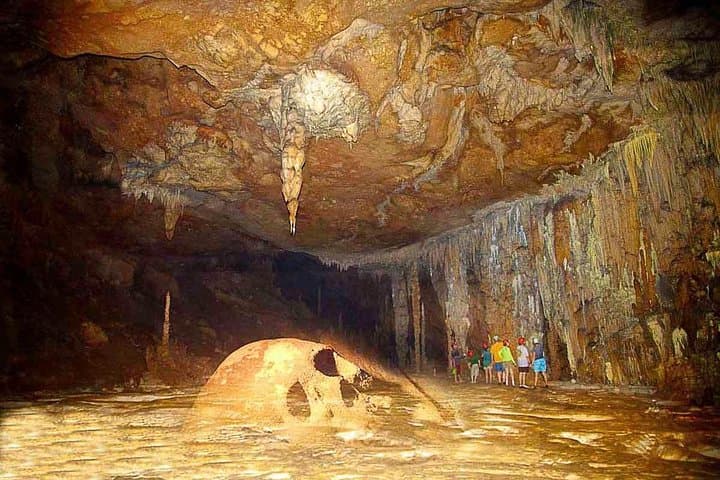
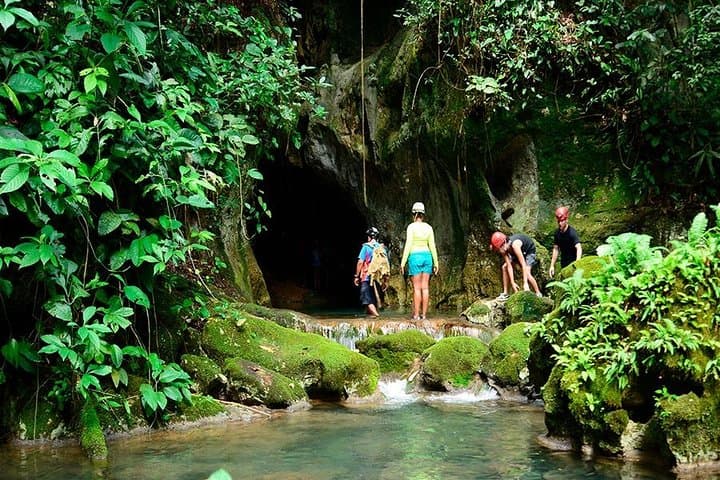
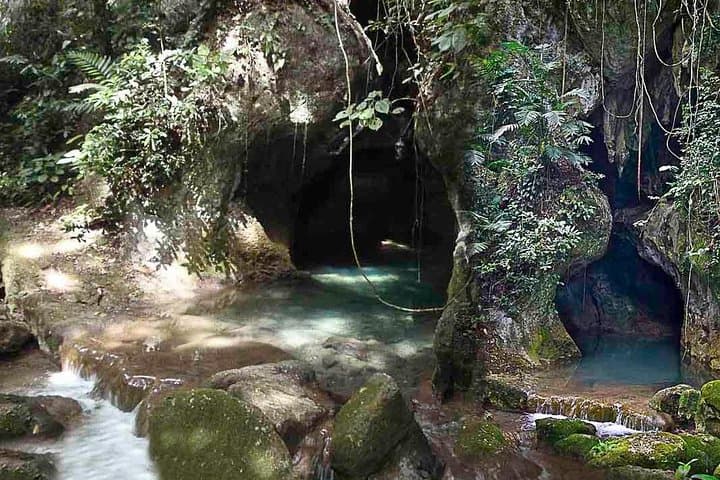
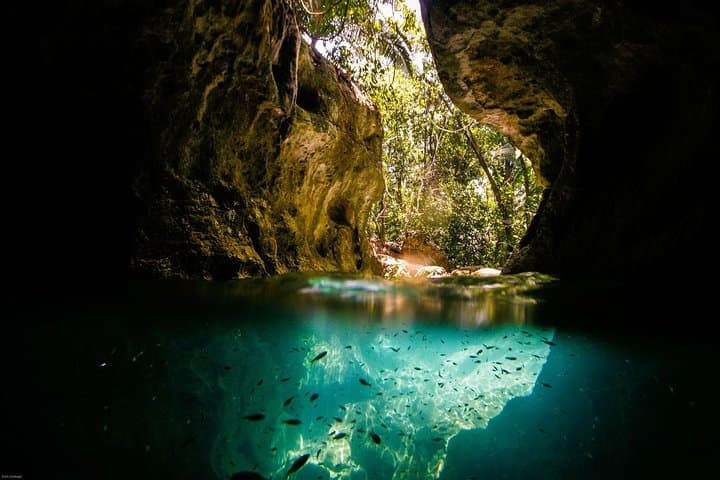
The approach is a short but honest push — three river crossings and a half-hour trail that brings you to an hourglass entrance, a constriction in stone that forces you to move carefully and watch each foothold. Inside, the cave stretches roughly three miles of passages where stalactites dangle like slow-motion icicles and water decides your pace: ankle to waist deep at times, sometimes a cold sweep around your hips. Light is minimal; the main chamber is not just dark but dense with the weight of history. Here sit calcified remains — the “Crystal Maiden” — whose crystallized bones mark a Maya ritual landscape where bloodletting and offerings connected people to the underworld.
Geologically, ATM is a limestone cathedral carved by rainwater percolating through centuries, dissolving corridors that now funnel streams and hold fragile speleothems. Culturally it’s among the most potent Maya caves open to visitors, and National Geographic once named it among the world’s most sacred caves. Guides who lead the route combine practical safety with storytelling — they point out pottery fragments, midden deposits, and pathways used in rites that linked surface settlements with subterranean shrines.
Practically, this is not a casual walk. Expect wet, slippery rock and sudden drops; the tour runs about nine hours from pickup in Caye Caulker to return. The operator provides helmets and headlamps; bring quick-dry clothing, a secure water shoe, and a small dry bag for an ID and phone. Hydrate before you arrive and pace food intake so the stomach doesn’t revolt in cold water. Photography is allowed but move respectfully around archaeological features; do not touch skeletal remains or disturb calcite formations.
Timing matters: the dry season lowers water levels and makes the route easier; the wet season can raise currents and obscure foot placements. Physical fitness and comfort in water are essential — you’ll be wading and occasionally swimming short stretches while negotiating rock. For many visitors, the payoff is elemental: a chamber where geology and ritual meet, a silence punctuated only by headlamp cones and the occasional drip that has been writing the cave’s story for millennia.
challenging.
9 hours.
You should be in good shape: comfortable hiking, able to wade and swim short distances, and handle uneven, slippery terrain.
The cave portion involves a 30-minute trail to the hourglass entrance and several hours inside; the total trip from pickup in Caye Caulker is about nine hours.
Yes—there are multiple crossings with water ranging from ankle to waist depth; short swims may be necessary depending on water level.
Yes, guides provide helmets and headlamps; bringing a small backup headlamp is recommended.
This tour is not recommended for young children; the operators require a good level of physical fitness and caution for minors.
Photography is allowed in many parts of the cave but guidelines vary—do not use flash or touch archaeological remains and follow your guide’s instructions.
Heavy rains raise water levels and can make sections impassable; operators may cancel trips in unsafe conditions—check weather and the trip’s cancellation policy.
ATM was used by the Maya for offerings and bloodletting; archaeologists have found pottery, tools and human remains indicating long-term ritual use.
Visitors are restricted to guided groups to limit impact; follow Leave No Trace rules and do not disturb archaeological materials.
Private Belize Adventure operates guided outdoor trips and adventures with an emphasis on safety, stewardship, and memorable experiences.
The boat eases away from Caye Caulker and the low-profile silhouette of the Belize coast grows wider, greener and more immediate. By the time you step onto the mainland at Belize City your feet already crave terra firma; the real descent begins after the 90-minute drive inland, through sugarcane flats and low jungle ridges. At the ranger outpost the guide fits you with a helmet and headlamp, and for a moment the jungle exhales: the watershed that feeds Actun Tunichil Muknal (ATM) is about to take you inside itself.
The boat eases away from Caye Caulker and the low-profile silhouette of the Belize coast grows wider, greener and more immediate. By the time you step onto the mainland at Belize City your feet already crave terra firma; the real descent begins after the 90-minute drive inland, through sugarcane flats and low jungle ridges. At the ranger outpost the guide fits you with a helmet and headlamp, and for a moment the jungle exhales: the watershed that feeds Actun Tunichil Muknal (ATM) is about to take you inside itself.
The approach is a short but honest push — three river crossings and a half-hour trail that brings you to an hourglass entrance, a constriction in stone that forces you to move carefully and watch each foothold. Inside, the cave stretches roughly three miles of passages where stalactites dangle like slow-motion icicles and water decides your pace: ankle to waist deep at times, sometimes a cold sweep around your hips. Light is minimal; the main chamber is not just dark but dense with the weight of history. Here sit calcified remains — the “Crystal Maiden” — whose crystallized bones mark a Maya ritual landscape where bloodletting and offerings connected people to the underworld.
Geologically, ATM is a limestone cathedral carved by rainwater percolating through centuries, dissolving corridors that now funnel streams and hold fragile speleothems. Culturally it’s among the most potent Maya caves open to visitors, and National Geographic once named it among the world’s most sacred caves. Guides who lead the route combine practical safety with storytelling — they point out pottery fragments, midden deposits, and pathways used in rites that linked surface settlements with subterranean shrines.
Practically, this is not a casual walk. Expect wet, slippery rock and sudden drops; the tour runs about nine hours from pickup in Caye Caulker to return. The operator provides helmets and headlamps; bring quick-dry clothing, a secure water shoe, and a small dry bag for an ID and phone. Hydrate before you arrive and pace food intake so the stomach doesn’t revolt in cold water. Photography is allowed but move respectfully around archaeological features; do not touch skeletal remains or disturb calcite formations.
Timing matters: the dry season lowers water levels and makes the route easier; the wet season can raise currents and obscure foot placements. Physical fitness and comfort in water are essential — you’ll be wading and occasionally swimming short stretches while negotiating rock. For many visitors, the payoff is elemental: a chamber where geology and ritual meet, a silence punctuated only by headlamp cones and the occasional drip that has been writing the cave’s story for millennia.