THE ADVENTURE COLLECTIVE® · Independent discovery and booking for outdoor travel

Two hours on the shallow flats of St. Joris Bay teach you how wind becomes motion. This intro lesson balances hands-on kite control, radio coaching, and safety practice in Curaçao’s reliable trade winds.
Two hours on the shallow flats of St. Joris Bay teach you how wind becomes motion. This intro lesson balances hands-on kite control, radio coaching, and safety practice in Curaçao’s reliable trade winds.
Waves flatten into a wide practice area and wind threads across shallow water as your instructor clips a radio to your life jacket — this is St. Joris Bay, Curaçao’s mainland A-spot for learning to kiteboard. The bay’s mix of waist-deep flats and deeper channels gives a controlled classroom where wind pulls you forward and the sea pushes back in measured rhythm.
Verified experiences and guided adventures in the surrounding area.
Operated by Awa Salu Kiteboarding Curacao · Willemstad, Curaçao
Waves flatten into a wide practice area and wind threads across shallow water as your instructor clips a radio to your life jacket — this is St. Joris Bay, Curaçao’s mainland A-spot for learning to kiteboard. The bay’s mix of waist-deep flats and deeper channels gives a controlled classroom where wind pulls you forward and the sea pushes back in measured rhythm.
The coastline here bears the island’s layered geology: Pleistocene limestone shelves giving way to coral and sand, carved by trade winds that have shaped local fishing culture for centuries. Willemstad’s colonial history and Afro-Caribbean traditions are a short drive away; on the beach you’ll see local kiters swapping tips, a practical culture born from daily play with wind and tide.
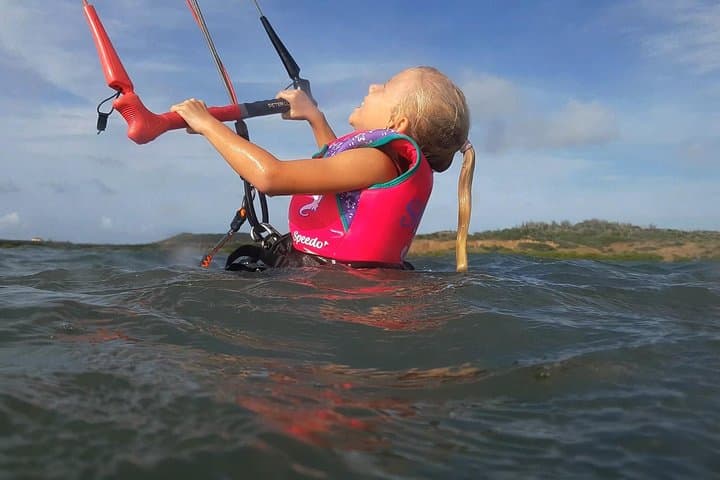
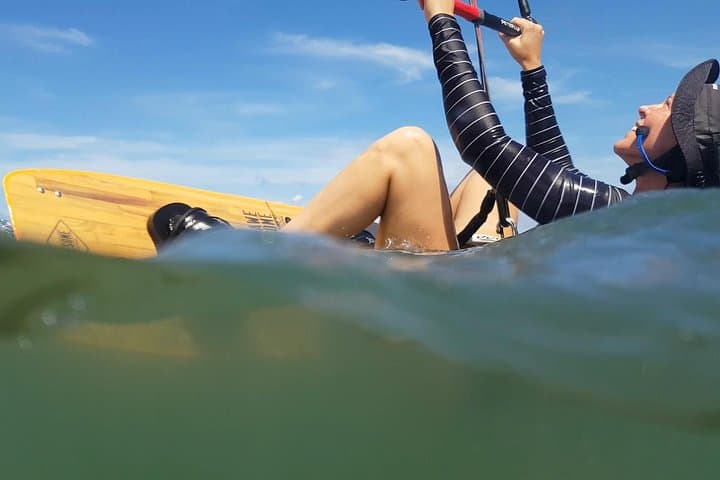
Expect focused technique work: kite setup, wind and safety briefings, radio coaching, and in-water steering drills. In two hours you’ll practice body-dragging, controlling the kite’s power and feeling how wind translates into movement. Instructors supply current-season gear, rash guards and water shoes; you supply attention and basic swimming competence.
Plan lessons for steady wind windows (mornings and late afternoons are common). Hydrate, apply reef-safe sunscreen, and wear swimwear under a rash guard. Start with an instructor-led warm-up and keep sessions conservative — confidence grows faster than speed. For photographers or spectators, the beach offers short walks to small viewpoints where the bay spreads out like a wind map.
This introduction balances thrill with structure: wind will tempt you, but technique keeps you moving. Leave ready to return for your next session and the wider freedom kiteboarding promises.
moderate.
2 hours.
Moderate fitness—comfortable swimming ability, good core stability and basic upper-body strength help.
Yes—basic swimming ability is required so you can manage shallow-water drills and return to shore if you release the kite.
Lessons are canceled for unsafe wind or storms; operators typically offer a full refund if canceled at least 24 hours before or due to weather.
Most beginners leave with solid kite control and body-dragging skills; standing up on the board sometimes takes several lessons depending on coordination and wind conditions.
Yes—current-season kites, boards, rash guards and water shoes are supplied, plus an intercom radio for instructor coaching during in-water drills.
St. Joris Bay has long been a local fishing and boating area; modern kite culture developed here as riders adapted sheltered flats and consistent trade winds.
Operators encourage reef-safe sunscreen and minimal beach impact; stick to sandy launch zones to avoid trampling coral and seagrass.
Awa Salu Kiteboarding Curacao operates guided outdoor trips and adventures with an emphasis on safety, stewardship, and memorable experiences.
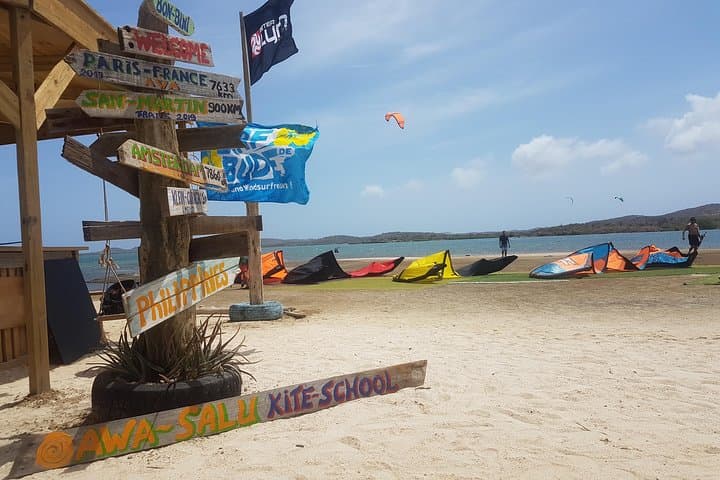
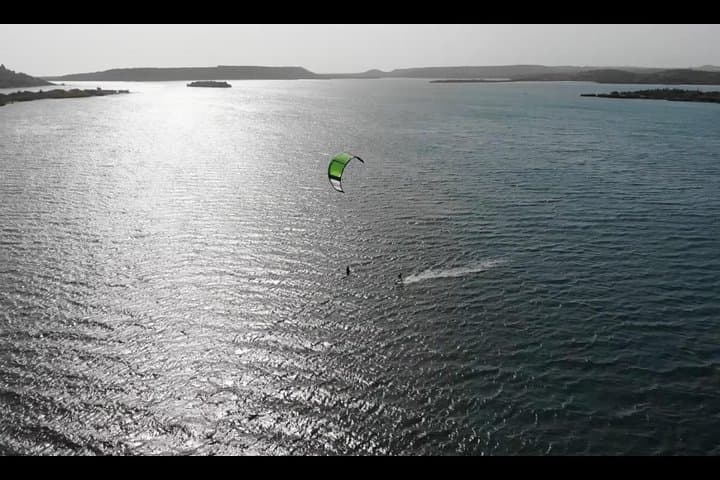
Waves flatten into a wide practice area and wind threads across shallow water as your instructor clips a radio to your life jacket — this is St. Joris Bay, Curaçao’s mainland A-spot for learning to kiteboard. The bay’s mix of waist-deep flats and deeper channels gives a controlled classroom where wind pulls you forward and the sea pushes back in measured rhythm.
Waves flatten into a wide practice area and wind threads across shallow water as your instructor clips a radio to your life jacket — this is St. Joris Bay, Curaçao’s mainland A-spot for learning to kiteboard. The bay’s mix of waist-deep flats and deeper channels gives a controlled classroom where wind pulls you forward and the sea pushes back in measured rhythm.
The coastline here bears the island’s layered geology: Pleistocene limestone shelves giving way to coral and sand, carved by trade winds that have shaped local fishing culture for centuries. Willemstad’s colonial history and Afro-Caribbean traditions are a short drive away; on the beach you’ll see local kiters swapping tips, a practical culture born from daily play with wind and tide.
Expect focused technique work: kite setup, wind and safety briefings, radio coaching, and in-water steering drills. In two hours you’ll practice body-dragging, controlling the kite’s power and feeling how wind translates into movement. Instructors supply current-season gear, rash guards and water shoes; you supply attention and basic swimming competence.
Plan lessons for steady wind windows (mornings and late afternoons are common). Hydrate, apply reef-safe sunscreen, and wear swimwear under a rash guard. Start with an instructor-led warm-up and keep sessions conservative — confidence grows faster than speed. For photographers or spectators, the beach offers short walks to small viewpoints where the bay spreads out like a wind map.
This introduction balances thrill with structure: wind will tempt you, but technique keeps you moving. Leave ready to return for your next session and the wider freedom kiteboarding promises.