THE ADVENTURE COLLECTIVE® · Independent discovery and booking for outdoor travel

Trace Roman roads through sunlit Provence: Arc de Triomphe in Orange, a picnic and walk at Pont du Gard, then Maison Carrée and the amphitheatre of Nîmes. This full-day coach tour mixes archaeology, riverside scenery and local produce.
Trace Roman roads through sunlit Provence: Arc de Triomphe in Orange, a picnic and walk at Pont du Gard, then Maison Carrée and the amphitheatre of Nîmes. This full-day coach tour mixes archaeology, riverside scenery and local produce.
You step out of Avignon’s old stone streets into Provençal light and the soft hum of a coach engine — the day unfurls eastward through lavender-scented fields toward monuments that still speak Roman.
Verified experiences and guided adventures in the surrounding area.
Operated by Ventourisme · Avignon, Provence-Alpes-Côte d'Azur
You step out of Avignon’s old stone streets into Provençal light and the soft hum of a coach engine — the day unfurls eastward through lavender-scented fields toward monuments that still speak Roman.
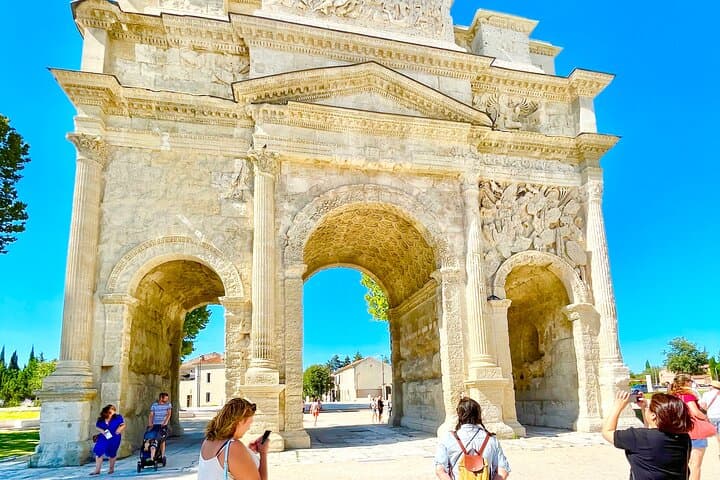
Begin at Orange: the Arc de Triomphe faces the avenue like a weathered standard, and the Ancient Theatre’s stage wall throws back centuries of applause. The stones here are limestone and limestone’s story is simple — deposited in shallow seas, quarried by Romans and polished by time.
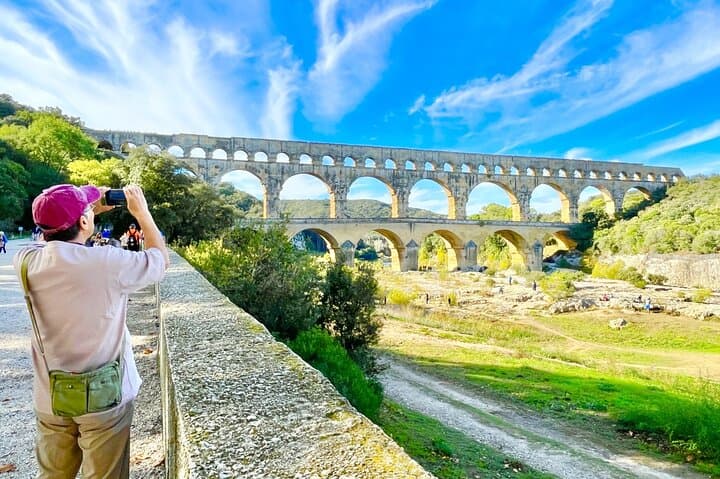
At Pont du Gard the Gardon River dares you to look down from the upper tier while the aqueduct’s three stacked arches tower above the rippling water. Built in the 1st century AD to move water across 50 km to Nîmes, the structure sits at the intersection of engineering and landscape, its geology shaped by limestone plateaus and river-carved gorges.
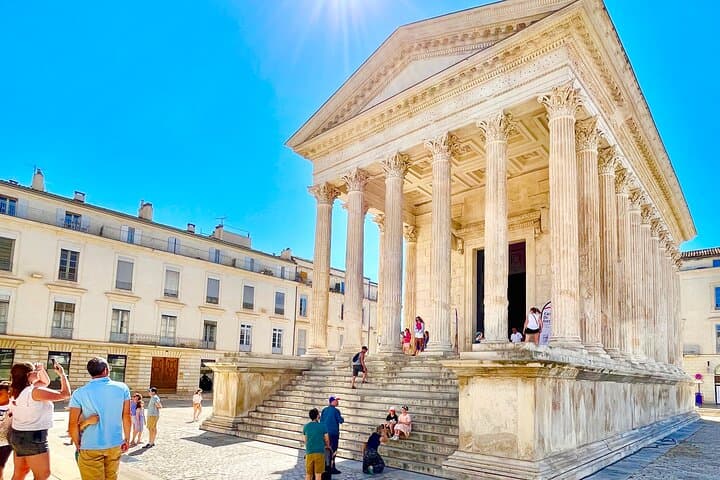
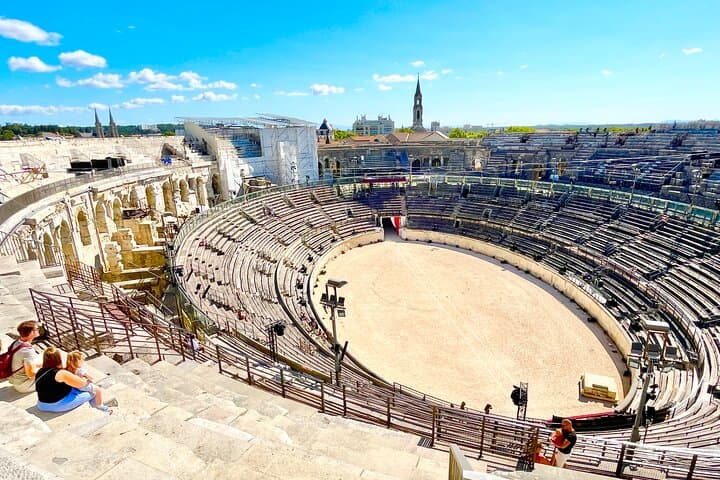
Nîmes rounds the route: Maison Carrée’s clean Corinthian lines and the amphitheatre’s elliptical arena recall a city designed for spectacle. Local culture threads through meals — a picnic of farmhouse cheese, tapenade and seasonal fruit — and small farm networks still supply markets here.
Practical guidance: expect a 7–9 hour day with several short walks and uneven ancient steps; wear grippy shoes, bring layered sun protection and at least 1.5 L water (one bottle included). Audio guides clarify dates and context, but bring curiosity: ask about local olive oils and the seasonal rhythms that shaped Roman logistics. Stick to paths at Pont du Gard and leave no trace; these ruins survived on care as much as stone.
moderate.
7–9 hours.
Requires moderate fitness: multiple short walks, some stairs and standing during audio tours.
Entrance to Pont du Gard plus audioguided admission at Orange Ancient Theatre and the Nîmes arena (seasonal) are included; you will receive individual tickets.
The meeting point is in front of Le Bristol in Avignon; the same location is used for return unless alternate pickup was arranged.
A shared picnic with local produce is provided between April and October; outside those months lunches may vary — check at booking.
Not recommended for those needing walkers or with limited mobility due to uneven surfaces, stairs and vehicle space constraints.
The Pont du Gard is part of a 50 km aqueduct built in the 1st century AD to supply Nîmes; Orange and Nîmes preserve major public monuments from Roman Gaul.
High visitor numbers require staying on marked paths and using provided facilities; favor local producers and avoid single-use plastics to reduce impact.
Ventourisme operates guided outdoor trips and adventures with an emphasis on safety, stewardship, and memorable experiences.
You step out of Avignon’s old stone streets into Provençal light and the soft hum of a coach engine — the day unfurls eastward through lavender-scented fields toward monuments that still speak Roman.
You step out of Avignon’s old stone streets into Provençal light and the soft hum of a coach engine — the day unfurls eastward through lavender-scented fields toward monuments that still speak Roman.
Begin at Orange: the Arc de Triomphe faces the avenue like a weathered standard, and the Ancient Theatre’s stage wall throws back centuries of applause. The stones here are limestone and limestone’s story is simple — deposited in shallow seas, quarried by Romans and polished by time.
At Pont du Gard the Gardon River dares you to look down from the upper tier while the aqueduct’s three stacked arches tower above the rippling water. Built in the 1st century AD to move water across 50 km to Nîmes, the structure sits at the intersection of engineering and landscape, its geology shaped by limestone plateaus and river-carved gorges.
Nîmes rounds the route: Maison Carrée’s clean Corinthian lines and the amphitheatre’s elliptical arena recall a city designed for spectacle. Local culture threads through meals — a picnic of farmhouse cheese, tapenade and seasonal fruit — and small farm networks still supply markets here.
Practical guidance: expect a 7–9 hour day with several short walks and uneven ancient steps; wear grippy shoes, bring layered sun protection and at least 1.5 L water (one bottle included). Audio guides clarify dates and context, but bring curiosity: ask about local olive oils and the seasonal rhythms that shaped Roman logistics. Stick to paths at Pont du Gard and leave no trace; these ruins survived on care as much as stone.