THE ADVENTURE COLLECTIVE® · Independent discovery and booking for outdoor travel

Spend a full day chasing three of Bali’s most photogenic falls—Tegenungan, Kanto Lampo and Tibumana—on a private tour from Ubud. Swim in clear plunge pools, walk short rainforest paths and enjoy a traditional warung lunch while a local English-speaking driver handles logistics.
Spend a full day chasing three of Bali’s most photogenic falls—Tegenungan, Kanto Lampo and Tibumana—on a private tour from Ubud. Swim in clear plunge pools, walk short rainforest paths and enjoy a traditional warung lunch while a local English-speaking driver handles logistics.
The morning air in central Bali is warm and humid, heavy with rice-field scents, when the minivan eases out of Ubud and the driver points to a ribbon of white water ahead. By the time you step onto the moist path at Tegenungan, the waterfall has already announced itself — a thunderous curtain spilling into a wide pool, droplets catching the low sun like scattered coins. The trail down is short but steep, arbor and stone negotiating each other as monkeys study your camera from the branches above.
Verified experiences and guided adventures in the surrounding area.
Operated by Bali Krisna Tour And Travel · Ubud, Bali
The morning air in central Bali is warm and humid, heavy with rice-field scents, when the minivan eases out of Ubud and the driver points to a ribbon of white water ahead. By the time you step onto the moist path at Tegenungan, the waterfall has already announced itself — a thunderous curtain spilling into a wide pool, droplets catching the low sun like scattered coins. The trail down is short but steep, arbor and stone negotiating each other as monkeys study your camera from the branches above.
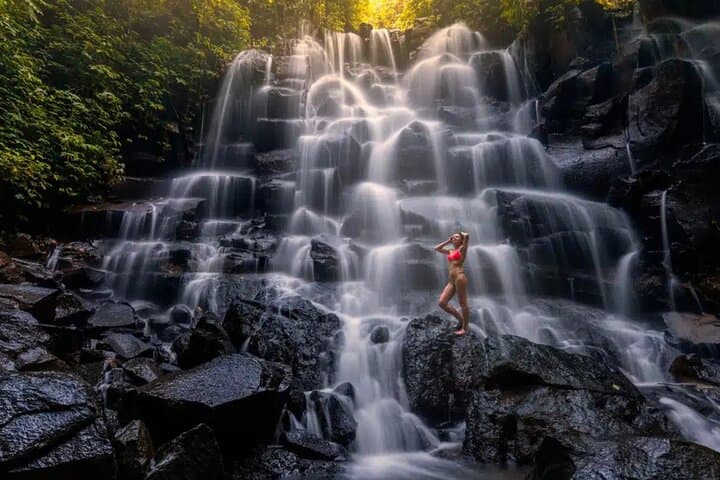
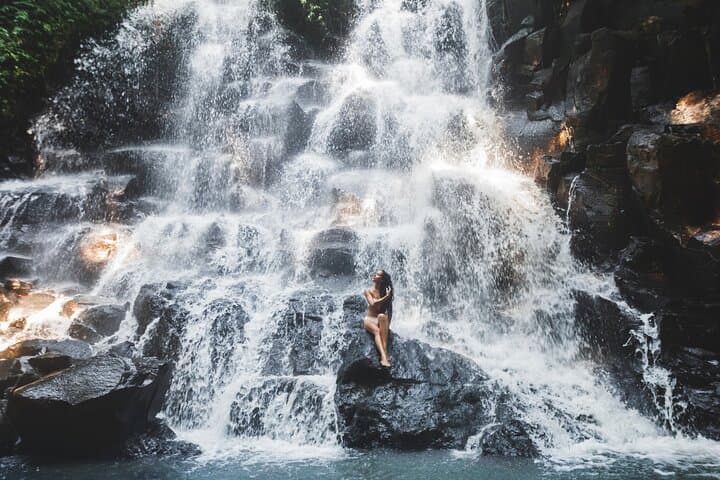
These three falls—Tegenungan, Kanto Lampo and Tibumana—are different chapters of the same geological story. Volcanic flows and uplift carved channels through Bali’s soft tuff and basalt; rain and groundwater then pursued the weakest seams, forcing water to drop where the rock gives way. Tegenungan is theatrical and wide; Kanto Lampo stages itself over jagged tiers that turn every photograph into an action shot; Tibumana hides deeper, a quieter plunge framed by a short, shaded rainforest walk.
Culturally, waterfalls in Bali are more than scenic stops. Water is sacred in Balinese Hindu practice, and many falls and springs have been part of local ritual and irrigation lore for centuries. Small warungs (family-run cafés) near these sites serve kopi and nasi campur, offering a practical and delicious way to rest between swims. Your English-speaking driver often doubles as a local guide, pointing out village temples, irrigation channels (subak) and the rice terraces that feed the island’s lifeblood.
Practicalities matter: expect an 8-hour day with two hours of driving and about six hours exploring. Each waterfall involves short hikes—typically 200–500 meters on uneven dirt and stone—with stair sections that can be slippery after rain. Pools are swimmable; currents can strengthen after storms. Wear quick-drying clothes and sturdy sandals or trail shoes with traction, bring reef-safe sunscreen and a dry bag for electronics.
Timing is everything. Early visits mean softer light and fewer tourists; late afternoon brings golden reflections but can coincide with return-traffic delays. If the wet season has recently hit Bali, falls will be fuller and louder, but trails and steps grow slippery and some access points are restricted.
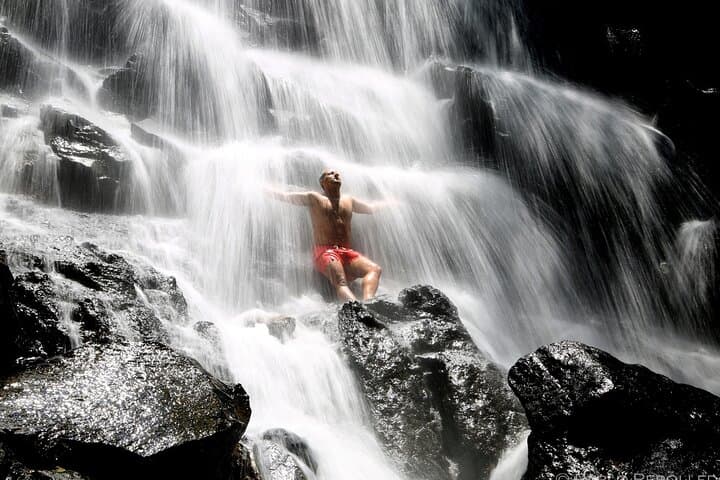
This private, full-day tour pairs convenience with accessibility: pickup across popular areas, entrance fees, lunch at a warung and mineral water are included, so you can focus on the trail, the plunge and the small, vivid moments—feet in cool river water, a sudden spray on your face, a local child waving from the bridge.
By dusk you’ll return to Ubud with damp hair, a memory of three distinct cascades and an easy checklist of what to plan next: a morning start, reef-safe sun protection, and a willingness to let the water pull you forward.
moderate.
8 hours.
Suitable for most travelers who can manage short hikes (200–500 m) and stair descents; some mobility required for uneven terrain.
The tour is about 8 hours total with roughly 1 hour at each waterfall (Tegenungan, Kanto Lampo and Tibumana) plus driving and lunch time.
Yes—pools at all three falls are typically swimmable, but conditions vary after heavy rain; follow guides’ instructions and avoid strong currents.
Yes—this private tour includes all entrance fees and a traditional Balinese lunch at a local warung, plus bottled water.
Pickup is provided from Kuta, Legian, Seminyak, Canggu, Jimbaran, Nusa Dua, the Airport, Benoa Harbour and Ubud; contact the operator for other areas.
Children are welcome, but the trail and stairs may be challenging for those with limited mobility; discuss specific needs with the operator ahead of booking.
Avoid using non-biodegradable sunscreen in pools, do not climb restricted rocks, follow local signage, and be cautious on wet steps—guides will advise on conditions.
Water plays a central role in Balinese Hindu ritual and irrigation systems (subak); many falls lie within landscapes shaped by communal water management for centuries.
Visit with reef-safe products, avoid littering and support local warungs to ensure tourism benefits nearby communities and protects freshwater sources.
Bali Krisna Tour And Travel operates guided outdoor trips and adventures with an emphasis on safety, stewardship, and memorable experiences.
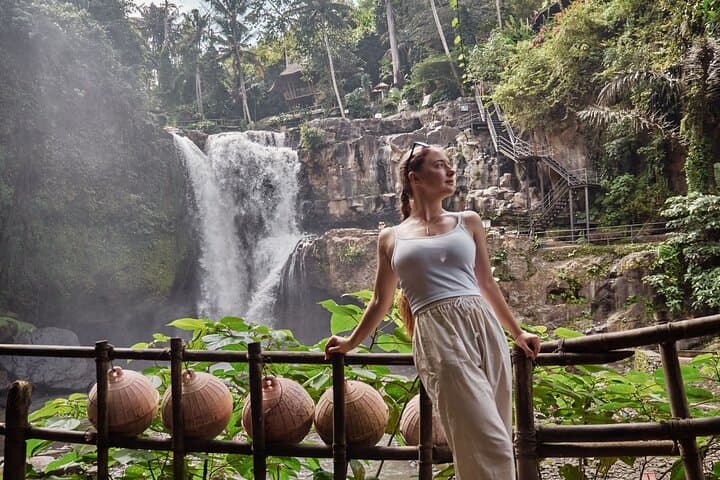
The morning air in central Bali is warm and humid, heavy with rice-field scents, when the minivan eases out of Ubud and the driver points to a ribbon of white water ahead. By the time you step onto the moist path at Tegenungan, the waterfall has already announced itself — a thunderous curtain spilling into a wide pool, droplets catching the low sun like scattered coins. The trail down is short but steep, arbor and stone negotiating each other as monkeys study your camera from the branches above.
The morning air in central Bali is warm and humid, heavy with rice-field scents, when the minivan eases out of Ubud and the driver points to a ribbon of white water ahead. By the time you step onto the moist path at Tegenungan, the waterfall has already announced itself — a thunderous curtain spilling into a wide pool, droplets catching the low sun like scattered coins. The trail down is short but steep, arbor and stone negotiating each other as monkeys study your camera from the branches above.
These three falls—Tegenungan, Kanto Lampo and Tibumana—are different chapters of the same geological story. Volcanic flows and uplift carved channels through Bali’s soft tuff and basalt; rain and groundwater then pursued the weakest seams, forcing water to drop where the rock gives way. Tegenungan is theatrical and wide; Kanto Lampo stages itself over jagged tiers that turn every photograph into an action shot; Tibumana hides deeper, a quieter plunge framed by a short, shaded rainforest walk.
Culturally, waterfalls in Bali are more than scenic stops. Water is sacred in Balinese Hindu practice, and many falls and springs have been part of local ritual and irrigation lore for centuries. Small warungs (family-run cafés) near these sites serve kopi and nasi campur, offering a practical and delicious way to rest between swims. Your English-speaking driver often doubles as a local guide, pointing out village temples, irrigation channels (subak) and the rice terraces that feed the island’s lifeblood.
Practicalities matter: expect an 8-hour day with two hours of driving and about six hours exploring. Each waterfall involves short hikes—typically 200–500 meters on uneven dirt and stone—with stair sections that can be slippery after rain. Pools are swimmable; currents can strengthen after storms. Wear quick-drying clothes and sturdy sandals or trail shoes with traction, bring reef-safe sunscreen and a dry bag for electronics.
Timing is everything. Early visits mean softer light and fewer tourists; late afternoon brings golden reflections but can coincide with return-traffic delays. If the wet season has recently hit Bali, falls will be fuller and louder, but trails and steps grow slippery and some access points are restricted.
This private, full-day tour pairs convenience with accessibility: pickup across popular areas, entrance fees, lunch at a warung and mineral water are included, so you can focus on the trail, the plunge and the small, vivid moments—feet in cool river water, a sudden spray on your face, a local child waving from the bridge.
By dusk you’ll return to Ubud with damp hair, a memory of three distinct cascades and an easy checklist of what to plan next: a morning start, reef-safe sun protection, and a willingness to let the water pull you forward.