THE ADVENTURE COLLECTIVE® · Independent discovery and booking for outdoor travel

Take a 90-minute helicopter flight from Franz Josef to see towering glaciers, three snow landings and rare views of Aoraki/Mount Cook. This ride pairs dramatic aerial perspective with practical briefing and photo stops — ideal for travelers who want maximum payoff in a single outing.
Take a 90-minute helicopter flight from Franz Josef to see towering glaciers, three snow landings and rare views of Aoraki/Mount Cook. This ride pairs dramatic aerial perspective with practical briefing and photo stops — ideal for travelers who want maximum payoff in a single outing.
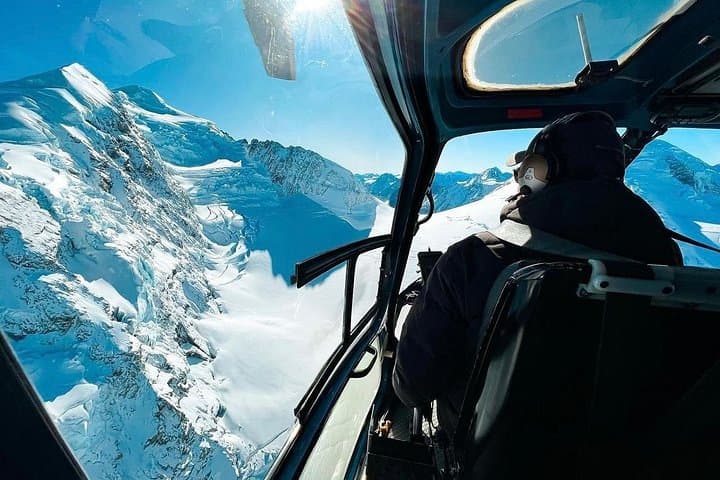
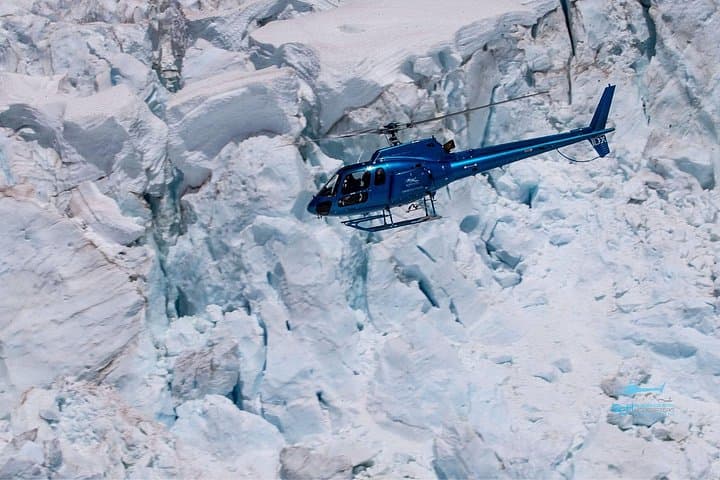
You lift off from the south edge of Franz Josef township and the valley exhales beneath you — a ribbon of river, rainforest clinging to steep walls, and the glacier ahead like an old, moving memory. The helicopter banks, and the scale switches: icefalls compress into creases, seracs throw sharp shadows, and Aoraki/Mount Cook appears, white and uncompromising, from an angle few see.
Verified experiences and guided adventures in the surrounding area.
Operated by Glacier Country Helicopters · Franz Josef, West Coast
You lift off from the south edge of Franz Josef township and the valley exhales beneath you — a ribbon of river, rainforest clinging to steep walls, and the glacier ahead like an old, moving memory. The helicopter banks, and the scale switches: icefalls compress into creases, seracs throw sharp shadows, and Aoraki/Mount Cook appears, white and uncompromising, from an angle few see.
This stretch of Westland Tai Poutini and Aoraki/Mount Cook National Parks holds geological stories: uplift from the Alpine Fault, persistent snowfields feeding outlet glaciers, and rapid coastal weather that carves and polishes rock. Māori place names and oral histories mark the land; Franz Josef’s European name came later, while the glacier’s Māori name — Kā Roimata o Hine Hukatere — recalls a local origin story about loss and ice.
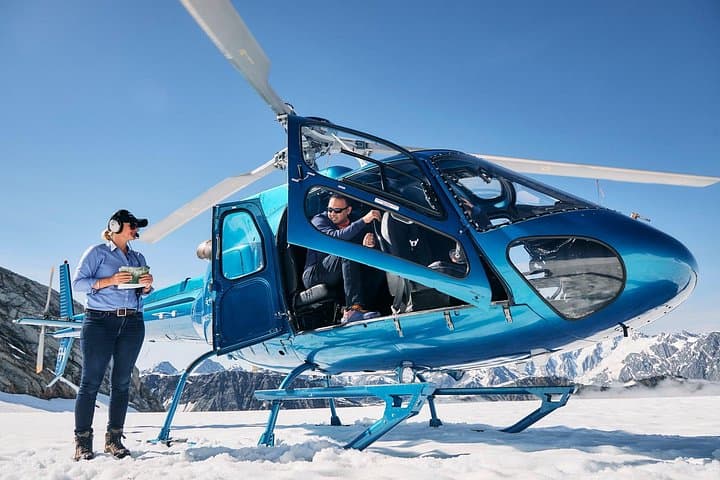
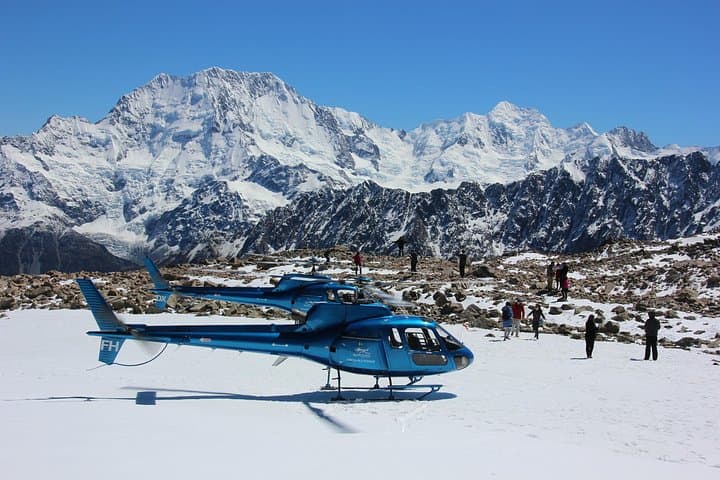
Expect three supervised snow landings where the rotor wash scours the surface and the mountains feel close enough to touch. Pilots give safety briefings and interpretive notes on glacier morphology and recent retreat trends caused by warming. Wildlife is subtle from the air — alpine parrots and coastal seals may appear at the edges.
Practical guidance: arrive 30 minutes early, bring warm layers and sturdy footwear for snow landings, and secure cameras with straps. Flights are weather-dependent and may be rescheduled; weight info is required at booking. For photographers, schedule morning light for crisper shadows; for a fuller sense of scale, book a longer window to include the South side of Aoraki/Mount Cook.
easy.
2–2.5 hours.
Suitable for most fitness levels; participants should be able to step in and out of the aircraft and stand briefly on uneven snow surfaces.
Flights depart from the helipad at the south end of Franz Josef township, next to the Blue Ice restaurant and Police Station; check-in is 30 minutes before departure.
The itinerary includes up to three snow landings, but landings depend on weather and landing site conditions; pilots make final decisions for safety.
Yes — operators collect passenger weights at booking to balance the helicopter; disclose accurate weights and any special requirements in advance.
Flights are cancelled for poor weather; the operator offers a full refund for cancellations made at least 24 hours prior or rescheduling when the flight is weather-affected.
The Franz Josef area sits within Westland Tai Poutini National Park; Maori place names and stories predate European naming, and the region’s glaciers have shaped local settlement and tourism histories.
Glaciers in this region have retreated noticeably over recent decades; operators follow strict landing protocols and low-impact practices to minimize disturbance to fragile alpine environments.
Glacier Country Helicopters operates guided outdoor trips and adventures with an emphasis on safety, stewardship, and memorable experiences.
You lift off from the south edge of Franz Josef township and the valley exhales beneath you — a ribbon of river, rainforest clinging to steep walls, and the glacier ahead like an old, moving memory. The helicopter banks, and the scale switches: icefalls compress into creases, seracs throw sharp shadows, and Aoraki/Mount Cook appears, white and uncompromising, from an angle few see.
You lift off from the south edge of Franz Josef township and the valley exhales beneath you — a ribbon of river, rainforest clinging to steep walls, and the glacier ahead like an old, moving memory. The helicopter banks, and the scale switches: icefalls compress into creases, seracs throw sharp shadows, and Aoraki/Mount Cook appears, white and uncompromising, from an angle few see.
This stretch of Westland Tai Poutini and Aoraki/Mount Cook National Parks holds geological stories: uplift from the Alpine Fault, persistent snowfields feeding outlet glaciers, and rapid coastal weather that carves and polishes rock. Māori place names and oral histories mark the land; Franz Josef’s European name came later, while the glacier’s Māori name — Kā Roimata o Hine Hukatere — recalls a local origin story about loss and ice.
Expect three supervised snow landings where the rotor wash scours the surface and the mountains feel close enough to touch. Pilots give safety briefings and interpretive notes on glacier morphology and recent retreat trends caused by warming. Wildlife is subtle from the air — alpine parrots and coastal seals may appear at the edges.
Practical guidance: arrive 30 minutes early, bring warm layers and sturdy footwear for snow landings, and secure cameras with straps. Flights are weather-dependent and may be rescheduled; weight info is required at booking. For photographers, schedule morning light for crisper shadows; for a fuller sense of scale, book a longer window to include the South side of Aoraki/Mount Cook.