THE ADVENTURE COLLECTIVE® · Independent discovery and booking for outdoor travel

Cross the Sahara on a nine-day guided trek from Marrakech to M’Hamid, following caravan routes, sleeping in desert bivouacs and walking through ergs, regs and tamarisk groves. Expect long days on sand, cultural stops at kasbahs and Tamegroute on the return.
Cross the Sahara on a nine-day guided trek from Marrakech to M’Hamid, following caravan routes, sleeping in desert bivouacs and walking through ergs, regs and tamarisk groves. Expect long days on sand, cultural stops at kasbahs and Tamegroute on the return.
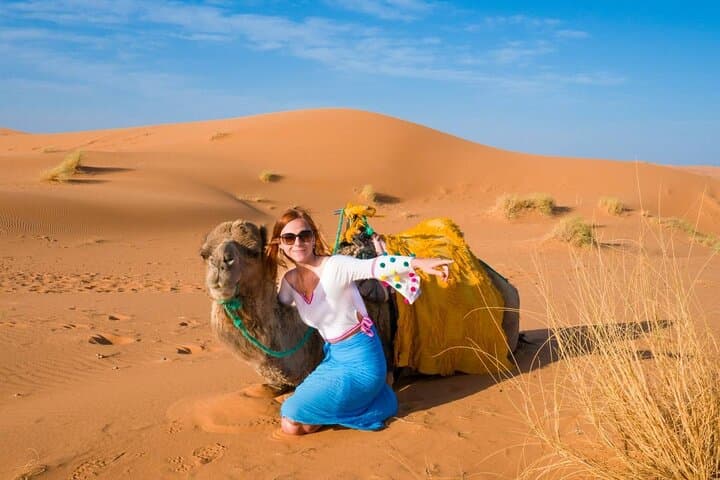
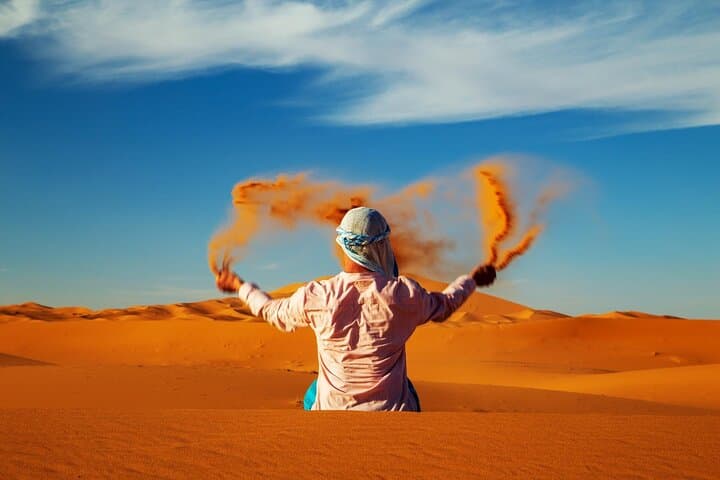
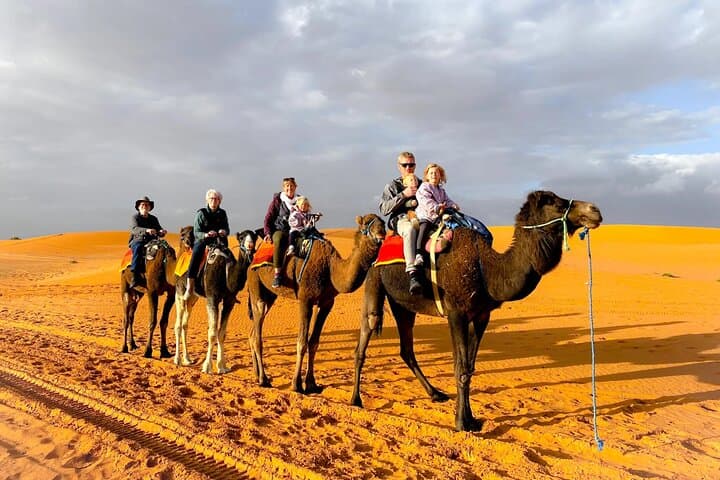
Morning light in the high plains gives way to a long ribbon of sand as your vehicle drops you off and the first dunes rise like a soft wall ahead. For nine days the Sahara reshapes itself beneath your boots: wind-sculpted ergs, hammered hamada rock, tamarisk-lined dry riverbeds and the quiet of bivouac nights under an enormous sky.
Verified experiences and guided adventures in the surrounding area.
Operated by Sunny Morocco · M'Hamid, Drâa-Tafilalet
Morning light in the high plains gives way to a long ribbon of sand as your vehicle drops you off and the first dunes rise like a soft wall ahead. For nine days the Sahara reshapes itself beneath your boots: wind-sculpted ergs, hammered hamada rock, tamarisk-lined dry riverbeds and the quiet of bivouac nights under an enormous sky.
This route follows historic caravan lines out of the Drâa Valley—past ksour (fortified villages) and kasbahs that once guarded trade in salt and dates—before crossing broad regs and shifting ergs toward M’Hamid. Geologically the landscape moves between pebble-strewn hamada, volcanic stones in the Drâa basin, and classic crescent dunes; culturally you’ll pass tombs like Sidi Naji and encounter Sahrawi and nomadic influences that still mark local music and craft. Stops on the return toward Tamegroute and Ouarzazate connect the trek to pottery workshops and ancient Quranic libraries.
Practically, expect consecutive day hikes of 4–7 hours across varied terrain, frequent sand ascents that spike heart rate, and cold nights that demand warm layers. Guides handle water logistics, meals and tents, but pack a 3–4 liter hydration system, sturdy boots with good sand clearance, sun protection, and lightweight insulating layers for evenings. Time your walking to avoid midday heat, protect electronics from fine sand, and travel light—every extra kilo is felt on dune climbs. Respect local customs in villages, leave no trace around fragile oases, and be prepared for simple, remote camping that trades comfort for clear stars and wide horizons.
challenging.
9 days.
Moderate to strong cardio fitness; accustomed to multi-day walking on soft sand and uneven regs
You should have at least moderate fitness—able to hike 4–7 hours on uneven ground and climb sand dunes; prior multi-day hiking experience is helpful.
Nights are in desert bivouacs—shared or private tents depending on booking; organizers supply mattresses and communal meals.
Guides manage group water supplies between resupplies—bring your own hydration system and expect to supplement with provided water and electrolytes.
Yes; operators typically offer luggage transfer or storage in Marrakech and only require a small daypack for the trek.
The route traces historic caravan corridors from the Drâa Valley; kasbahs and ksour along the way recall commerce in salt, dates and textiles between Sahara and cities like Ouarzazate.
The Sahara’s fragile dunes and oases recover slowly from disturbance—stick to established paths, pack out waste, and minimize groundwater use at camps.
Sunny Morocco operates guided outdoor trips and adventures with an emphasis on safety, stewardship, and memorable experiences.
Morning light in the high plains gives way to a long ribbon of sand as your vehicle drops you off and the first dunes rise like a soft wall ahead. For nine days the Sahara reshapes itself beneath your boots: wind-sculpted ergs, hammered hamada rock, tamarisk-lined dry riverbeds and the quiet of bivouac nights under an enormous sky.
Morning light in the high plains gives way to a long ribbon of sand as your vehicle drops you off and the first dunes rise like a soft wall ahead. For nine days the Sahara reshapes itself beneath your boots: wind-sculpted ergs, hammered hamada rock, tamarisk-lined dry riverbeds and the quiet of bivouac nights under an enormous sky.
This route follows historic caravan lines out of the Drâa Valley—past ksour (fortified villages) and kasbahs that once guarded trade in salt and dates—before crossing broad regs and shifting ergs toward M’Hamid. Geologically the landscape moves between pebble-strewn hamada, volcanic stones in the Drâa basin, and classic crescent dunes; culturally you’ll pass tombs like Sidi Naji and encounter Sahrawi and nomadic influences that still mark local music and craft. Stops on the return toward Tamegroute and Ouarzazate connect the trek to pottery workshops and ancient Quranic libraries.
Practically, expect consecutive day hikes of 4–7 hours across varied terrain, frequent sand ascents that spike heart rate, and cold nights that demand warm layers. Guides handle water logistics, meals and tents, but pack a 3–4 liter hydration system, sturdy boots with good sand clearance, sun protection, and lightweight insulating layers for evenings. Time your walking to avoid midday heat, protect electronics from fine sand, and travel light—every extra kilo is felt on dune climbs. Respect local customs in villages, leave no trace around fragile oases, and be prepared for simple, remote camping that trades comfort for clear stars and wide horizons.