THE ADVENTURE COLLECTIVE® · Independent discovery and booking for outdoor travel

A compact, nine-day loop from Windhoek that pairs Etosha’s big-game waterholes with the red dunes of Sossusvlei, coastal Swakopmund, and the history-steeped diamond towns of the south. Early mornings, long drives, and dramatic geology define the trip.
A compact, nine-day loop from Windhoek that pairs Etosha’s big-game waterholes with the red dunes of Sossusvlei, coastal Swakopmund, and the history-steeped diamond towns of the south. Early mornings, long drives, and dramatic geology define the trip.
Before dawn at Dune 45 the sand sharpens into a knife of shadow and light; the first climber pauses on the wind-sculpted spine while the desert exhales cool air that will become heat by mid-morning.
Verified experiences and guided adventures in the surrounding area.
Operated by World Adventure Tours · Windhoek, Khomas
Before dawn at Dune 45 the sand sharpens into a knife of shadow and light; the first climber pauses on the wind-sculpted spine while the desert exhales cool air that will become heat by mid-morning.
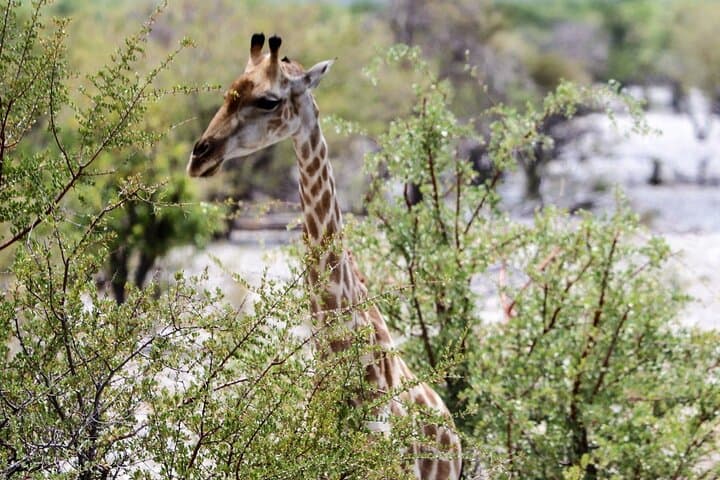
This nine-day route stitches together Namibia’s defining landscapes: Etosha’s salt pan and watering holes where elephants and lions gather, the fog-cooled Atlantic at Swakopmund, the towering ochre dunes of Sossusvlei and the deep incision of Fish River Canyon. Geologically the Namib is ancient—sand blown and reworked over millions of years—while Fish River’s terraces expose nearly two billion years of rock. Cultural threads run alongside: Himba and Herero communities maintain strong traditions, and German colonial architecture marks coastal towns like Luderitz. The ghost village of Kolmanskop tells the more recent story of diamond booms surrendered to migrating sand.
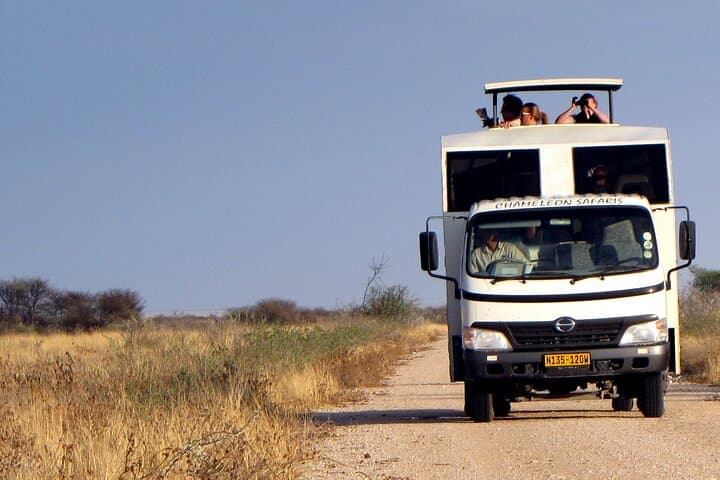
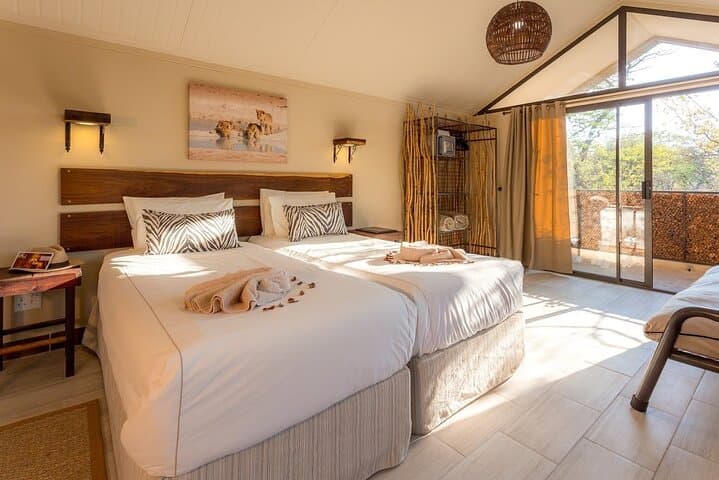
Practically, expect long translational drives across tar and gravel, early starts for wildlife viewing, and a mix of lodge rooms and campsites. Vehicles have pop-up roofs for game drives; park entry fees and some meals are included. Pack layered clothing for hot days and cold nights, ample water and battery backups, and be ready for uneven dunes and canyon steps underfoot. Respect local guides—they read the landscape and wildlife behavior.
This trip balances close wildlife encounters with stark desert solitude and coastal winds, offering both cinematic panoramas and tangible logistical considerations: timing, hydration, and simple gear make the difference between a taxing journey and an immersive safari.
moderate.
9 days.
Suitable for travelers in average fitness: able to handle short hikes on sand and uneven terrain and long vehicle transfers.
April to October (Namibia’s dry season) is ideal for wildlife viewing in Etosha and clearer skies at Sossusvlei; coastal fog in early morning is common year-round.
The tour includes long vehicle transfers but minimal technical hiking; most walking is short and on sand or paths—basic mobility and stamina are sufficient.
Park entry fees and many meals are included as listed, but some optional activities in Swakopmund and personal expenses are extra.
Campsites provide basic facilities; expect shared amenities and cold nights—bring your sleeping bag or rent one as available.
German colonial settlement and a 20th-century diamond rush shaped coastal towns like Luderitz and Kolmanskop; indigenous groups such as the Himba maintain distinct cultural practices in northern and central regions.
Namibia uses park fees and community-run conservancies to fund wildlife protection; minimize water use, stay on designated tracks, and support local guides and lodges to benefit conservation efforts.
World Adventure Tours operates guided outdoor trips and adventures with an emphasis on safety, stewardship, and memorable experiences.
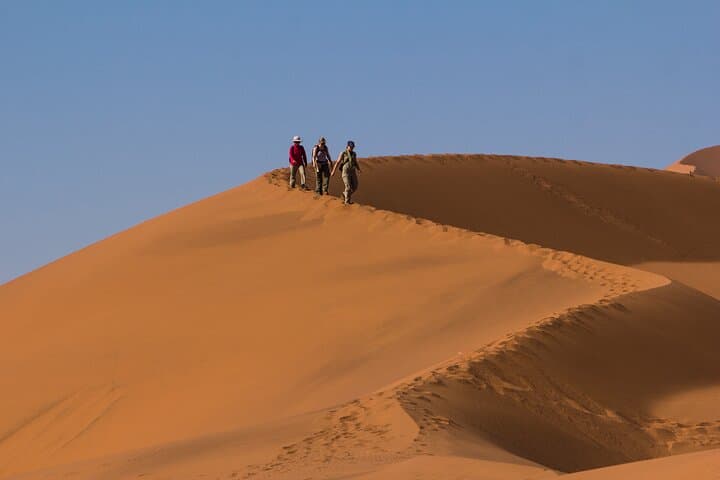
Before dawn at Dune 45 the sand sharpens into a knife of shadow and light; the first climber pauses on the wind-sculpted spine while the desert exhales cool air that will become heat by mid-morning.
Before dawn at Dune 45 the sand sharpens into a knife of shadow and light; the first climber pauses on the wind-sculpted spine while the desert exhales cool air that will become heat by mid-morning.
This nine-day route stitches together Namibia’s defining landscapes: Etosha’s salt pan and watering holes where elephants and lions gather, the fog-cooled Atlantic at Swakopmund, the towering ochre dunes of Sossusvlei and the deep incision of Fish River Canyon. Geologically the Namib is ancient—sand blown and reworked over millions of years—while Fish River’s terraces expose nearly two billion years of rock. Cultural threads run alongside: Himba and Herero communities maintain strong traditions, and German colonial architecture marks coastal towns like Luderitz. The ghost village of Kolmanskop tells the more recent story of diamond booms surrendered to migrating sand.
Practically, expect long translational drives across tar and gravel, early starts for wildlife viewing, and a mix of lodge rooms and campsites. Vehicles have pop-up roofs for game drives; park entry fees and some meals are included. Pack layered clothing for hot days and cold nights, ample water and battery backups, and be ready for uneven dunes and canyon steps underfoot. Respect local guides—they read the landscape and wildlife behavior.
This trip balances close wildlife encounters with stark desert solitude and coastal winds, offering both cinematic panoramas and tangible logistical considerations: timing, hydration, and simple gear make the difference between a taxing journey and an immersive safari.