THE ADVENTURE COLLECTIVE® · Independent discovery and booking for outdoor travel

A nine-day loop from Tangier through Chefchaouen, Fes and the High Atlas to the Sahara and Marrakech. Expect Roman ruins, mountain passes, dune camels and cultural workshops with local artisans.
A nine-day loop from Tangier through Chefchaouen, Fes and the High Atlas to the Sahara and Marrakech. Expect Roman ruins, mountain passes, dune camels and cultural workshops with local artisans.
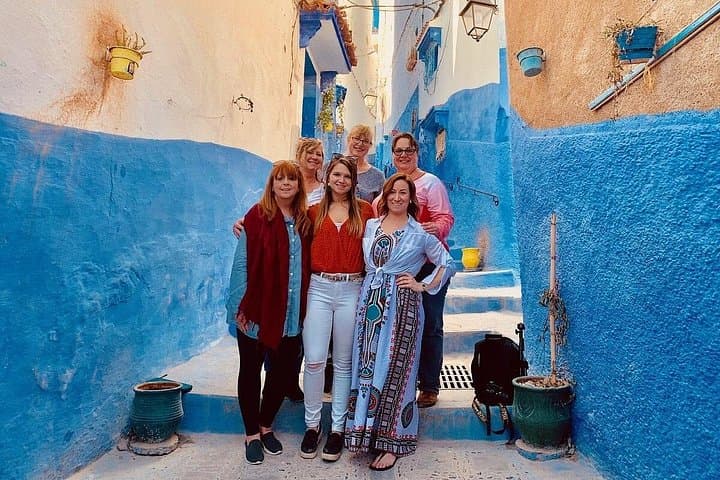
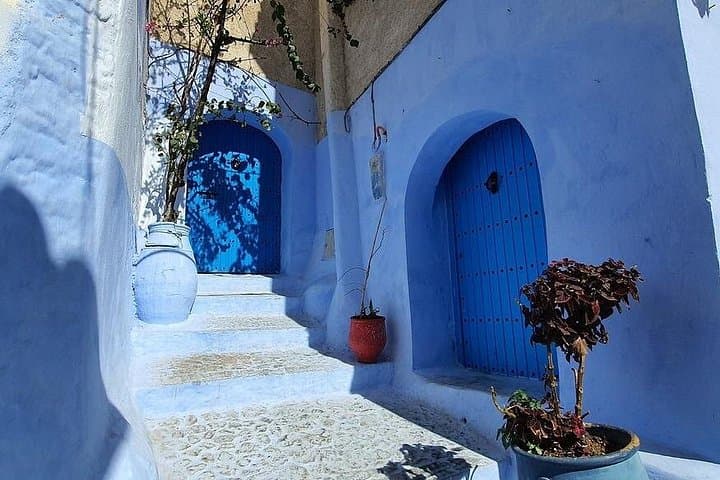
The tour begins on Tangier’s wind-swept headlands where the Atlantic and Mediterranean argue at Cap Spartel, then threads northward through blue-washed alleys, cedar forests and a rolling High Atlas that pushes travelers up and over the Tizi n'Tichka pass.
Verified experiences and guided adventures in the surrounding area.
Operated by Moroccan Trips · Tangier, Tanger-Tetouan-Al Hoceima
The tour begins on Tangier’s wind-swept headlands where the Atlantic and Mediterranean argue at Cap Spartel, then threads northward through blue-washed alleys, cedar forests and a rolling High Atlas that pushes travelers up and over the Tizi n'Tichka pass.
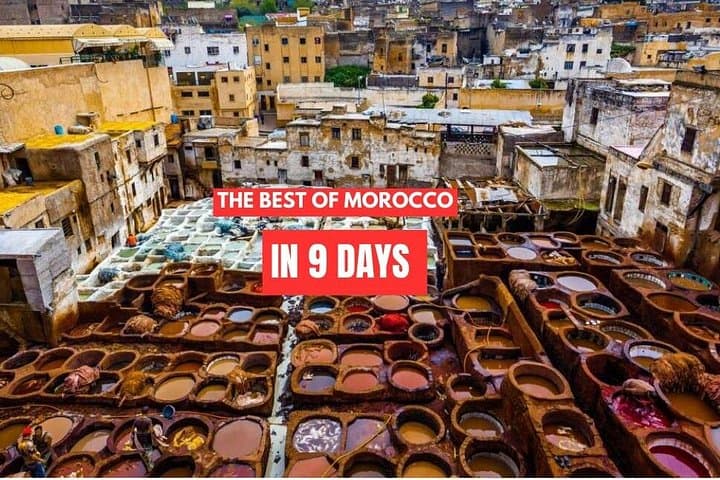
Across nine days the route moves from the Rif Mountains to the Roman stones of Volubilis, the labyrinth of Fes medina, and finally to the orange dusk of Merzouga’s Erg Chebbi dunes. Geology shows itself in layered gorges—Todra and Dades—and in fossil-rich Erfoud, where ancient seas left calcified records. Culturally the trip is a sweep through Morocco’s imperial cities, Berber villages, and living artisanal trades: tanneries, kasbahs and music villages like Khamliya.
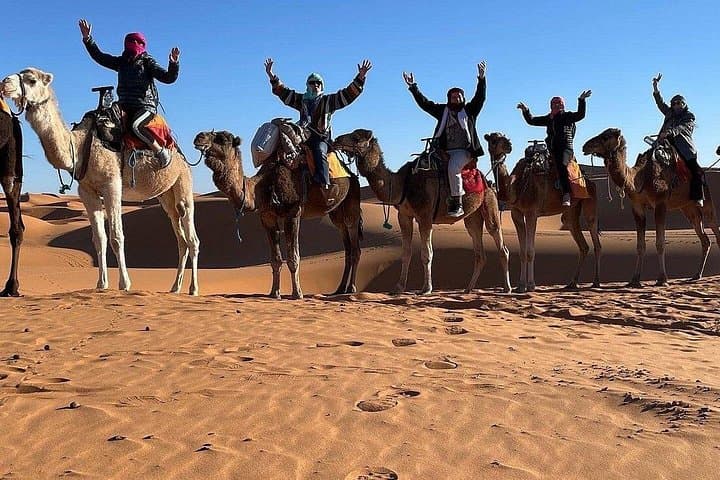
Expect long scenic drives punctuated by short hikes in medinas, a camel trek across soft, shifting sand, and one night in a desert camp under open sky. The desert’s wind is an active companion—moving ridgelines and changing the view by the hour—so timing sunrise and sunset here matters.
Practical notes: pack a small daypack for market walks and dune hikes, bring layered clothing for big temperature swings, and carry at least 2–3 liters of water during desert activities. Comfortable, broken-in walking shoes are essential for cobbled streets and rocky gorges. Travel days include multi-hour transfers; plan for motion comfort and phone power for photos and navigation. Guides handle logistics and local payments, but small cash for tips and market purchases keeps the trip smooth.
moderate.
9 days.
Suitable for general travelers in good health who can manage cobbled medina walks, short hikes, and a camel ride over sand dunes.
Breakfast is included most days and three dinners are provided; lunches are usually at local restaurants or on-the-road stops unless specified otherwise.
The camel ride is gentle and guided—most travelers find it easy, though saddles can be uncomfortable for prolonged periods; bring padded shorts if concerned.
Pickup from Tangier (airport, port, or hotel) is included; confirm your arrival details when booking for smooth pickup arrangements.
Full refund if cancelled at least 6 days before departure; 50% refund 2–6 days prior; no refund within 2 days—check the operator’s policy for specifics.
The route traces Morocco’s layered past: Roman Volubilis, medieval Fes intellectual centers, and fortified kasbahs that controlled caravan routes across the Sahara.
The Sahara’s fragile ecosystems depend on limited water and low-impact tourism—respect guided paths, avoid littering, and support local guides and cooperatives.
Moroccan Trips operates guided outdoor trips and adventures with an emphasis on safety, stewardship, and memorable experiences.
The tour begins on Tangier’s wind-swept headlands where the Atlantic and Mediterranean argue at Cap Spartel, then threads northward through blue-washed alleys, cedar forests and a rolling High Atlas that pushes travelers up and over the Tizi n'Tichka pass.
The tour begins on Tangier’s wind-swept headlands where the Atlantic and Mediterranean argue at Cap Spartel, then threads northward through blue-washed alleys, cedar forests and a rolling High Atlas that pushes travelers up and over the Tizi n'Tichka pass.
Across nine days the route moves from the Rif Mountains to the Roman stones of Volubilis, the labyrinth of Fes medina, and finally to the orange dusk of Merzouga’s Erg Chebbi dunes. Geology shows itself in layered gorges—Todra and Dades—and in fossil-rich Erfoud, where ancient seas left calcified records. Culturally the trip is a sweep through Morocco’s imperial cities, Berber villages, and living artisanal trades: tanneries, kasbahs and music villages like Khamliya.
Expect long scenic drives punctuated by short hikes in medinas, a camel trek across soft, shifting sand, and one night in a desert camp under open sky. The desert’s wind is an active companion—moving ridgelines and changing the view by the hour—so timing sunrise and sunset here matters.
Practical notes: pack a small daypack for market walks and dune hikes, bring layered clothing for big temperature swings, and carry at least 2–3 liters of water during desert activities. Comfortable, broken-in walking shoes are essential for cobbled streets and rocky gorges. Travel days include multi-hour transfers; plan for motion comfort and phone power for photos and navigation. Guides handle logistics and local payments, but small cash for tips and market purchases keeps the trip smooth.