THE ADVENTURE COLLECTIVE® · Independent discovery and booking for outdoor travel

A classic 9-day Machame ascent that walks through rainforest, heather moorland and scree to reach Uhuru Peak. Built-in acclimatization and experienced guides boost your chances for summit success.
A classic 9-day Machame ascent that walks through rainforest, heather moorland and scree to reach Uhuru Peak. Built-in acclimatization and experienced guides boost your chances for summit success.
You wake before dawn in a forest that breathes mist and green, laces your boots with mud, then opens into a high plain where the mountain’s flank unspools above you. The Machame Route begins in rainforest hum and finishes where cold wind irons the crater rim—yielding a sunrise that makes every step count.
Verified experiences and guided adventures in the surrounding area.
Operated by Peak Planet · Moshi, Kilimanjaro Region
You wake before dawn in a forest that breathes mist and green, laces your boots with mud, then opens into a high plain where the mountain’s flank unspools above you. The Machame Route begins in rainforest hum and finishes where cold wind irons the crater rim—yielding a sunrise that makes every step count.
Kilimanjaro is a free-standing stratovolcano built from successive lava flows; its slopes hold distinct ecological zones from montane forest to alpine desert and the ice-scarred summit where glaciers still cling to the rim. The region’s Chagga communities farm the lower slopes and have guided climbers for generations, blending practical hospitality with local stories about the mountain’s moods.
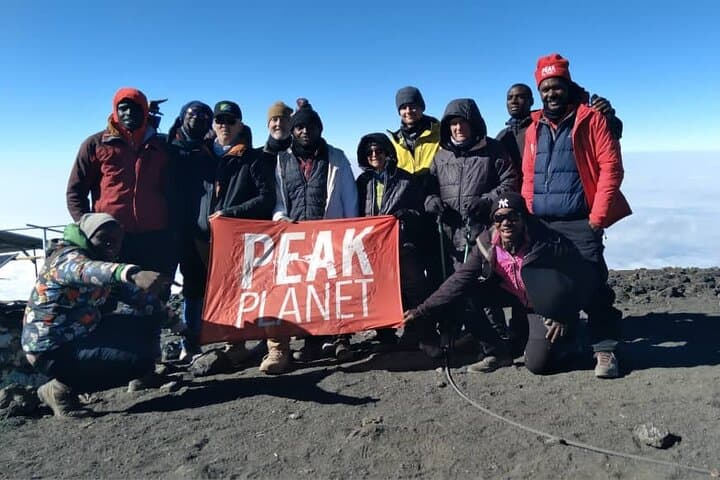
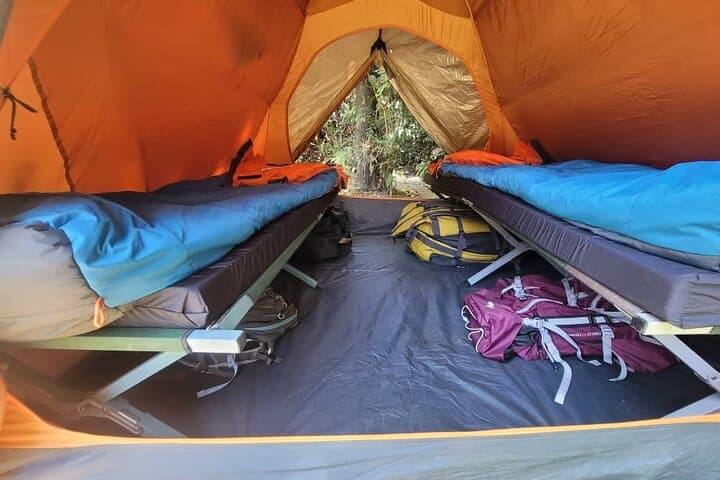
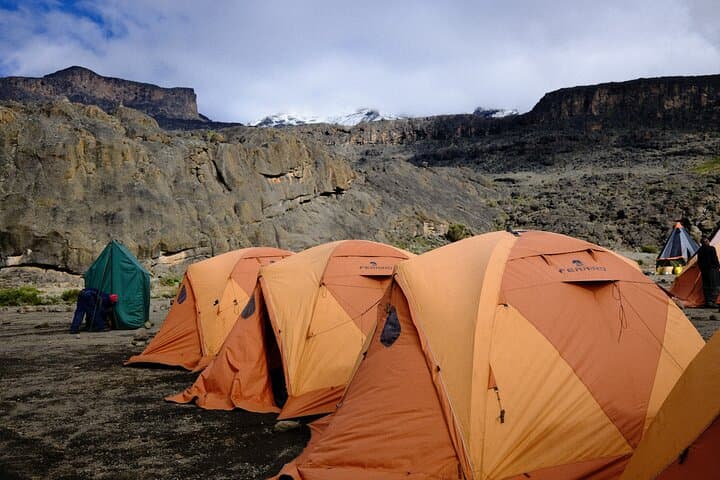
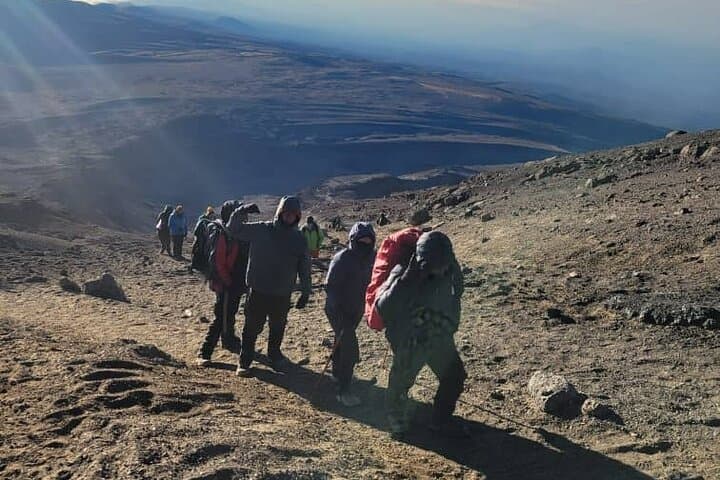
Expect sustained ascents on compacted scree, steep switchbacks on the Barranco Wall, and a late-night summit push from Barafu over loose volcanic gravel to Stella Point and Uhuru Peak (19,341 ft). Acclimatization days are built in; success hinges on pacing, hydration and listening to guides. Camps are basic Ferrino tents with cots and food provided by crew; the final descent returns you to forest birdsong and coffee farms near Mweka.
Practical notes: train with long hikes and elevation gain, break in mountaineering boots, pack layered insulation for sub-zero summit temps, and plan for early starts and limited phone signal. Carry water purification, high-calorie snacks and a reliable headlamp. With good conditioning and respect for altitude, the Machame Route is a technically moderate but physically demanding climb that rewards persistence with one of Africa’s most elemental summits.
difficult.
9 days.
High aerobic fitness with experience on multi-day hikes and training for sustained elevation gain; previous high-altitude trekking is strongly recommended.
It is physically demanding due to sustained daily elevation gain and a long summit night; good cardiovascular fitness and multi-day hiking experience are important.
Yes—professional guides and porters are standard; they handle camp setup, cooking and carry most group gear while guides manage pacing and altitude decisions.
No technical gear is required for the Machame Route in normal weather, though microspikes or crampons may be useful if ice conditions occur near the summit.
The drier windows are late June–October and late December–March for more stable weather and clearer summit visibility.
Kilimanjaro has long-standing cultural significance for local Chagga people and became a focus of European exploration in the late 19th century; modern guided climbs developed alongside local portering traditions.
Kilimanjaro National Park protects diverse habitats but faces pressure from climate change shrinking summit ice and from increased foot traffic; stick to established trails and follow park rules.
Peak Planet operates guided outdoor trips and adventures with an emphasis on safety, stewardship, and memorable experiences.
You wake before dawn in a forest that breathes mist and green, laces your boots with mud, then opens into a high plain where the mountain’s flank unspools above you. The Machame Route begins in rainforest hum and finishes where cold wind irons the crater rim—yielding a sunrise that makes every step count.
You wake before dawn in a forest that breathes mist and green, laces your boots with mud, then opens into a high plain where the mountain’s flank unspools above you. The Machame Route begins in rainforest hum and finishes where cold wind irons the crater rim—yielding a sunrise that makes every step count.
Kilimanjaro is a free-standing stratovolcano built from successive lava flows; its slopes hold distinct ecological zones from montane forest to alpine desert and the ice-scarred summit where glaciers still cling to the rim. The region’s Chagga communities farm the lower slopes and have guided climbers for generations, blending practical hospitality with local stories about the mountain’s moods.
Expect sustained ascents on compacted scree, steep switchbacks on the Barranco Wall, and a late-night summit push from Barafu over loose volcanic gravel to Stella Point and Uhuru Peak (19,341 ft). Acclimatization days are built in; success hinges on pacing, hydration and listening to guides. Camps are basic Ferrino tents with cots and food provided by crew; the final descent returns you to forest birdsong and coffee farms near Mweka.
Practical notes: train with long hikes and elevation gain, break in mountaineering boots, pack layered insulation for sub-zero summit temps, and plan for early starts and limited phone signal. Carry water purification, high-calorie snacks and a reliable headlamp. With good conditioning and respect for altitude, the Machame Route is a technically moderate but physically demanding climb that rewards persistence with one of Africa’s most elemental summits.