THE ADVENTURE COLLECTIVE® · Independent discovery and booking for outdoor travel

Trek the less-traveled Lemosho Route on this nine-day ascent of Mount Kilimanjaro, designed to maximize acclimatization and summit success. Expect rainforest, moorland, scree slopes and a challenging midnight summit push to Uhuru Peak.
Trek the less-traveled Lemosho Route on this nine-day ascent of Mount Kilimanjaro, designed to maximize acclimatization and summit success. Expect rainforest, moorland, scree slopes and a challenging midnight summit push to Uhuru Peak.
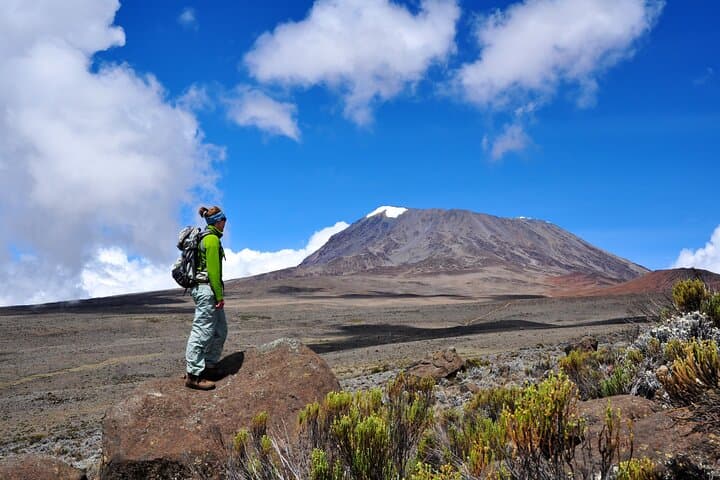
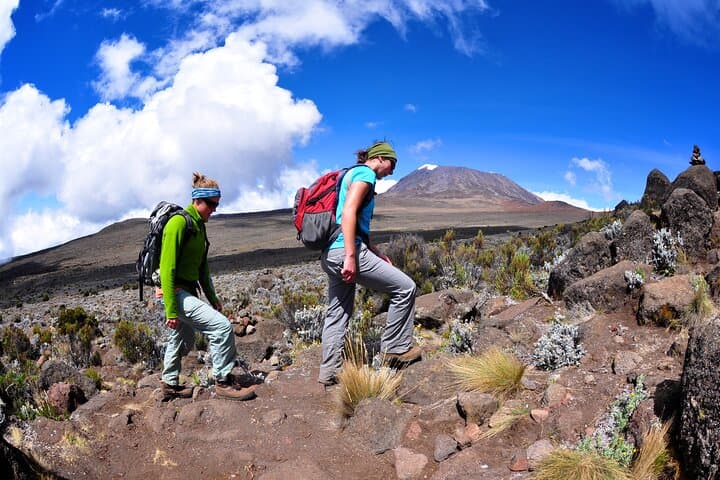
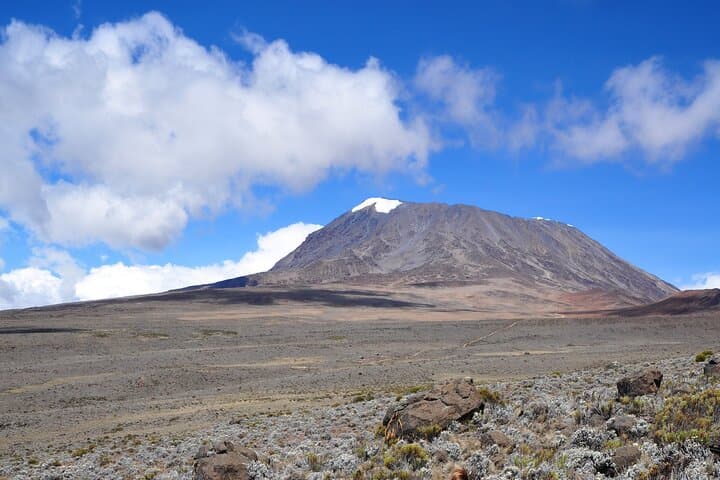
Dawn breaks over a rim of cloud and the western slopes of Kilimanjaro glow pale as hikers shoulder packs at Lemosho Gate. The trail slips up through mossy rainforest, climbs into heather and moorland, then opens onto lava towers and alpine desert as Kibo’s icefields loom above. On this nine-day itinerary the mountain tests patience as much as legs: long, steady ascents, technical-free scrambling on rock, and a summit night that stretches into the thin air above 5,000 meters.
Verified experiences and guided adventures in the surrounding area.
Operated by Mountain Warriors Tours and Safaris · Moshi, Kilimanjaro Region
Dawn breaks over a rim of cloud and the western slopes of Kilimanjaro glow pale as hikers shoulder packs at Lemosho Gate. The trail slips up through mossy rainforest, climbs into heather and moorland, then opens onto lava towers and alpine desert as Kibo’s icefields loom above. On this nine-day itinerary the mountain tests patience as much as legs: long, steady ascents, technical-free scrambling on rock, and a summit night that stretches into the thin air above 5,000 meters.
Geologically Kilimanjaro is a three-peaked stratovolcano—Shira, Mawenzi and Kibo—sculpted by eruptions and glacial retreat; its soils and microclimates change every few hundred meters. Culturally the Chagga people have long lived around its lower slopes and guides, porters, and cooks carry knowledge and stories that make the climb manageable and humane. The Lemosho Route takes a more remote western approach, increasing acclimatization time and success rates by spreading ascent over varied terrain.
Practical guidance: expect 6–10 hours of walking on most days with a summit push starting around midnight from Barafu Camp (4,640 m) to Uhuru Peak (5,895 m). Bring layered clothing for sub-zero summit temperatures, a sleeping bag rated to −10°C, and sturdy boots for scree and rock. Hydrate constantly, follow the slow local pace (pole-pole), and budget tipping for crew and park fees. Weather can switch rapidly—sun, wind and snow are all possible—so plan gear and timing sensibly. By day nine the descent through cloud forest to Mweka Gate is a welcome, jubilant end to a disciplined, high-altitude adventure.
challenging.
9 days.
Good aerobic fitness and experience with multi-day hikes; ability to trek 6–10 hours a day and cope with high altitude is required.
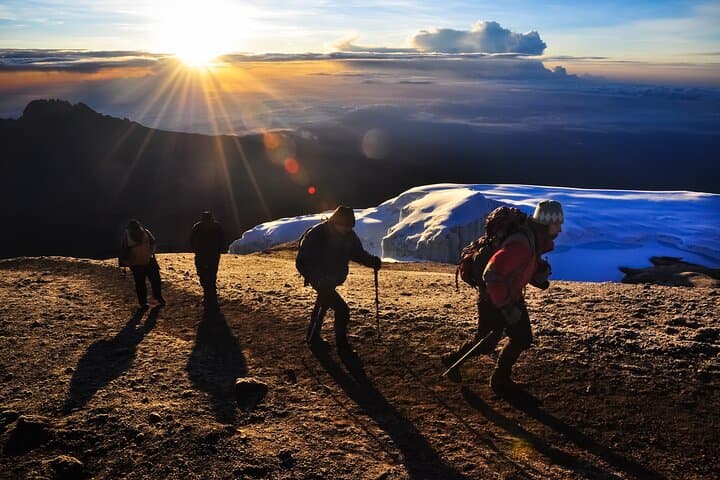
Summit night typically starts between 23:00–00:30 from Barafu; expect 7–10 hours round trip to Uhuru Peak and descent time to camp varies by group.
No technical mountaineering skills are required for the Lemosho Route; the route involves steep walking and scrambling but no rope work.
Camping is provided each night on the mountain; tents, meals and crew support are included per the itinerary.
Dry seasons—January–March and June–October—offer more stable conditions and clearer summit views, though climbs are possible year‑round with variable weather.
Kilimanjaro’s first documented ascent to the summit was in 1889 by Hans Meyer and Ludwig Purtscheller; the mountain’s volcanic peaks record a long history of eruptions and glacial change.
Kilimanjaro National Park is a UNESCO World Heritage Site; minimize impact by packing out waste, respecting porter limits, and supporting operators who follow park regulations.
Mountain Warriors Tours and Safaris operates guided outdoor trips and adventures with an emphasis on safety, stewardship, and memorable experiences.
Dawn breaks over a rim of cloud and the western slopes of Kilimanjaro glow pale as hikers shoulder packs at Lemosho Gate. The trail slips up through mossy rainforest, climbs into heather and moorland, then opens onto lava towers and alpine desert as Kibo’s icefields loom above. On this nine-day itinerary the mountain tests patience as much as legs: long, steady ascents, technical-free scrambling on rock, and a summit night that stretches into the thin air above 5,000 meters.
Dawn breaks over a rim of cloud and the western slopes of Kilimanjaro glow pale as hikers shoulder packs at Lemosho Gate. The trail slips up through mossy rainforest, climbs into heather and moorland, then opens onto lava towers and alpine desert as Kibo’s icefields loom above. On this nine-day itinerary the mountain tests patience as much as legs: long, steady ascents, technical-free scrambling on rock, and a summit night that stretches into the thin air above 5,000 meters.
Geologically Kilimanjaro is a three-peaked stratovolcano—Shira, Mawenzi and Kibo—sculpted by eruptions and glacial retreat; its soils and microclimates change every few hundred meters. Culturally the Chagga people have long lived around its lower slopes and guides, porters, and cooks carry knowledge and stories that make the climb manageable and humane. The Lemosho Route takes a more remote western approach, increasing acclimatization time and success rates by spreading ascent over varied terrain.
Practical guidance: expect 6–10 hours of walking on most days with a summit push starting around midnight from Barafu Camp (4,640 m) to Uhuru Peak (5,895 m). Bring layered clothing for sub-zero summit temperatures, a sleeping bag rated to −10°C, and sturdy boots for scree and rock. Hydrate constantly, follow the slow local pace (pole-pole), and budget tipping for crew and park fees. Weather can switch rapidly—sun, wind and snow are all possible—so plan gear and timing sensibly. By day nine the descent through cloud forest to Mweka Gate is a welcome, jubilant end to a disciplined, high-altitude adventure.