THE ADVENTURE COLLECTIVE® · Independent discovery and booking for outdoor travel

Nine days across Ghana move from Accra's coast to Mole's savannah, Kakum's canopy, and Ashanti weaving villages. Expect early-morning wildlife treks, cultural workshops, and visits to UNESCO-listed forts and museums.
Nine days across Ghana move from Accra's coast to Mole's savannah, Kakum's canopy, and Ashanti weaving villages. Expect early-morning wildlife treks, cultural workshops, and visits to UNESCO-listed forts and museums.
You step off the morning flight into Tamale and the air rearranges itself around you — dry heat, a horizon of pale grass, and the distant silhouette of a park that seems to breathe. Over nine days the landscape does the talking: Accra's coastal trade winds, the deep-canopied hush of Kakum, and the open, bone-dry savannah of Mole where elephants shape the waterholes with their trunks.
Verified experiences and guided adventures in the surrounding area.
Operated by Ashanti African Tours · Accra, Greater Accra Region
You step off the morning flight into Tamale and the air rearranges itself around you — dry heat, a horizon of pale grass, and the distant silhouette of a park that seems to breathe. Over nine days the landscape does the talking: Accra's coastal trade winds, the deep-canopied hush of Kakum, and the open, bone-dry savannah of Mole where elephants shape the waterholes with their trunks.
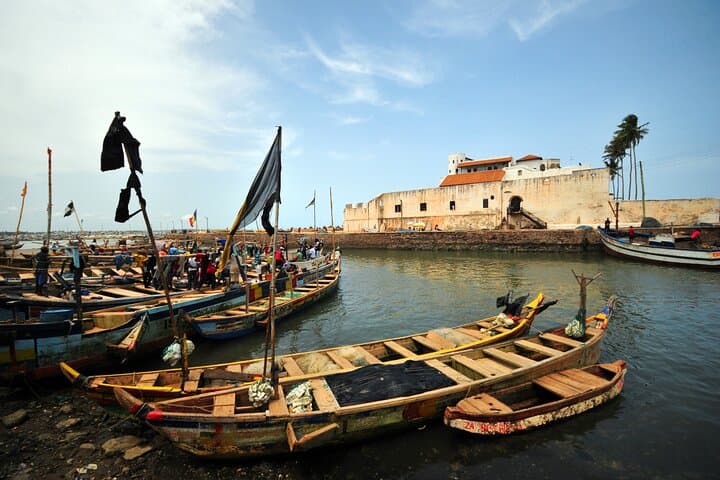
Ghana's story threads through every stop. The Gold Coast's colonial forts at Elmina and Cape Coast speak to the transatlantic era; Ashanti towns keep weaving and brass-casting traditions alive; Larabanga's ancient mosque recalls centuries of Saharan trade. Geologically, the country moves from coastal sedimentary plains to the Precambrian rocks inland that give rise to escarpments and the sandy soils of the northern savannah.
Expect guided game walks with armed rangers in Mole, dugout canoe river safaris, canopy bridges in Kakum 40m above the forest floor, and hands-on cultural workshops in Kente and adinkra villages. Wildlife takes center stage at dawn and dusk — elephants, kob, baboons, and a chorus of birds; rivers dare you to slow down and listen for crocodiles at the edge.
Practical edge: packing light breathable layers, sturdy shoes, and a mid-sized daypack makes transitions between flights, drives, and village walks easier. Plan for early starts (best wildlife viewing), bring malaria precautions and travel documents, and carry local currency for market purchases. Guides and included transfers handle logistics, but bring patience — Ghanaese time keeps its own rhythm. This tour balances wildlife, history, and living culture into a purposeful, active introduction to Ghana.
moderate.
9 days (multiple short walks and transfers each day).
Suitable for travelers in average fitness—capable of several short walks (1–4 hours) on uneven terrain and boarding small boats or light aircraft.
The tour mixes vehicle transfers with short guided walks and optional canoe trips; most activities are low to moderate intensity and suitable for travelers who can walk up to a few hours on uneven ground.
Yes—accommodation, most meals as listed, and transfers are included; specific hotels vary by itinerary and are typically mid-range with local character.
Elephants are commonly seen at Mole, especially near waterholes; sightings of lions or leopards are rarer but possible—early morning and evening drives improve chances.
A valid passport is required; check visa requirements for your nationality. Malaria prophylaxis and routine vaccinations are recommended—consult a travel clinic before departure.
Ghana’s coastland was central to transatlantic trade; inland, the Ashanti Empire shaped regional politics and crafts like kente weaving and adinkra symbolism.
Mole and Kakum are key protected areas supported by park fees and community programs; respect trails, avoid single-use plastics, and follow guide instructions to reduce disturbance.
Ashanti African Tours operates guided outdoor trips and adventures with an emphasis on safety, stewardship, and memorable experiences.
You step off the morning flight into Tamale and the air rearranges itself around you — dry heat, a horizon of pale grass, and the distant silhouette of a park that seems to breathe. Over nine days the landscape does the talking: Accra's coastal trade winds, the deep-canopied hush of Kakum, and the open, bone-dry savannah of Mole where elephants shape the waterholes with their trunks.
You step off the morning flight into Tamale and the air rearranges itself around you — dry heat, a horizon of pale grass, and the distant silhouette of a park that seems to breathe. Over nine days the landscape does the talking: Accra's coastal trade winds, the deep-canopied hush of Kakum, and the open, bone-dry savannah of Mole where elephants shape the waterholes with their trunks.
Ghana's story threads through every stop. The Gold Coast's colonial forts at Elmina and Cape Coast speak to the transatlantic era; Ashanti towns keep weaving and brass-casting traditions alive; Larabanga's ancient mosque recalls centuries of Saharan trade. Geologically, the country moves from coastal sedimentary plains to the Precambrian rocks inland that give rise to escarpments and the sandy soils of the northern savannah.
Expect guided game walks with armed rangers in Mole, dugout canoe river safaris, canopy bridges in Kakum 40m above the forest floor, and hands-on cultural workshops in Kente and adinkra villages. Wildlife takes center stage at dawn and dusk — elephants, kob, baboons, and a chorus of birds; rivers dare you to slow down and listen for crocodiles at the edge.
Practical edge: packing light breathable layers, sturdy shoes, and a mid-sized daypack makes transitions between flights, drives, and village walks easier. Plan for early starts (best wildlife viewing), bring malaria precautions and travel documents, and carry local currency for market purchases. Guides and included transfers handle logistics, but bring patience — Ghanaese time keeps its own rhythm. This tour balances wildlife, history, and living culture into a purposeful, active introduction to Ghana.