THE ADVENTURE COLLECTIVE® · Independent discovery and booking for outdoor travel

A concentrated, nine-day journey from Lukla to Everest Base Camp, finishing with a helicopter return to Lukla and Kathmandu. Ideal for travelers short on time who still want the full Khumbu experience with guided acclimatization and safety support.
A concentrated, nine-day journey from Lukla to Everest Base Camp, finishing with a helicopter return to Lukla and Kathmandu. Ideal for travelers short on time who still want the full Khumbu experience with guided acclimatization and safety support.
You step out before dawn into a thin, cold air that tastes like metal and prayer flags. The valley yawns open: layered ridgelines, the dull blue of distant glaciers, and the serrated white of Everest catching first light. On the trail you pass mani walls, stone houses, and yak caravans—each day a steady climb through villages that live at the edge of the sky.
Verified experiences and guided adventures in the surrounding area.
Operated by Adventure Master Trek · Gorak Shep, Province No. 1
You step out before dawn into a thin, cold air that tastes like metal and prayer flags. The valley yawns open: layered ridgelines, the dull blue of distant glaciers, and the serrated white of Everest catching first light. On the trail you pass mani walls, stone houses, and yak caravans—each day a steady climb through villages that live at the edge of the sky.
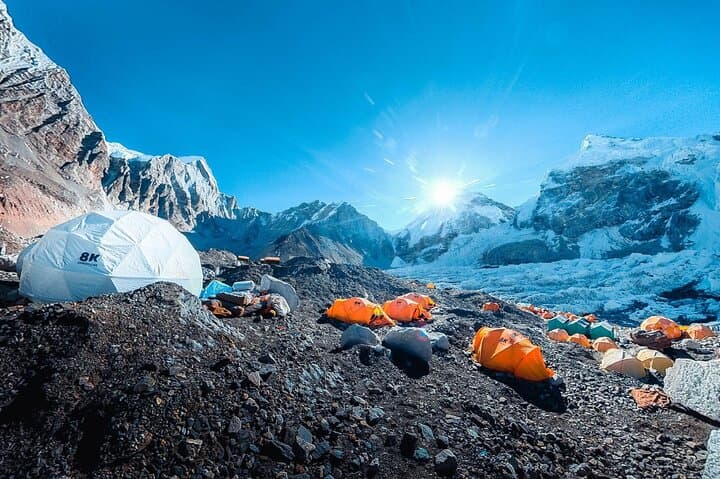
This nine-day itinerary follows the classic Khumbu route from Lukla to Everest Base Camp (EBC), then finishes with a helicopter return to Lukla and onward to Kathmandu. Geologically the route threads moraine and glacial outwash across a young Himalayan range formed by the Indian and Eurasian plates; culturally it travels through Sherpa communities where Buddhism and mountaineering history—Tenzing Norgay, Hillary expeditions—shape daily life.
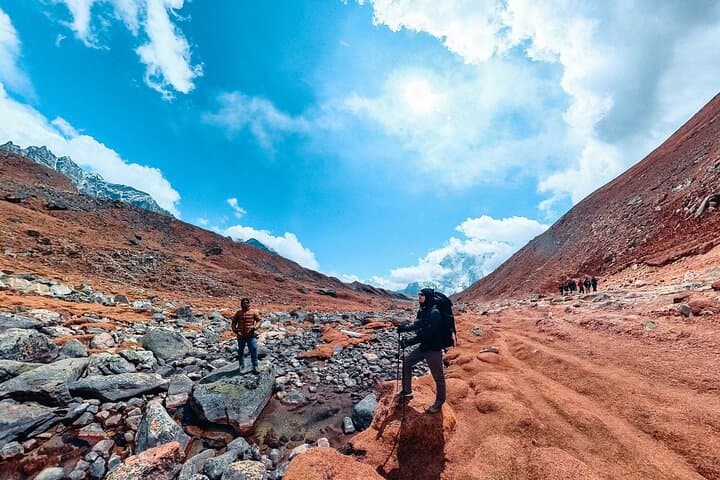
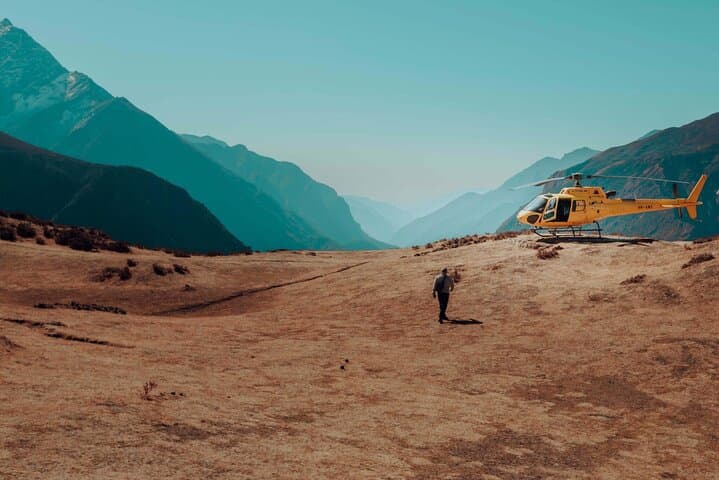
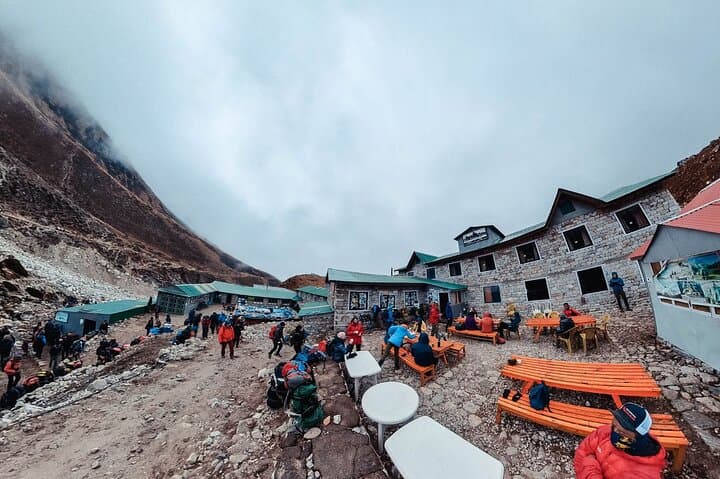
Expect well-trodden trails that become steeper past Dingboche and rocky, glacial moraine above Lobuche. Nights are in teahouses or simple lodges; oxygen saturation is monitored regularly and acclimatization days are built into the schedule. The helicopter leg offers dramatic aerial perspective of the Khumbu Icefall and the valleys you just climbed.
Practical guidance: pace your elevation gain, hydrate and eat frequently, and bring layered insulation and a quality sleeping bag for sub-zero nights. Plan for weather delays on Lukla flights and carry copies of permits and passport pages. Respect local conservation norms—pack out plastics when possible and support village lodges. This trip compresses classic high-altitude trekking into a short window while keeping safety and acclimatization central.
moderate.
9 days.
Suitable for hikers with regular aerobic conditioning and prior multi-day trekking experience; must tolerate long days at altitude.
Moderate fitness is required: regular cardio training and multi-hour hikes beforehand will make the consecutive days of uphill walking and thin air far easier.
Helicopter flights depend on weather and load limits; operators often plan contingencies and will prioritize safety—expect possible delays or schedule changes.
Yes; TIMS and Sagarmatha (Everest) National Park permits are required and are typically handled by the operator as part of your package.
Ascend slowly, use acclimatization days, monitor oxygen saturation, stay hydrated, and descend immediately if symptoms worsen; guides carry first-aid gear and oximeters.
The Khumbu has been inhabited by Sherpa communities for centuries and gained global recognition after 20th-century mountaineering expeditions; Lukla airstrip and Namche Bazaar evolved as logistical hubs.
Tourism pressure has increased waste and water use; support local lodges, use refillable bottles, and follow "pack-in, pack-out" principles to reduce impact.
Adventure Master Trek operates guided outdoor trips and adventures with an emphasis on safety, stewardship, and memorable experiences.
You step out before dawn into a thin, cold air that tastes like metal and prayer flags. The valley yawns open: layered ridgelines, the dull blue of distant glaciers, and the serrated white of Everest catching first light. On the trail you pass mani walls, stone houses, and yak caravans—each day a steady climb through villages that live at the edge of the sky.
You step out before dawn into a thin, cold air that tastes like metal and prayer flags. The valley yawns open: layered ridgelines, the dull blue of distant glaciers, and the serrated white of Everest catching first light. On the trail you pass mani walls, stone houses, and yak caravans—each day a steady climb through villages that live at the edge of the sky.
This nine-day itinerary follows the classic Khumbu route from Lukla to Everest Base Camp (EBC), then finishes with a helicopter return to Lukla and onward to Kathmandu. Geologically the route threads moraine and glacial outwash across a young Himalayan range formed by the Indian and Eurasian plates; culturally it travels through Sherpa communities where Buddhism and mountaineering history—Tenzing Norgay, Hillary expeditions—shape daily life.
Expect well-trodden trails that become steeper past Dingboche and rocky, glacial moraine above Lobuche. Nights are in teahouses or simple lodges; oxygen saturation is monitored regularly and acclimatization days are built into the schedule. The helicopter leg offers dramatic aerial perspective of the Khumbu Icefall and the valleys you just climbed.
Practical guidance: pace your elevation gain, hydrate and eat frequently, and bring layered insulation and a quality sleeping bag for sub-zero nights. Plan for weather delays on Lukla flights and carry copies of permits and passport pages. Respect local conservation norms—pack out plastics when possible and support village lodges. This trip compresses classic high-altitude trekking into a short window while keeping safety and acclimatization central.