THE ADVENTURE COLLECTIVE® · Independent discovery and booking for outdoor travel

A compact, high-altitude journey from Lukla to Everest Base Camp that blends Sherpa culture, glacial landscapes and demanding climbs. Expect steep ascents, teahouse nights, and dramatic mountain views—pack for altitude and plan your acclimatization carefully.
A compact, high-altitude journey from Lukla to Everest Base Camp that blends Sherpa culture, glacial landscapes and demanding climbs. Expect steep ascents, teahouse nights, and dramatic mountain views—pack for altitude and plan your acclimatization carefully.
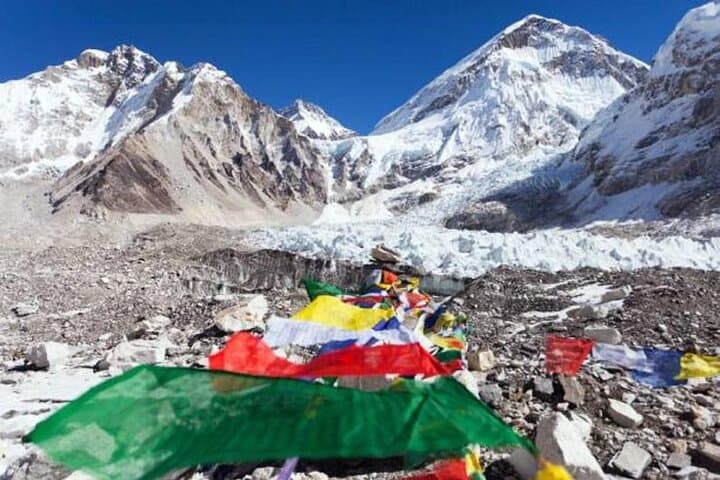
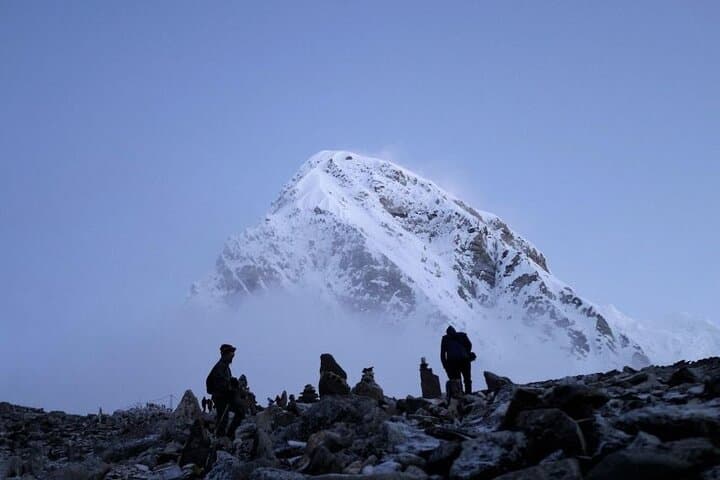
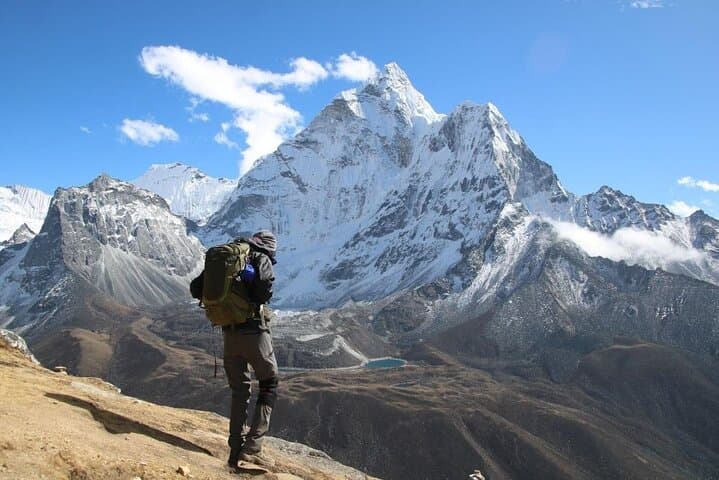
Touchdown at Lukla is immediate proof that the Himalaya demands attention: the short runway, prayer flags fluttering against an open sky, and the first serrated teeth of the Mahalangur range rising like a promise. From here the trail threads river valleys, suspension bridges, rhododendron forests and stone-built Sherpa villages as it climbs from roughly 2,800 m to Everest Base Camp at 5,364 m.
Verified experiences and guided adventures in the surrounding area.
Operated by AM Travels and Tours · Lukla, Province No. 1
Touchdown at Lukla is immediate proof that the Himalaya demands attention: the short runway, prayer flags fluttering against an open sky, and the first serrated teeth of the Mahalangur range rising like a promise. From here the trail threads river valleys, suspension bridges, rhododendron forests and stone-built Sherpa villages as it climbs from roughly 2,800 m to Everest Base Camp at 5,364 m.
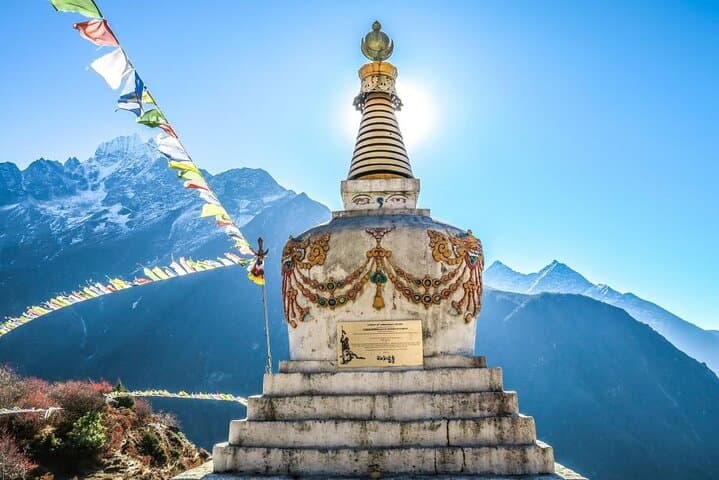
This route follows aged trade paths and pilgrimage tracks through the Khumbu, an area shaped by the slow grind of glaciers and the uplift of the Indian plate. Sherpa culture is woven into every gompa, mani wall and tea house; Tengboche Monastery and local museums provide context on Buddhist practice and the region’s mountaineering history, from early expeditions to modern guiding economies. Along the way the Khumbu Glacier, moraine fields and icefalls offer a study in high-altitude geology and constant change.
Practically, expect 9 days of walking totaling roughly 65 km round-trip with cumulative ascent around 2,500 m. Key nights: Namche Bazaar (3,440 m) for acclimatization, Dingboche (4,360 m), Lobuche (4,940 m) and Gorak Shep before the Base Camp push. Temperatures swing dramatically; weather can alter plans quickly.
Plan for gradual acclimatization, light but warm layers, and conservative pacing—altitude is the primary hazard. Bring cash for teahouses, extra battery power for cold drains, and copies of permits (TIMS, Sagarmatha National Park). A local, English-speaking guide familiar with early morning routes and emergency evacuation protocols significantly reduces risk. With careful preparation, this trek delivers panoramic alpine drama, cultural immersion and a tangible sense of achievement.
difficult.
9 days.
Strong aerobic fitness and experience with multi-day trekking at altitude; good cardiovascular conditioning and leg endurance required
Yes—both a TIMS card and a Sagarmatha National Park permit are required; your operator typically arranges these before departure.
The itinerary is physically demanding due to daily elevation gain and high altitude; good fitness and strict acclimatization are essential to complete it safely.
Spring (March–May) and fall (September–November) offer the most stable weather and visibility; monsoon brings clouds and winter brings severe cold and limited services.
Consult a travel clinic about altitude medication (acetazolamide), carry a basic first-aid kit, and know evacuation procedures; insurance with high-altitude rescue coverage is advised.
The Khumbu region is home to the Sherpa people, whose mountaineering knowledge and trade routes supported early Everest expeditions and continue to shape local life.
Increased trekking traffic has stressed local waste systems; support initiatives like the Sagarmatha Pollution Control Committee by minimizing single-use plastics and packing out non-biodegradable trash.
AM Travels and Tours operates guided outdoor trips and adventures with an emphasis on safety, stewardship, and memorable experiences.
Touchdown at Lukla is immediate proof that the Himalaya demands attention: the short runway, prayer flags fluttering against an open sky, and the first serrated teeth of the Mahalangur range rising like a promise. From here the trail threads river valleys, suspension bridges, rhododendron forests and stone-built Sherpa villages as it climbs from roughly 2,800 m to Everest Base Camp at 5,364 m.
Touchdown at Lukla is immediate proof that the Himalaya demands attention: the short runway, prayer flags fluttering against an open sky, and the first serrated teeth of the Mahalangur range rising like a promise. From here the trail threads river valleys, suspension bridges, rhododendron forests and stone-built Sherpa villages as it climbs from roughly 2,800 m to Everest Base Camp at 5,364 m.
This route follows aged trade paths and pilgrimage tracks through the Khumbu, an area shaped by the slow grind of glaciers and the uplift of the Indian plate. Sherpa culture is woven into every gompa, mani wall and tea house; Tengboche Monastery and local museums provide context on Buddhist practice and the region’s mountaineering history, from early expeditions to modern guiding economies. Along the way the Khumbu Glacier, moraine fields and icefalls offer a study in high-altitude geology and constant change.
Practically, expect 9 days of walking totaling roughly 65 km round-trip with cumulative ascent around 2,500 m. Key nights: Namche Bazaar (3,440 m) for acclimatization, Dingboche (4,360 m), Lobuche (4,940 m) and Gorak Shep before the Base Camp push. Temperatures swing dramatically; weather can alter plans quickly.
Plan for gradual acclimatization, light but warm layers, and conservative pacing—altitude is the primary hazard. Bring cash for teahouses, extra battery power for cold drains, and copies of permits (TIMS, Sagarmatha National Park). A local, English-speaking guide familiar with early morning routes and emergency evacuation protocols significantly reduces risk. With careful preparation, this trek delivers panoramic alpine drama, cultural immersion and a tangible sense of achievement.