THE ADVENTURE COLLECTIVE® · Independent discovery and booking for outdoor travel

A high-altitude circuit through Ecuador’s volcanic spine — from condor viewpoints near Antisana to the emerald crater of Quilotoa and Chimborazo’s glaciers. Practical, multi-day route planning for hikers and culture seekers.
A high-altitude circuit through Ecuador’s volcanic spine — from condor viewpoints near Antisana to the emerald crater of Quilotoa and Chimborazo’s glaciers. Practical, multi-day route planning for hikers and culture seekers.
Dawn breaks over an Andean saddle and the road climbs into a thin, cold air that tastes of volcanic dust. You stand on a ridge watching condors wheel above glacier-streaked cones while the valley below shifts from puna grass to dense cloudforest; this is the tempo of a nine-day traverse through Ecuador’s highlands.
Verified experiences and guided adventures in the surrounding area.
Operated by Ecuador Best Tours · Quito, Pichincha
Dawn breaks over an Andean saddle and the road climbs into a thin, cold air that tastes of volcanic dust. You stand on a ridge watching condors wheel above glacier-streaked cones while the valley below shifts from puna grass to dense cloudforest; this is the tempo of a nine-day traverse through Ecuador’s highlands.
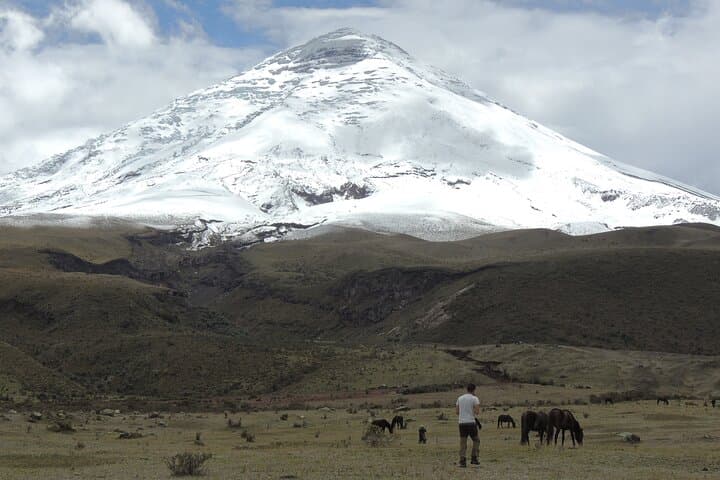
The route traces geological chapters — young andesite cones like Cotopaxi and Chimborazo, crater lakes such as Quilotoa formed in collapsed magma chambers, and terraces where Inca masonry still grips the slopes at Ingapirca. Spanish colonial churches and traditional markets at Salasaca and Tigua show how culture layered atop the highlands: Indigenous weaving, straw hat workshops, and roadside stalls selling mote and cheese.
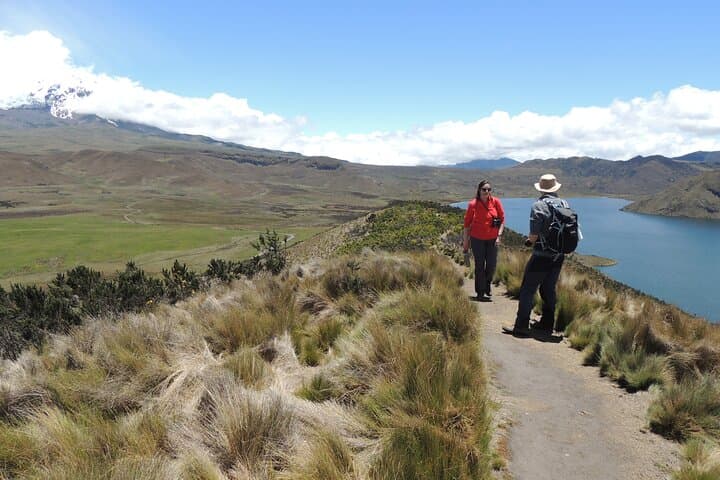
Expect steady drives on the Pan-American and shorter alpine hikes: Laguna Limpiopungo, a steep descent at Quilotoa, and high-altitude walks to refuges near Cotopaxi and Chimborazo. Weather swings fast — sun, wind, and sudden rain — and the páramo ecosystem is fragile and exposed. Wildlife sightings center on Andean condors and wild horses; birds and foxes are common near reserves.
Practical guidance: pace yourself for altitude (sleep low, ascend slowly), pack windproof layers and sturdy boots, and keep sun protection handy. Allow time in Baños for hot springs and optional rafting, and carry cash for markets. With basic fitness and attention to acclimatization, this itinerary gives a concentrated, immersive view of Ecuador’s volcano-studded spine.
moderate.
9 days.
Moderate aerobic fitness recommended — able to hike 3–6 hours at altitude and tolerate daily transfers.
Plan at least a day in Quito or a lower-altitude town before climbing above 3,000 m; ascend slowly and monitor symptoms of altitude sickness.
No — the tour visits park areas and refuges accessible by road and non-technical trails; summit climbs require technical gear and experience and are not included.
The dry season (June–September) has more stable weather for hiking, though the highlands can be visited year-round with rainproof gear.
Yes — the itinerary includes breakfasts and several lunches/dinners, plus listed lodgings and private transport; check the provider for exact meal details.
The route crosses Inca-built sites like Ingapirca and colonial-era towns; Chimborazo was a focus of Alexander von Humboldt’s early geological observations.
The páramo and high-Andean wetlands are fragile — stick to trails, avoid collecting plants or stones, and support local guides and community-run lodges to minimize impact.
Ecuador Best Tours operates guided outdoor trips and adventures with an emphasis on safety, stewardship, and memorable experiences.


Dawn breaks over an Andean saddle and the road climbs into a thin, cold air that tastes of volcanic dust. You stand on a ridge watching condors wheel above glacier-streaked cones while the valley below shifts from puna grass to dense cloudforest; this is the tempo of a nine-day traverse through Ecuador’s highlands.
Dawn breaks over an Andean saddle and the road climbs into a thin, cold air that tastes of volcanic dust. You stand on a ridge watching condors wheel above glacier-streaked cones while the valley below shifts from puna grass to dense cloudforest; this is the tempo of a nine-day traverse through Ecuador’s highlands.
The route traces geological chapters — young andesite cones like Cotopaxi and Chimborazo, crater lakes such as Quilotoa formed in collapsed magma chambers, and terraces where Inca masonry still grips the slopes at Ingapirca. Spanish colonial churches and traditional markets at Salasaca and Tigua show how culture layered atop the highlands: Indigenous weaving, straw hat workshops, and roadside stalls selling mote and cheese.
Expect steady drives on the Pan-American and shorter alpine hikes: Laguna Limpiopungo, a steep descent at Quilotoa, and high-altitude walks to refuges near Cotopaxi and Chimborazo. Weather swings fast — sun, wind, and sudden rain — and the páramo ecosystem is fragile and exposed. Wildlife sightings center on Andean condors and wild horses; birds and foxes are common near reserves.
Practical guidance: pace yourself for altitude (sleep low, ascend slowly), pack windproof layers and sturdy boots, and keep sun protection handy. Allow time in Baños for hot springs and optional rafting, and carry cash for markets. With basic fitness and attention to acclimatization, this itinerary gives a concentrated, immersive view of Ecuador’s volcano-studded spine.