THE ADVENTURE COLLECTIVE® · Independent discovery and booking for outdoor travel

Move from Phnom Penh’s riverside streets to dawn at Angkor Wat on this nine-day private tour. Expect temple walks, a Kulen Mountain hike, Tonle Sap boat rides, and a close look at Cambodia’s layered history.
Move from Phnom Penh’s riverside streets to dawn at Angkor Wat on this nine-day private tour. Expect temple walks, a Kulen Mountain hike, Tonle Sap boat rides, and a close look at Cambodia’s layered history.
Sunrise paints Angkor Wat in cool gold and the jungle seems to breathe around the stones — roots threading through towers, leaves softening carved faces. This nine-day route moves from Phnom Penh’s broad rivers and colonial boulevards to the low plains and temple forests around Siem Reap, riding a slow arc through Cambodia’s living history.
Verified experiences and guided adventures in the surrounding area.
Operated by Travel to Inspire · Siem Reap, Siem Reap Province
Sunrise paints Angkor Wat in cool gold and the jungle seems to breathe around the stones — roots threading through towers, leaves softening carved faces. This nine-day route moves from Phnom Penh’s broad rivers and colonial boulevards to the low plains and temple forests around Siem Reap, riding a slow arc through Cambodia’s living history.
Phnom Penh opens with the Royal Palace’s gleaming spires and the National Museum’s Angkorian sculpture; the city also carries the heavy memory of the Killing Fields and Tuol Sleng, sites that demand quiet attention. Geologically, the journey traces laterite soils and sandstone quarries — Kulen Mountain’s ancient riverbed carvings and the 1,000 Lingas are reminders of the Khmer Empire’s engineering and spiritual landscape. Culture here is tactile: Apsara dancers, woodcarvers at Les Artisans d’Angkor, and villagers harvesting rice on raised banks.
Expect flat to gently rolling terrain for most temple walks, with the exception of Phnom Kulen where short climbs and a waterfall pool reward the effort. Tonle Sap’s floating villages shift with the water, the lake’s currents pushing boats and lives with the seasons.
Practical guide: plan early starts for sunrise and to avoid midday heat, carry a reusable water bottle and sun protection, and respect dress codes at religious sites (shoulders and knees covered). Entrance passes for Angkor are required; book at official centers. Allow a 5–6 hour private transfer between Phnom Penh and Siem Reap and factor rest after long drives. Travel lightly, keep local currency (riel and dollars) on hand, and move deliberately—these landscapes reveal themselves when you slow down and listen.
moderate.
9 days.
Suitable for travelers in average fitness who can walk on uneven surfaces for several hours and tolerate early mornings and short climbs.
Yes — Angkor Archaeological Park requires a pass purchased at the official ticket center near Siem Reap; single-day and multi-day options are available.
Expect about 5–6 hours by private minibus on the main highway; travel time varies with traffic and stops in rural areas.
Major temple grounds are largely flat but have uneven stones and stairways; some sites like Angkor Wat have ramps but many historic areas are not fully accessible.
US dollars are widely accepted alongside Cambodian riel; carry cash for markets, small restaurants, and tips — larger hotels accept cards.
The route traces the Khmer Empire’s center of gravity — Angkor was the political and hydraulic heart from the 9th to 15th centuries; Phnom Penh later became the modern capital under French colonial influence and endured the 20th-century Khmer Rouge era.
High visitor numbers stress Angkor’s stonework and the Tonle Sap ecosystem; follow trails, avoid feeding wildlife, and support local community projects to reduce impact.
Travel to Inspire operates guided outdoor trips and adventures with an emphasis on safety, stewardship, and memorable experiences.
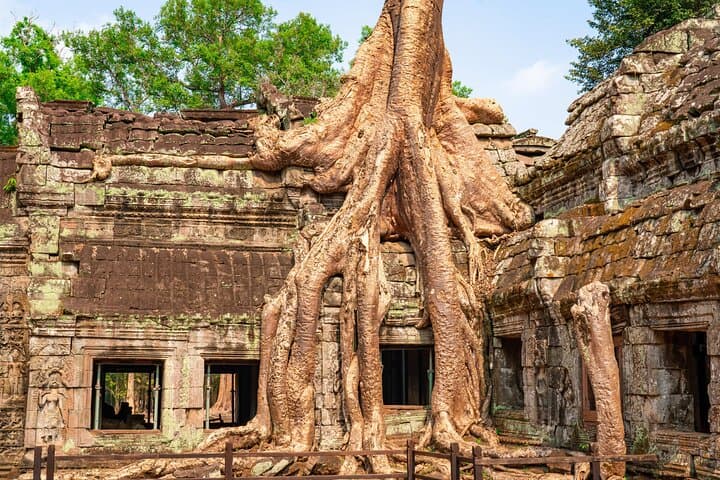
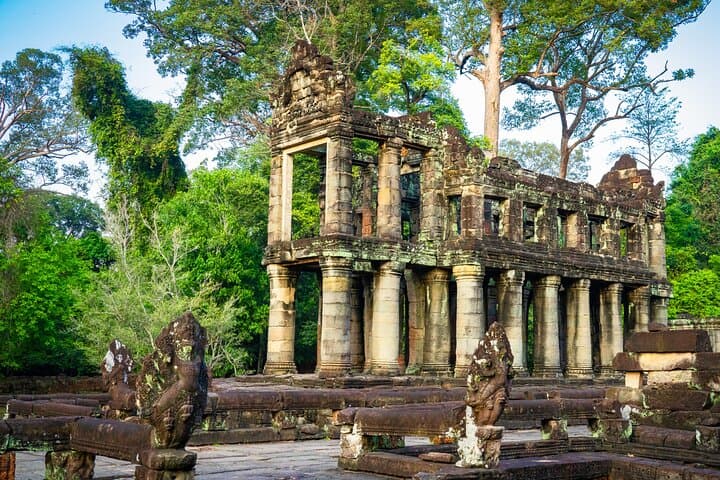
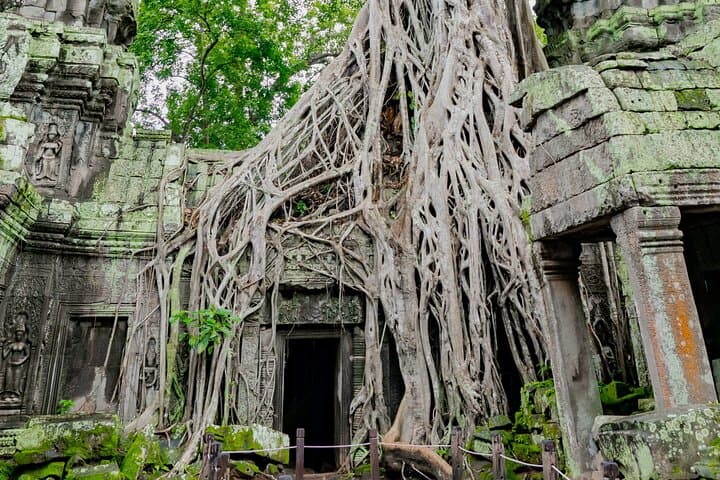
Sunrise paints Angkor Wat in cool gold and the jungle seems to breathe around the stones — roots threading through towers, leaves softening carved faces. This nine-day route moves from Phnom Penh’s broad rivers and colonial boulevards to the low plains and temple forests around Siem Reap, riding a slow arc through Cambodia’s living history.
Sunrise paints Angkor Wat in cool gold and the jungle seems to breathe around the stones — roots threading through towers, leaves softening carved faces. This nine-day route moves from Phnom Penh’s broad rivers and colonial boulevards to the low plains and temple forests around Siem Reap, riding a slow arc through Cambodia’s living history.
Phnom Penh opens with the Royal Palace’s gleaming spires and the National Museum’s Angkorian sculpture; the city also carries the heavy memory of the Killing Fields and Tuol Sleng, sites that demand quiet attention. Geologically, the journey traces laterite soils and sandstone quarries — Kulen Mountain’s ancient riverbed carvings and the 1,000 Lingas are reminders of the Khmer Empire’s engineering and spiritual landscape. Culture here is tactile: Apsara dancers, woodcarvers at Les Artisans d’Angkor, and villagers harvesting rice on raised banks.
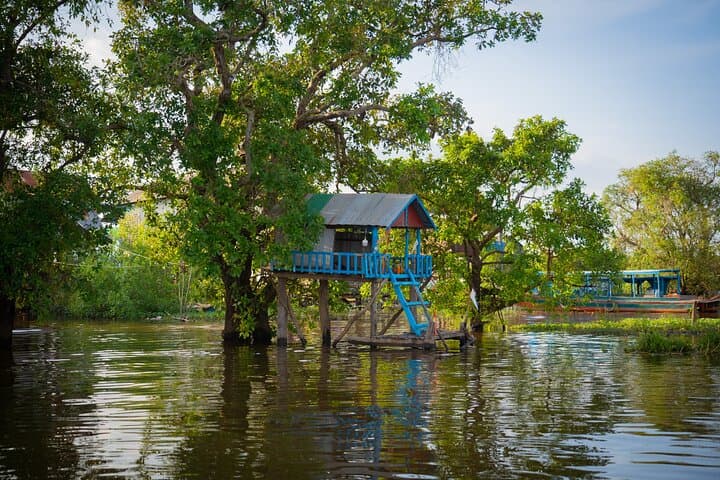
Expect flat to gently rolling terrain for most temple walks, with the exception of Phnom Kulen where short climbs and a waterfall pool reward the effort. Tonle Sap’s floating villages shift with the water, the lake’s currents pushing boats and lives with the seasons.
Practical guide: plan early starts for sunrise and to avoid midday heat, carry a reusable water bottle and sun protection, and respect dress codes at religious sites (shoulders and knees covered). Entrance passes for Angkor are required; book at official centers. Allow a 5–6 hour private transfer between Phnom Penh and Siem Reap and factor rest after long drives. Travel lightly, keep local currency (riel and dollars) on hand, and move deliberately—these landscapes reveal themselves when you slow down and listen.