THE ADVENTURE COLLECTIVE® · Independent discovery and booking for outdoor travel

A nine-day journey through Bhutan’s western valleys combining cultural immersion, classic Dzongs and the iconic Tiger’s Nest hike. Plan for high passes, short alpine hikes and a schedule balanced between sacred sites and village life.
A nine-day journey through Bhutan’s western valleys combining cultural immersion, classic Dzongs and the iconic Tiger’s Nest hike. Plan for high passes, short alpine hikes and a schedule balanced between sacred sites and village life.
You step out of the plane into a thin, dry air scented with pine and yak dung smoke, the valley opening like a folded map beneath a ring of Himalayan ridges. Prayer flags snap in a brisk wind that seems to push you uphill toward monasteries clinging to cliffs and fortresses guarding narrow river confluences.
Verified experiences and guided adventures in the surrounding area.
Operated by Bhutan Acorn Tours and Travel · Paro, Paro District
You step out of the plane into a thin, dry air scented with pine and yak dung smoke, the valley opening like a folded map beneath a ring of Himalayan ridges. Prayer flags snap in a brisk wind that seems to push you uphill toward monasteries clinging to cliffs and fortresses guarding narrow river confluences.
This nine-day circuit moves from Paro’s watchtower museum through Haa and Phobjikha valleys to the capital Thimphu and the rice-stitched Punakha basin. Along the way you cross high passes — Chelela at roughly 3,900 m — and walk ancient trails used by pilgrims for centuries. Geology here is raw: glacially carved valleys, river-fed terraces, and steep schist and granite faces that gave builders the timber-and-stone Dzongs that define Bhutanese identity. Buddhism threads the itinerary; dzongs, lhakhangs and the Tiger’s Nest (Taktsang) are active sacred sites where rituals remain part of daily life.
Expect active travel: a 4–5 hour round-trip hike to Taktsang (approximately 5 km with 700–900 m of ascent for many visitors) and a 5 km Gangtey nature hike (2.5–3 hours) through wetlands and meadows. Trails vary from paved monastery approaches to rocky mountain tracks.
Practical notes: flights to Paro are limited and should be booked well in advance; visas are processed after booking. Pack layered clothing for temperature swings, sturdy boots for steep, sometimes slippery trails, and small bills for rural purchases. Acclimatize gradually, respect religious customs (quiet voices, removed hats in shrines), and leave no trace — these valleys are still fragile and deeply lived-in.
moderate.
9 days, 8 nights.
Suitable for travelers in good general health who can handle several days of walking and one steep day-hike at altitude
Yes — tour operators process your e‑Visa after booking; you must provide passport biodata pages and passports need at least six months validity.
The standard hike is 4–5 hours round trip with a steep climb and stone steps; most healthy walkers complete it at a moderate pace, but horses can be used to the midpoint for a fee.
The itinerary uses twin-share 3-star hotels and selected homestays — basic but clean and typical of Bhutanese hospitality.
The Bhutanese Ngultrum (BTN) is used alongside Indian rupees; tipping is modest and appreciated in rural areas — carry small notes for guides and homestays.
Dzongs and monasteries date from the 7th century onward; many sites reflect Bhutan’s unification under Zhabdrung Ngawang Namgyel in the 17th century.
Tourism in Bhutan follows a high-value, low-impact approach; visitors are encouraged to minimize waste, use local services and respect protected wetland and wildlife areas.
Bhutan Acorn Tours and Travel operates guided outdoor trips and adventures with an emphasis on safety, stewardship, and memorable experiences.


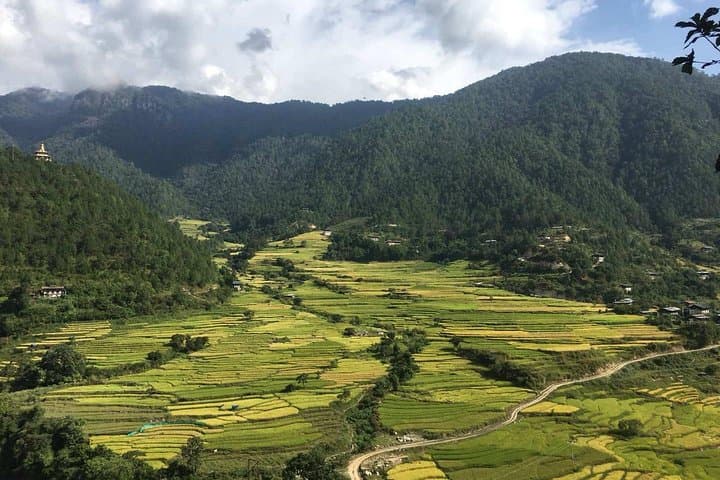
You step out of the plane into a thin, dry air scented with pine and yak dung smoke, the valley opening like a folded map beneath a ring of Himalayan ridges. Prayer flags snap in a brisk wind that seems to push you uphill toward monasteries clinging to cliffs and fortresses guarding narrow river confluences.
You step out of the plane into a thin, dry air scented with pine and yak dung smoke, the valley opening like a folded map beneath a ring of Himalayan ridges. Prayer flags snap in a brisk wind that seems to push you uphill toward monasteries clinging to cliffs and fortresses guarding narrow river confluences.
This nine-day circuit moves from Paro’s watchtower museum through Haa and Phobjikha valleys to the capital Thimphu and the rice-stitched Punakha basin. Along the way you cross high passes — Chelela at roughly 3,900 m — and walk ancient trails used by pilgrims for centuries. Geology here is raw: glacially carved valleys, river-fed terraces, and steep schist and granite faces that gave builders the timber-and-stone Dzongs that define Bhutanese identity. Buddhism threads the itinerary; dzongs, lhakhangs and the Tiger’s Nest (Taktsang) are active sacred sites where rituals remain part of daily life.
Expect active travel: a 4–5 hour round-trip hike to Taktsang (approximately 5 km with 700–900 m of ascent for many visitors) and a 5 km Gangtey nature hike (2.5–3 hours) through wetlands and meadows. Trails vary from paved monastery approaches to rocky mountain tracks.
Practical notes: flights to Paro are limited and should be booked well in advance; visas are processed after booking. Pack layered clothing for temperature swings, sturdy boots for steep, sometimes slippery trails, and small bills for rural purchases. Acclimatize gradually, respect religious customs (quiet voices, removed hats in shrines), and leave no trace — these valleys are still fragile and deeply lived-in.