THE ADVENTURE COLLECTIVE® · Independent discovery and booking for outdoor travel

Move through Uzbekistan’s greatest Silk Road cities on a compact, 8-day group tour. From Tashkent’s bazaars to Registan’s turquoise domes, expect brisk travel days, local crafts, and historic monuments with practical logistics handled for you.
Move through Uzbekistan’s greatest Silk Road cities on a compact, 8-day group tour. From Tashkent’s bazaars to Registan’s turquoise domes, expect brisk travel days, local crafts, and historic monuments with practical logistics handled for you.
You step off a late-afternoon train into Registan’s light and the city seems to speak in tiles and domes—blue glaze flashing as the sun slips west. The tour moves at that same confident pace: early flights and trains, market mornings, and evenings spent under courtyard lamps where the food is as direct as the history.
Verified experiences and guided adventures in the surrounding area.
Operated by GOTOUZBEKISTAN · Tashkent, Tashkent
You step off a late-afternoon train into Registan’s light and the city seems to speak in tiles and domes—blue glaze flashing as the sun slips west. The tour moves at that same confident pace: early flights and trains, market mornings, and evenings spent under courtyard lamps where the food is as direct as the history.
This itinerary follows Uzbekistan’s great Silk Road nodes. Samarkand’s architecture records Timurid ambition in turquoise; Bukhara’s mud-brick streets keep centuries of caravan trade in their angles; Khiva’s Ichan-Qala preserves a fortified urban life cut off from steppe wind and time. Geologically you’ll cross broad, flat plains shaped by ancient rivers, then approach the foothills that drain toward the Zeravshan—land that guided trade routes and the movement of peoples.
Culture is tactile: Siab Bazaar’s spices and Konigil’s mulberry-paper workshops are everyday craft practices, not museum displays. Trains such as the Afrosiyob ferry you fast between cities, while local guides translate monuments into stories about emirs, astronomers, and artisan families.
Practical guidance: expect moderate walking on mixed surfaces—flagstone, packed dirt, plaza steps—so bring broken-in walking shoes and a small daypack. Mornings and late afternoons are the best times for site visits to avoid heat and tour-group bottlenecks. Carry local currency (UZS) for small purchases and tipping; credit cards work in larger hotels. Be ready for early transfers: punctuality matters.
This route balances immersive cultural access with practical logistics—seven nights of shared accommodation, several internal transfers by rail and flight, and a rhythm that pushes you outward each day while giving time to absorb the place.
moderate.
8 days.
Requires moderate fitness: able to walk 2–4 miles a day on mixed terrain and handle multiple short transfers between hotels and stations.
Visa requirements depend on your nationality—many travelers can obtain e-visas or visa-free entry for short stays; check official government sources well before travel.
This tour uses short domestic flights (about 1.5 hours Tashkent–Urgench) and high-speed trains (Samarkand–Tashkent ~2 hours 10 minutes); some legs may be by comfortable overland transfer if trains are unavailable.
Yes; single travelers often join group tours, though single-room supplements apply. Expect shared-group sightseeing and private transfers as noted in the itinerary.
English-speaking local guides accompany the group, while Uzbek and Russian are commonly spoken locally; learning a few Uzbek or Russian phrases is appreciated by hosts.
These cities were major Silk Road hubs; Samarkand rose under Timur in the 14th century while Bukhara and Khiva governed regional trade and scholarship for centuries.
Water scarcity and site erosion are local concerns—use refillable bottles, stay on marked paths at monuments, and support licensed guides and local craftspeople to keep heritage sites sustainable.
GOTOUZBEKISTAN operates guided outdoor trips and adventures with an emphasis on safety, stewardship, and memorable experiences.
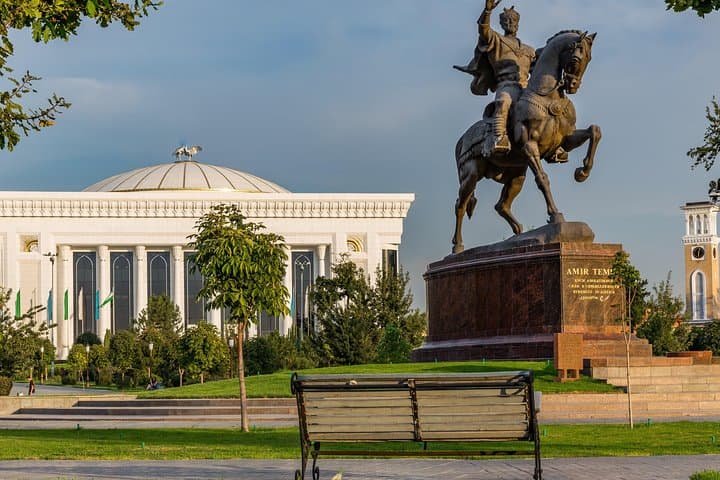
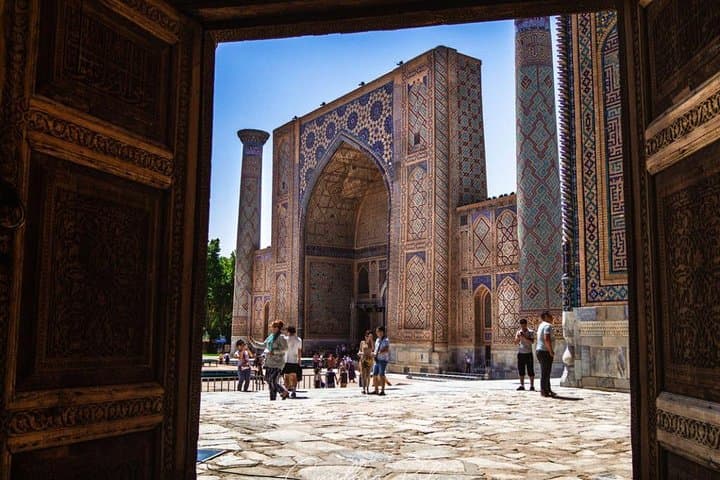
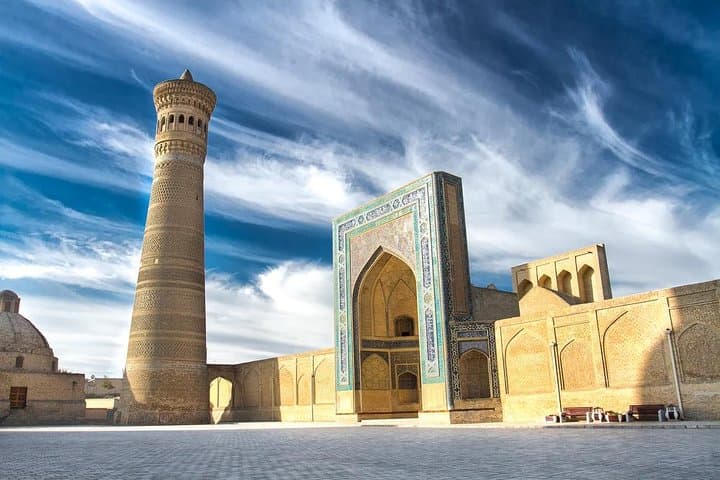
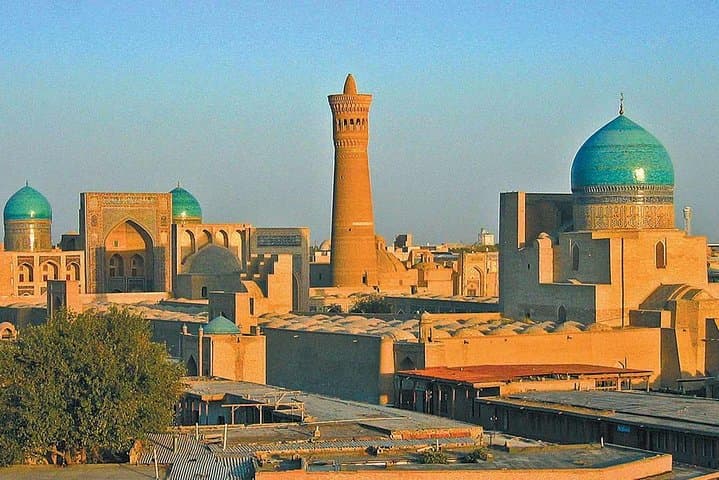
You step off a late-afternoon train into Registan’s light and the city seems to speak in tiles and domes—blue glaze flashing as the sun slips west. The tour moves at that same confident pace: early flights and trains, market mornings, and evenings spent under courtyard lamps where the food is as direct as the history.
You step off a late-afternoon train into Registan’s light and the city seems to speak in tiles and domes—blue glaze flashing as the sun slips west. The tour moves at that same confident pace: early flights and trains, market mornings, and evenings spent under courtyard lamps where the food is as direct as the history.
This itinerary follows Uzbekistan’s great Silk Road nodes. Samarkand’s architecture records Timurid ambition in turquoise; Bukhara’s mud-brick streets keep centuries of caravan trade in their angles; Khiva’s Ichan-Qala preserves a fortified urban life cut off from steppe wind and time. Geologically you’ll cross broad, flat plains shaped by ancient rivers, then approach the foothills that drain toward the Zeravshan—land that guided trade routes and the movement of peoples.
Culture is tactile: Siab Bazaar’s spices and Konigil’s mulberry-paper workshops are everyday craft practices, not museum displays. Trains such as the Afrosiyob ferry you fast between cities, while local guides translate monuments into stories about emirs, astronomers, and artisan families.
Practical guidance: expect moderate walking on mixed surfaces—flagstone, packed dirt, plaza steps—so bring broken-in walking shoes and a small daypack. Mornings and late afternoons are the best times for site visits to avoid heat and tour-group bottlenecks. Carry local currency (UZS) for small purchases and tipping; credit cards work in larger hotels. Be ready for early transfers: punctuality matters.
This route balances immersive cultural access with practical logistics—seven nights of shared accommodation, several internal transfers by rail and flight, and a rhythm that pushes you outward each day while giving time to absorb the place.