THE ADVENTURE COLLECTIVE® · Independent discovery and booking for outdoor travel

Traverse high alpine passes and medieval tower-villages on an eight-day trek from Mazeri to Ushguli. Expect long days in variable mountain weather, guesthouse overnights, and panoramic views of Ushba, Tetnuldi and Shkhara.
Traverse high alpine passes and medieval tower-villages on an eight-day trek from Mazeri to Ushguli. Expect long days in variable mountain weather, guesthouse overnights, and panoramic views of Ushba, Tetnuldi and Shkhara.
Morning light slices across moraine ridges as you leave Mestia; the road narrows, villages shrink, and the peaks—the knife-edges of Ushba and the bulk of Tetnuldi—come forward like landmarks on a map of challenge. Over eight days you move through pine stands, alpine meadows, and high passes, the air shifting from humid valley to thin ridge wind.
Verified experiences and guided adventures in the surrounding area.
Operated by TrekGeorgia · Mestia, Samegrelo-Zemo Svaneti
Morning light slices across moraine ridges as you leave Mestia; the road narrows, villages shrink, and the peaks—the knife-edges of Ushba and the bulk of Tetnuldi—come forward like landmarks on a map of challenge. Over eight days you move through pine stands, alpine meadows, and high passes, the air shifting from humid valley to thin ridge wind.
Svaneti’s stacked stone towers and medieval churches record centuries of mountain life; the villages here are living history, part of a UNESCO cultural landscape forged by isolation and defense. Geologically, you’re in the Greater Caucasus: uplifted limestone and granite that fracture into serrated peaks—Shkhara (5152 m) and Janga (5059 m) loom on the horizon while glaciers carve cirques and feed roaring rivers that dare you to keep pace.
Expect shepherded trails and guesthouse hospitality—seven breakfasts, six lunches and seven dinners are typical—plus luggage transferred by vehicle. The trek covers roughly 58 km of walking with steep ascents to Guli Pass (≈2960 m) and Chkhutnieri (≈2655 m), and a high-point visit to Ushguli (≈2200 m), Europe’s highest permanent settlement.
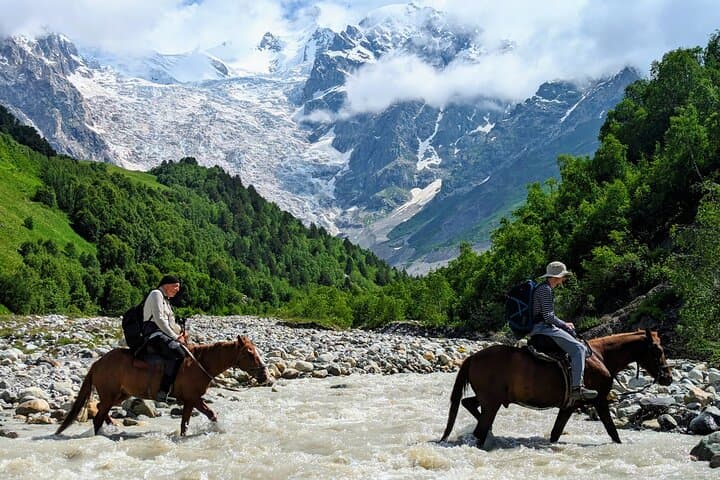
Practical edge: plan for highly variable weather, strong sun at altitude, and river crossings that may require horses. Daily hiking ranges from 3–8 hours; bring sturdy, broken-in boots, layered insulation, a sun hat, and a water treatment option despite provided bottled water. Follow local guide instructions on river crossings and acclimatize by pacing up into passes rather than sprinting. Leave no trace: these villages rely on fragile alpine pastures and glaciers that are already shifting with climate trends.
challenging.
8 days total; daily hikes 3–8 hours.
Good aerobic fitness with experience on multi-day mountain hikes; ability to carry a daypack and handle steep ascents.
Daily legs vary from easy village walks to full-day ascents over alpine passes; expect 3–8 hours walking on most days with steep sections.
Guesthouses are basic but adequate—mixture of shared and private facilities depending on village; hot meals are typically provided.
No technical climbing gear is required; this is trekking rather than mountaineering, though crampons may be needed out of season.
The highest pass on this itinerary is Guli at about 2,960 m; Ushguli village sits near 2,200 m.
Svaneti’s stone defensive towers and churches date to medieval times and grew from the need to protect mountain communities from raids and harsh winters.
The region’s fragile alpine meadows and glaciers require low-impact travel; stick to established paths and support local guesthouses that follow sustainable practices.
TrekGeorgia operates guided outdoor trips and adventures with an emphasis on safety, stewardship, and memorable experiences.
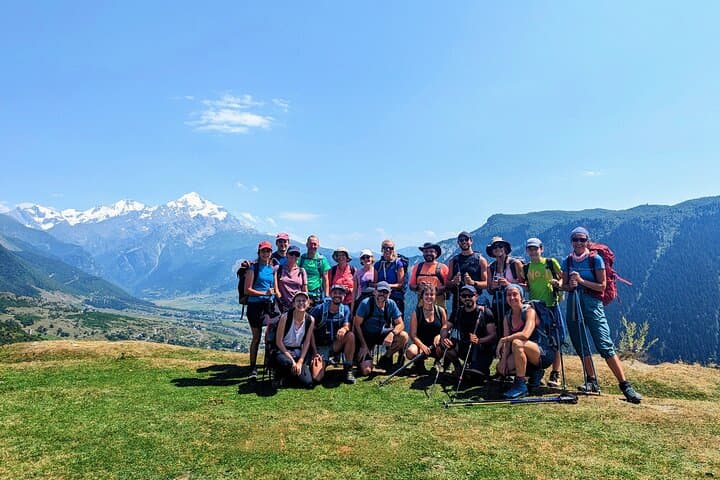
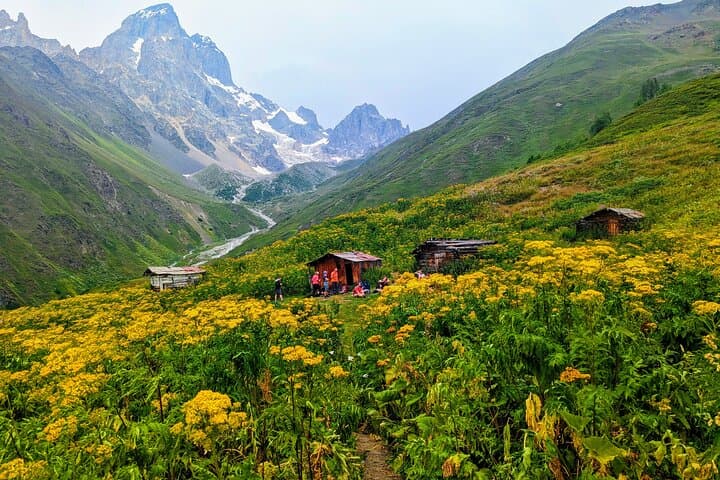
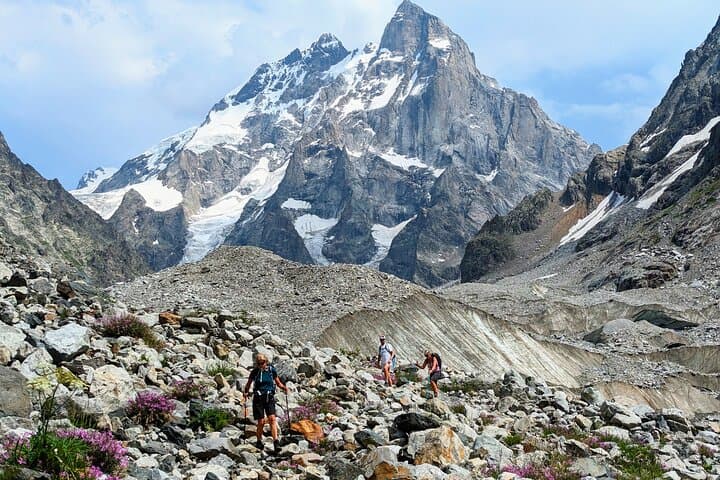
Morning light slices across moraine ridges as you leave Mestia; the road narrows, villages shrink, and the peaks—the knife-edges of Ushba and the bulk of Tetnuldi—come forward like landmarks on a map of challenge. Over eight days you move through pine stands, alpine meadows, and high passes, the air shifting from humid valley to thin ridge wind.
Morning light slices across moraine ridges as you leave Mestia; the road narrows, villages shrink, and the peaks—the knife-edges of Ushba and the bulk of Tetnuldi—come forward like landmarks on a map of challenge. Over eight days you move through pine stands, alpine meadows, and high passes, the air shifting from humid valley to thin ridge wind.
Svaneti’s stacked stone towers and medieval churches record centuries of mountain life; the villages here are living history, part of a UNESCO cultural landscape forged by isolation and defense. Geologically, you’re in the Greater Caucasus: uplifted limestone and granite that fracture into serrated peaks—Shkhara (5152 m) and Janga (5059 m) loom on the horizon while glaciers carve cirques and feed roaring rivers that dare you to keep pace.
Expect shepherded trails and guesthouse hospitality—seven breakfasts, six lunches and seven dinners are typical—plus luggage transferred by vehicle. The trek covers roughly 58 km of walking with steep ascents to Guli Pass (≈2960 m) and Chkhutnieri (≈2655 m), and a high-point visit to Ushguli (≈2200 m), Europe’s highest permanent settlement.
Practical edge: plan for highly variable weather, strong sun at altitude, and river crossings that may require horses. Daily hiking ranges from 3–8 hours; bring sturdy, broken-in boots, layered insulation, a sun hat, and a water treatment option despite provided bottled water. Follow local guide instructions on river crossings and acclimatize by pacing up into passes rather than sprinting. Leave no trace: these villages rely on fragile alpine pastures and glaciers that are already shifting with climate trends.