THE ADVENTURE COLLECTIVE® · Independent discovery and booking for outdoor travel

A compact mix of Kathmandu heritage and short Annapurna hikes, this 8-day trip pairs cultural sightseeing with soft mountain trekking to Dhampus and Australian Camp. Expect village teahouses, panoramic sunrise views, and accessible trail days suitable for moderately fit travelers.
A compact mix of Kathmandu heritage and short Annapurna hikes, this 8-day trip pairs cultural sightseeing with soft mountain trekking to Dhampus and Australian Camp. Expect village teahouses, panoramic sunrise views, and accessible trail days suitable for moderately fit travelers.
Dawn breaks over Kathmandu as prayer flags stir the air and the valley exhales city heat. On day one the itinerary moves through Swayambhunath and Boudhanath, where stupa faces watch over slow circumambulations; by midweek you’ll swap dusty streets for terraced fields and the clean, conifer-scented slopes above Pokhara. The trek portions—Dhampus and Australian Camp—are short, steep on sections, and designed to deliver broad Annapurna views without technical difficulty.
Verified experiences and guided adventures in the surrounding area.
Operated by Sabbatical Explore Nepal · Kathmandu, Bagmati Province
Dawn breaks over Kathmandu as prayer flags stir the air and the valley exhales city heat. On day one the itinerary moves through Swayambhunath and Boudhanath, where stupa faces watch over slow circumambulations; by midweek you’ll swap dusty streets for terraced fields and the clean, conifer-scented slopes above Pokhara. The trek portions—Dhampus and Australian Camp—are short, steep on sections, and designed to deliver broad Annapurna views without technical difficulty.
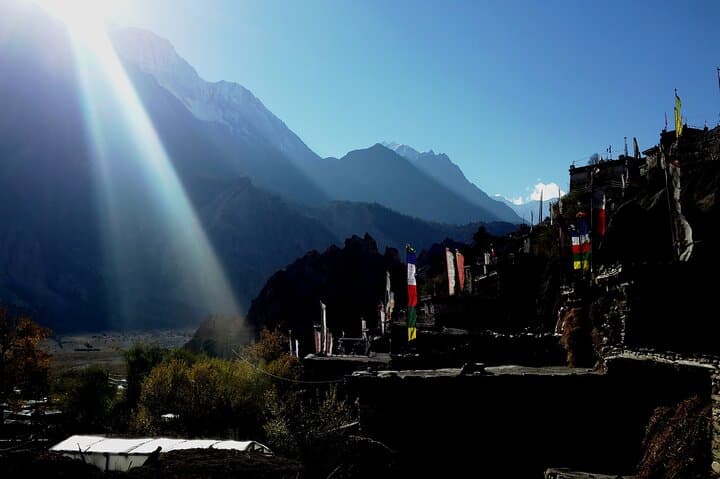
Geology here is young and rugged: rivers cut deep valleys between sedimentary ridges uplifted by the collision of the Indian and Eurasian plates. Culturally the route threads Newar city squares, Tibetan-influenced stupas, Gurung and Magar village life, and hilltop tea houses where locals earn trekking-season income. Bandipur recalls an old trade route, its Newari houses and carved windows offering a window into merchant-era Nepal.
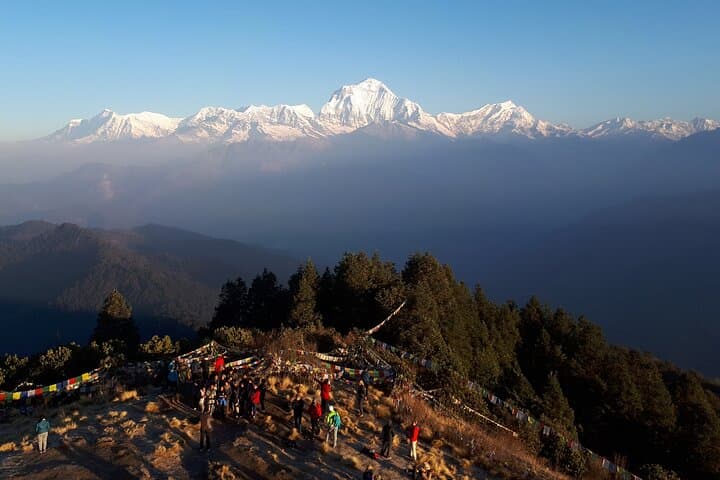
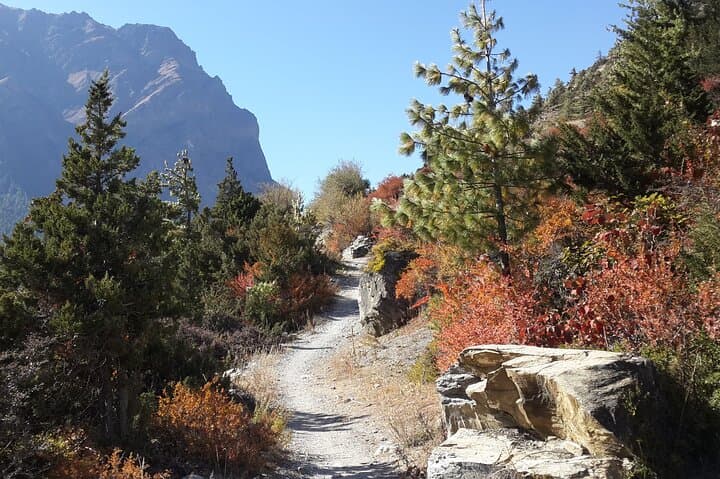
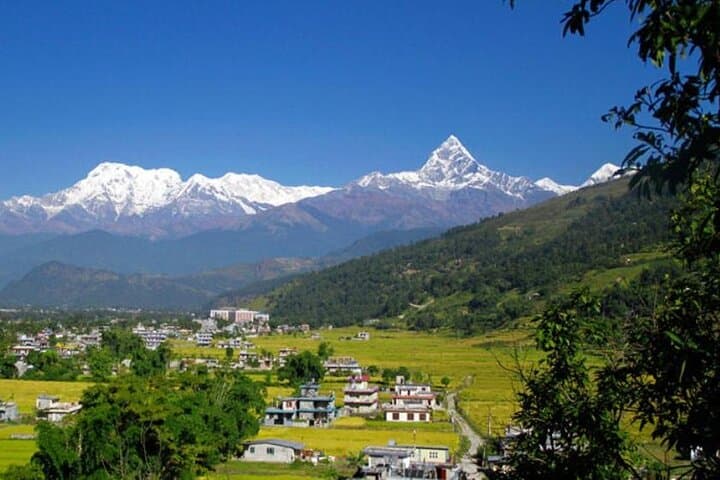
Expect 2–5 hour day hikes on stone and dirt trails with 300–700 m gains on the higher days, forested switchbacks, and open ridgelines that put Machhapuchhre and Annapurna in constant view. Plan for early mornings for Sarangkot and Australian Camp sunrises; light, breathable layers work best because valley days warm and hilltop evenings cool. Carry water, a basic first-aid kit, and local currency for teahouse snacks and donations.
Logistics: the tour runs from Kathmandu with private transfers, guesthouse nights, and most meals on trek days. Altitude is moderate—acclimatize by pacing walks and hydrating. Respect monastery etiquette, support community-run lodges, and pack out plastic when possible—these routes remain fragile but rewarding for travelers who arrive prepared.
moderate.
8 days.
Suitable for travelers in reasonable shape who can manage daily walks of 2–5 hours and short elevation gains; basic stamina and balance on uneven terrain recommended.
Trek days are short to moderate—typically 2–5 hours with sections of steep switchbacks but no technical climbing; suitable for most active travelers.
Altitudes are moderate (under 2,200–2,500 m); standard pacing and hydration suffice, but if you have altitude sensitivity consult a physician.
Most breakfasts are included and all meals are supplied on full trek days to Dhampus and Australian Camp; lunches and dinners in cities are often on your own per the itinerary.
Accommodation ranges from 3-star hotels in Kathmandu and Pokhara to family-run tea houses and guesthouses in Dhampus and Australian Camp—basic but comfortable with hot meals during trek nights.
Kathmandu Valley has been a cultural crossroads for centuries—Newar artisans built the ornate squares and temples that remain central to urban life; Bandipur grew as a hilltop trade stop between India and Tibet.
The Annapurna foothills suffer from seasonal litter and trail erosion; travelers help most by using reusable containers, staying on marked trails, and choosing community-run lodges that reinvest in local waste and water projects.
Sabbatical Explore Nepal operates guided outdoor trips and adventures with an emphasis on safety, stewardship, and memorable experiences.
Dawn breaks over Kathmandu as prayer flags stir the air and the valley exhales city heat. On day one the itinerary moves through Swayambhunath and Boudhanath, where stupa faces watch over slow circumambulations; by midweek you’ll swap dusty streets for terraced fields and the clean, conifer-scented slopes above Pokhara. The trek portions—Dhampus and Australian Camp—are short, steep on sections, and designed to deliver broad Annapurna views without technical difficulty.
Dawn breaks over Kathmandu as prayer flags stir the air and the valley exhales city heat. On day one the itinerary moves through Swayambhunath and Boudhanath, where stupa faces watch over slow circumambulations; by midweek you’ll swap dusty streets for terraced fields and the clean, conifer-scented slopes above Pokhara. The trek portions—Dhampus and Australian Camp—are short, steep on sections, and designed to deliver broad Annapurna views without technical difficulty.
Geology here is young and rugged: rivers cut deep valleys between sedimentary ridges uplifted by the collision of the Indian and Eurasian plates. Culturally the route threads Newar city squares, Tibetan-influenced stupas, Gurung and Magar village life, and hilltop tea houses where locals earn trekking-season income. Bandipur recalls an old trade route, its Newari houses and carved windows offering a window into merchant-era Nepal.
Expect 2–5 hour day hikes on stone and dirt trails with 300–700 m gains on the higher days, forested switchbacks, and open ridgelines that put Machhapuchhre and Annapurna in constant view. Plan for early mornings for Sarangkot and Australian Camp sunrises; light, breathable layers work best because valley days warm and hilltop evenings cool. Carry water, a basic first-aid kit, and local currency for teahouse snacks and donations.
Logistics: the tour runs from Kathmandu with private transfers, guesthouse nights, and most meals on trek days. Altitude is moderate—acclimatize by pacing walks and hydrating. Respect monastery etiquette, support community-run lodges, and pack out plastic when possible—these routes remain fragile but rewarding for travelers who arrive prepared.