THE ADVENTURE COLLECTIVE® · Independent discovery and booking for outdoor travel

An eight-day private circuit through Yunnan’s geological and cultural high points—Stone Forest, Erhai Lake, Lijiang’s ancient town and Jade Dragon Snow Mountain—designed for travelers who want an immersive but paced introduction to the region. Expect alpine meadows, karst towers and centuries-old minority culture with private transport and English-speaking guides.
An eight-day private circuit through Yunnan’s geological and cultural high points—Stone Forest, Erhai Lake, Lijiang’s ancient town and Jade Dragon Snow Mountain—designed for travelers who want an immersive but paced introduction to the region. Expect alpine meadows, karst towers and centuries-old minority culture with private transport and English-speaking guides.
You step out of Kunming’s airport into an air that already tastes different—earthy, high and slightly cool—and within hours you can be following limestone towers or skimming a quiet lake. The first real scene is the Stone Forest, where karst spires rise like a city of fossilized columns daring you to weave between them. By midweek you’ll be watching Erhai Lake push gentle waves against a wooden boat as Cangshan’s ridgeline stands mute across the water.
Verified experiences and guided adventures in the surrounding area.
Operated by China Travel Service · Kunming, Yunnan
You step out of Kunming’s airport into an air that already tastes different—earthy, high and slightly cool—and within hours you can be following limestone towers or skimming a quiet lake. The first real scene is the Stone Forest, where karst spires rise like a city of fossilized columns daring you to weave between them. By midweek you’ll be watching Erhai Lake push gentle waves against a wooden boat as Cangshan’s ridgeline stands mute across the water.
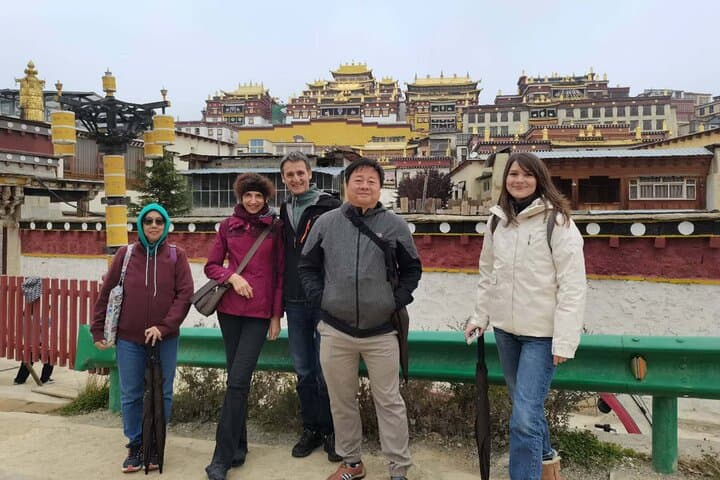
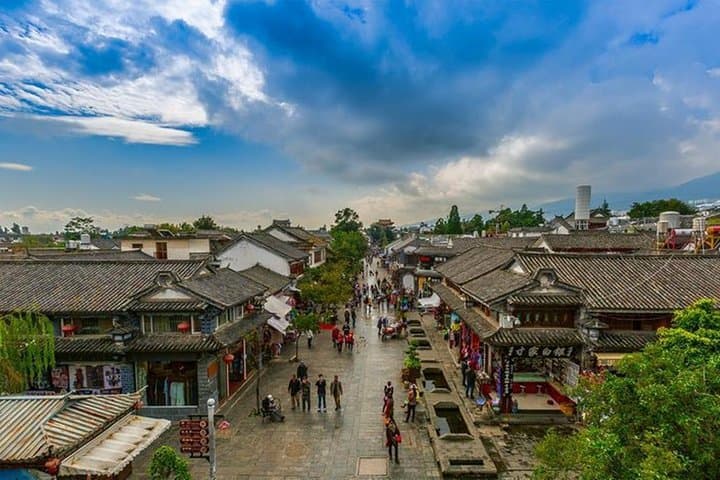
Yunnan’s story is written in geology and trade: ancient karst sculpted by water, tectonic lift that created Jade Dragon Snow Mountain’s glaciers and the old Tea-Horse Road that threaded Tibetan, Naxi and Bai cultures together. Lijiang’s cobbled streets and Baisha murals carry centuries of Naxi religious life; Dali’s Three Pagodas watch over a lakeshore culture that’s folded into local Bai customs.
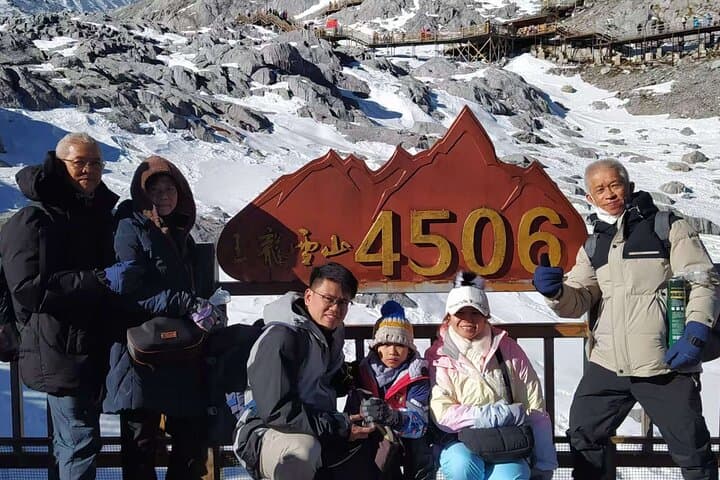
Expect varied terrain: paved streets and stone steps in old towns, short forest walks (some 30–60 minute easy hikes), and alpine meadows above 3,000 m with thin air. Elevation gain is gradual on the tour, but you will visit spots above 3,000–4,000 m (Jade Dragon area and Shangri‑La), so acclimatize and move deliberately.
Practical guidance: travel with layers, a good pair of walking shoes, sun protection and a water system. Peak photo windows are early morning and late afternoon; avoid tight schedules the first day to adjust. Guides and private transfers handle logistics—bring local currency, your passport, and patience for mountain weather shifts.
moderate.
8 days.
Moderate fitness: able to walk 1–3 hours at a time on uneven ground and tolerate several days at altitude.
Most entrance tickets mentioned in the itinerary and private air‑conditioned transfers, plus the Kunming–Dali high-speed train (2nd class), are included; confirm specifics in your booking confirmation.
Yes—this tour visits elevations above 3,000 m; allow time to acclimatize, stay hydrated, avoid alcohol on arrival and notify guides of any symptoms.
Moderate fitness is recommended: short hikes and walks of up to a few hours on uneven ground are common, but no technical climbing is required.
English-speaking tour guides are provided according to the itinerary; request language needs at booking and reconfirm before travel.
Yunnan sits at a crossroads of trade—sections of the ancient Tea‑Horse Road passed through these valleys, and towns like Lijiang preserve Naxi, Bai and Tibetan cultural layers recognized by UNESCO.
Pudacuo National Park is a protected area with fragile high‑altitude wetlands; visitors should stick to boardwalks, avoid feeding wildlife and minimize single‑use plastics.
China Travel Service operates guided outdoor trips and adventures with an emphasis on safety, stewardship, and memorable experiences.

You step out of Kunming’s airport into an air that already tastes different—earthy, high and slightly cool—and within hours you can be following limestone towers or skimming a quiet lake. The first real scene is the Stone Forest, where karst spires rise like a city of fossilized columns daring you to weave between them. By midweek you’ll be watching Erhai Lake push gentle waves against a wooden boat as Cangshan’s ridgeline stands mute across the water.
You step out of Kunming’s airport into an air that already tastes different—earthy, high and slightly cool—and within hours you can be following limestone towers or skimming a quiet lake. The first real scene is the Stone Forest, where karst spires rise like a city of fossilized columns daring you to weave between them. By midweek you’ll be watching Erhai Lake push gentle waves against a wooden boat as Cangshan’s ridgeline stands mute across the water.
Yunnan’s story is written in geology and trade: ancient karst sculpted by water, tectonic lift that created Jade Dragon Snow Mountain’s glaciers and the old Tea-Horse Road that threaded Tibetan, Naxi and Bai cultures together. Lijiang’s cobbled streets and Baisha murals carry centuries of Naxi religious life; Dali’s Three Pagodas watch over a lakeshore culture that’s folded into local Bai customs.
Expect varied terrain: paved streets and stone steps in old towns, short forest walks (some 30–60 minute easy hikes), and alpine meadows above 3,000 m with thin air. Elevation gain is gradual on the tour, but you will visit spots above 3,000–4,000 m (Jade Dragon area and Shangri‑La), so acclimatize and move deliberately.
Practical guidance: travel with layers, a good pair of walking shoes, sun protection and a water system. Peak photo windows are early morning and late afternoon; avoid tight schedules the first day to adjust. Guides and private transfers handle logistics—bring local currency, your passport, and patience for mountain weather shifts.