THE ADVENTURE COLLECTIVE® · Independent discovery and booking for outdoor travel

An eight-day private luxury circuit from Casablanca to Marrakech that links imperial cities, Roman ruins, blue alleys and Marrakech’s famed medina. Expect guided cultural walks, private transport, and comfortable riad stays.
An eight-day private luxury circuit from Casablanca to Marrakech that links imperial cities, Roman ruins, blue alleys and Marrakech’s famed medina. Expect guided cultural walks, private transport, and comfortable riad stays.
You step from the airport into Casablanca's warm air, the city humming as the driver eases you past the mosque's sea-sprayed edge. Over the next eight days the road becomes a narrative: Atlantic wind pushing you toward Roman stones, Rif peaks calling you into blue alleyways, and the red clay of Marrakech offering a last, sun-baked exhale.
Verified experiences and guided adventures in the surrounding area.
Operated by Best Tours Morocco · Casablanca, Casablanca-Settat
You step from the airport into Casablanca's warm air, the city humming as the driver eases you past the mosque's sea-sprayed edge. Over the next eight days the road becomes a narrative: Atlantic wind pushing you toward Roman stones, Rif peaks calling you into blue alleyways, and the red clay of Marrakech offering a last, sun-baked exhale.
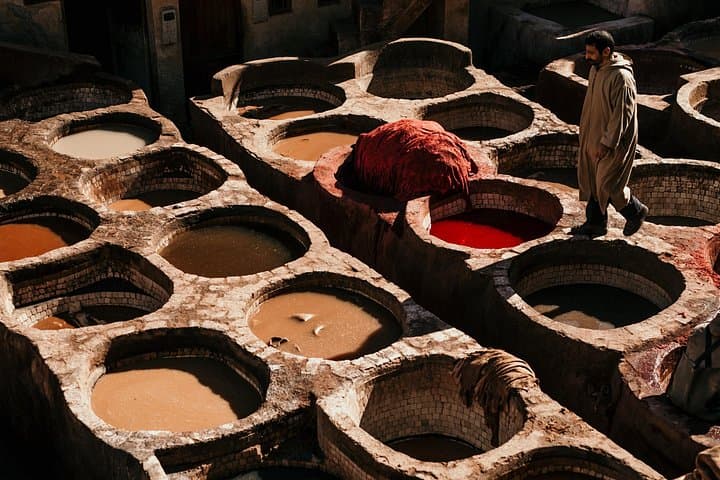
This privately guided circuit stitches together Morocco's imperial cities and coastal plain. Begin with Hassan II's coastal minaret, then cross to Meknes—an 18th-century imperial capital—and the clean-ruined geometry of Volubilis, where Roman mosaics still hold the light. Fes delivers a medieval medina of tanneries and artisan quarters; Chefchaouen offers steep, blue-laned streets carved into the Rif foothills. Rabat's Hassan Tower and the Oudaya Kasbah reveal Almohad and Alaouite chapters, while Marrakech closes the loop with Bahia Palace, Jemaa el-Fna, and Majorelle's cultivated calm.
Geology here is visible: folded Atlas foothills, coastal plains worn by Atlantic weather, and limestone terraces near Volubilis. Culture is lived in workshops—leather, brass, and ceramics—and in the rhythm of markets and mint tea ritual.
Practical guidance: book morning visits to medinas to avoid peak heat and crowds; carry small-denomination Moroccan dirhams for markets; wear sturdy, breathable walking shoes for cobbles and uneven Roman stones. Respect mosque rules and modest dress in conservative areas. Hydrate—bottled water is provided daily, but bring a refillable bottle for side excursions.
This itinerary balances relaxed transport with focused walking tours: it invites you to move through Morocco at a measured pace, rewarded by layered history and sharp, sensory scenes.
easy.
8 days.
Suitable for travelers in average physical condition; able to walk several hours with breaks and manage stairs and uneven surfaces.
Many nationalities can enter Morocco visa-free for short tourist stays; check current government requirements well before travel.
The itinerary is private and paced for broad accessibility, but it includes cobbled areas and stairs—advise the operator of mobility needs when booking.
The Moroccan dirham (MAD) is used; credit cards are commonly accepted in hotels and larger restaurants but smaller shops and markets prefer cash.
Non-Muslim visitors can enter some major mosques by guided tour rules (e.g., Hassan II in Casablanca); local rules vary so plan for guided access or exterior visits.
The route links Morocco’s imperial cities—Fes, Meknes, Marrakesh—and the Roman site of Volubilis, reflecting centuries of Phoenician, Roman, Berber and Arab influence.
Tourism concentrates in fragile medinas and archaeological sites; favor local guides and businesses, avoid single-use plastics, and follow signage to protect mosaics and historic fabric.
Best Tours Morocco operates guided outdoor trips and adventures with an emphasis on safety, stewardship, and memorable experiences.
You step from the airport into Casablanca's warm air, the city humming as the driver eases you past the mosque's sea-sprayed edge. Over the next eight days the road becomes a narrative: Atlantic wind pushing you toward Roman stones, Rif peaks calling you into blue alleyways, and the red clay of Marrakech offering a last, sun-baked exhale.
You step from the airport into Casablanca's warm air, the city humming as the driver eases you past the mosque's sea-sprayed edge. Over the next eight days the road becomes a narrative: Atlantic wind pushing you toward Roman stones, Rif peaks calling you into blue alleyways, and the red clay of Marrakech offering a last, sun-baked exhale.
This privately guided circuit stitches together Morocco's imperial cities and coastal plain. Begin with Hassan II's coastal minaret, then cross to Meknes—an 18th-century imperial capital—and the clean-ruined geometry of Volubilis, where Roman mosaics still hold the light. Fes delivers a medieval medina of tanneries and artisan quarters; Chefchaouen offers steep, blue-laned streets carved into the Rif foothills. Rabat's Hassan Tower and the Oudaya Kasbah reveal Almohad and Alaouite chapters, while Marrakech closes the loop with Bahia Palace, Jemaa el-Fna, and Majorelle's cultivated calm.
Geology here is visible: folded Atlas foothills, coastal plains worn by Atlantic weather, and limestone terraces near Volubilis. Culture is lived in workshops—leather, brass, and ceramics—and in the rhythm of markets and mint tea ritual.
Practical guidance: book morning visits to medinas to avoid peak heat and crowds; carry small-denomination Moroccan dirhams for markets; wear sturdy, breathable walking shoes for cobbles and uneven Roman stones. Respect mosque rules and modest dress in conservative areas. Hydrate—bottled water is provided daily, but bring a refillable bottle for side excursions.
This itinerary balances relaxed transport with focused walking tours: it invites you to move through Morocco at a measured pace, rewarded by layered history and sharp, sensory scenes.