THE ADVENTURE COLLECTIVE® · Independent discovery and booking for outdoor travel

Drift from Cairo’s stone giants to Luxor’s colonnades on an eight‑day journey combining three nights aboard a five‑star Nile cruise with guided visits to the Valley of the Kings, Karnak, Kom Ombo and Edfu. Expect domestic flights, moderate walking on uneven surfaces, and immersive archaeological highlights.
Drift from Cairo’s stone giants to Luxor’s colonnades on an eight‑day journey combining three nights aboard a five‑star Nile cruise with guided visits to the Valley of the Kings, Karnak, Kom Ombo and Edfu. Expect domestic flights, moderate walking on uneven surfaces, and immersive archaeological highlights.
Morning light thins over the Nile as you climb aboard a five‑star cruise in Aswan; the river moves with deliberation, nudging the boat toward ancient quays where stone gods still watch. Over eight days you’ll trade Cairo’s crowded avenues for the slow rhythms of the Nile, drifting between palm-lined banks and the colonnaded façades of Karnak and Luxor.
Verified experiences and guided adventures in the surrounding area.
Operated by Yalla Egypt Travel · Cairo, Cairo Governorate
Morning light thins over the Nile as you climb aboard a five‑star cruise in Aswan; the river moves with deliberation, nudging the boat toward ancient quays where stone gods still watch. Over eight days you’ll trade Cairo’s crowded avenues for the slow rhythms of the Nile, drifting between palm-lined banks and the colonnaded façades of Karnak and Luxor.
This route stitches together Egypt’s Pharaonic high points: the Great Pyramids and Sphinx at Giza, the rock-cut tombs of the Valley of the Kings, Hatshepsut’s terraced mortuary temple, and the precision-carved Kom Ombo and Edfu temples from the Greco‑Roman era. Geologically the Nile valley is an alluvial ribbon carved through sandstone and limestone; the river’s floodplain fed millennia of settlement and the monumental building you see today. Culturally, local life still orbits the river—boatmen, date farmers, and market vendors maintain rhythms unchanged by tourism.
Practical guidance: this tour moves fast—expect domestic flights between Cairo, Aswan and Luxor and several guided site visits with moderate walking on uneven stone and desert sand. Carry a sun hat and breathable layers; temperatures vary from hot daytime sun to cooler desert evenings. Hydrate constantly and bring a refillable water bottle (tap water is not recommended).
Timing matters—arrive rested in Cairo to absorb the museum and pyramid visits, and reserve mornings for major monuments when light and crowds are best. Respect site rules: no flash photography inside tombs, and follow your guide’s route to protect fragile reliefs. With preparation, this eight-day loop offers both cinematic vistas and direct access to Egypt’s living archaeological landscape.
easy.
8 days.
Suitable for travelers in average fitness; involves repeated short walks of up to 2–3 miles across uneven terrain and stairs.
Yes — domestic flights from Cairo to Aswan and from Luxor to Cairo are included in the package.
The operator lists wheelchair accessibility for transportation and some surfaces, but many ancient sites include steps and uneven ground—check specific accessibility needs with the operator before booking.
Many nationalities require a visa to enter Egypt; check current embassy rules and obtain one in advance or on arrival where applicable.
Carry Egyptian pounds for small purchases and tipping; tipping (baksheesh) is customary for guides, drivers, and cruise staff—small denominations are most useful.
The Nile valley has supported complex societies for millennia; many temples here date from the New Kingdom (c. 1550–1070 BCE) and reflect Egypt’s centralized state and ritual life.
High visitor numbers can stress fragile tomb paintings and sandstone reliefs; follow guide instructions, avoid touching surfaces, and use water sparingly—support local conservation fees when offered.
Yalla Egypt Travel operates guided outdoor trips and adventures with an emphasis on safety, stewardship, and memorable experiences.
Morning light thins over the Nile as you climb aboard a five‑star cruise in Aswan; the river moves with deliberation, nudging the boat toward ancient quays where stone gods still watch. Over eight days you’ll trade Cairo’s crowded avenues for the slow rhythms of the Nile, drifting between palm-lined banks and the colonnaded façades of Karnak and Luxor.
Morning light thins over the Nile as you climb aboard a five‑star cruise in Aswan; the river moves with deliberation, nudging the boat toward ancient quays where stone gods still watch. Over eight days you’ll trade Cairo’s crowded avenues for the slow rhythms of the Nile, drifting between palm-lined banks and the colonnaded façades of Karnak and Luxor.
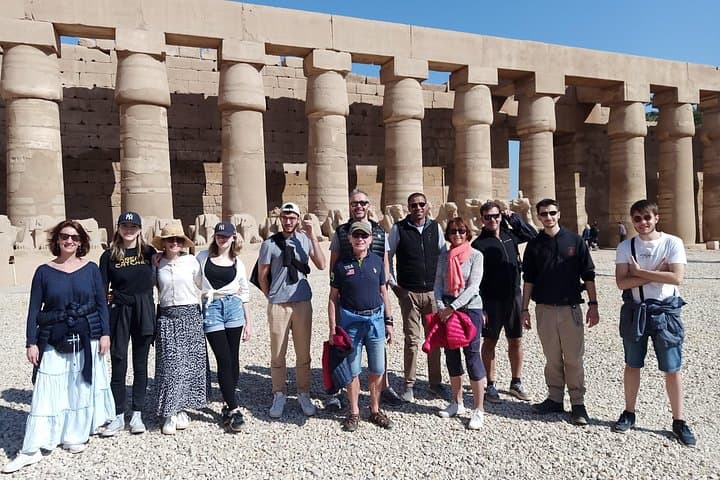
This route stitches together Egypt’s Pharaonic high points: the Great Pyramids and Sphinx at Giza, the rock-cut tombs of the Valley of the Kings, Hatshepsut’s terraced mortuary temple, and the precision-carved Kom Ombo and Edfu temples from the Greco‑Roman era. Geologically the Nile valley is an alluvial ribbon carved through sandstone and limestone; the river’s floodplain fed millennia of settlement and the monumental building you see today. Culturally, local life still orbits the river—boatmen, date farmers, and market vendors maintain rhythms unchanged by tourism.
Practical guidance: this tour moves fast—expect domestic flights between Cairo, Aswan and Luxor and several guided site visits with moderate walking on uneven stone and desert sand. Carry a sun hat and breathable layers; temperatures vary from hot daytime sun to cooler desert evenings. Hydrate constantly and bring a refillable water bottle (tap water is not recommended).
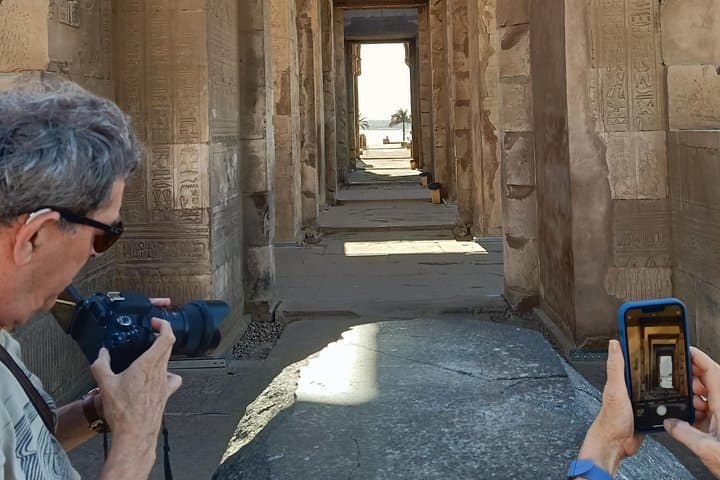
Timing matters—arrive rested in Cairo to absorb the museum and pyramid visits, and reserve mornings for major monuments when light and crowds are best. Respect site rules: no flash photography inside tombs, and follow your guide’s route to protect fragile reliefs. With preparation, this eight-day loop offers both cinematic vistas and direct access to Egypt’s living archaeological landscape.