THE ADVENTURE COLLECTIVE® · Independent discovery and booking for outdoor travel

Traverse Morocco from Marrakech to Casablanca in eight days: High Atlas passes, UNESCO kasbahs, Todgha Gorges, and a Sahara night under the stars. This guided loop balances long drives with cultural stops, a camel trek, and desert camping.
Traverse Morocco from Marrakech to Casablanca in eight days: High Atlas passes, UNESCO kasbahs, Todgha Gorges, and a Sahara night under the stars. This guided loop balances long drives with cultural stops, a camel trek, and desert camping.
The convoy leaves Marrakech before the medina wakes, headlights cutting across ochre walls as the High Atlas rises like a shoulder against the sky. The road climbs Tizi n’Tichka; switchbacks reveal Berber villages clinging to ridgelines while the mountains dare you to look away. Ait Ben Haddou appears later — a mud‑brick fortress sitting on the riverbank, its towers catching late light like a citadel paused between desert and cinema.
Verified experiences and guided adventures in the surrounding area.
Operated by Dahhani Signature Golf · Marrakech, Marrakesh-Safi
The convoy leaves Marrakech before the medina wakes, headlights cutting across ochre walls as the High Atlas rises like a shoulder against the sky. The road climbs Tizi n’Tichka; switchbacks reveal Berber villages clinging to ridgelines while the mountains dare you to look away. Ait Ben Haddou appears later — a mud‑brick fortress sitting on the riverbank, its towers catching late light like a citadel paused between desert and cinema.
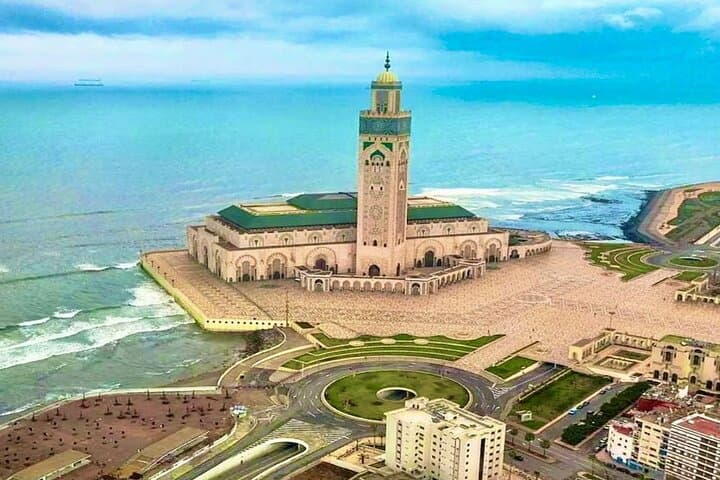
This route threads history and geology: the High Atlas is young tectonic uplift, Todgha’s limestone cliffs were sculpted by millennia of water, and Erg Chebbi’s dunes are wind‑carved hills of sand once crossed by caravan traders. Cities provide cultural punctuation — Fes’s medina preserves medieval crafts and theological scholarship, Chefchaouen’s painted streets reflect Andalusian and Rif Mountain influences, and Casablanca’s Hassan II Mosque points to modern Morocco’s outward gaze.
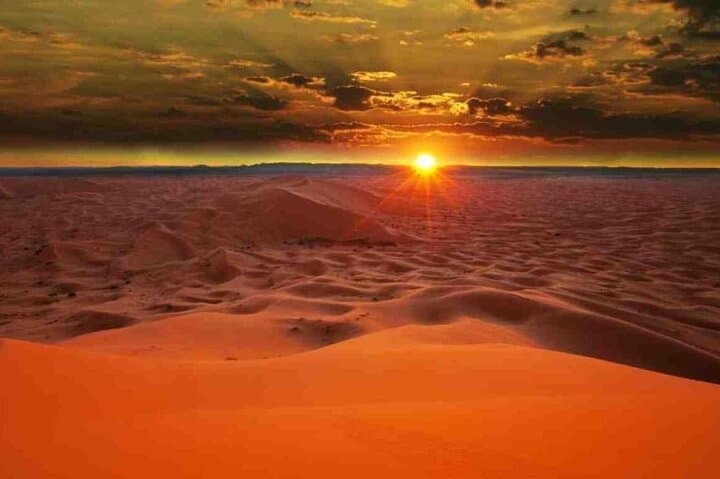
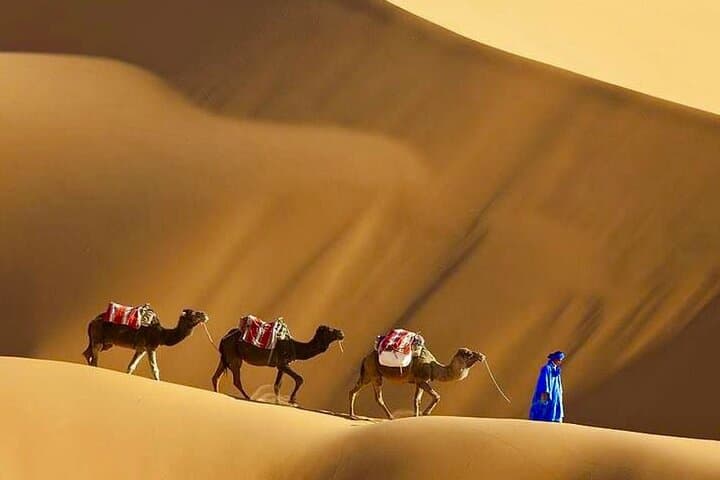
Expect long driving segments balanced by hands‑on moments: a sunset camel trek and a night in a traditional desert camp, walking tours through car‑free lanes of Fes, and short hikes beside the Todgha Gorges. Practical tips: plan around heat — Sahara evenings are cold despite daytime heat, carry local cash for small markets, and wear shoes that handle dusty alleys and rocky paths. Guided logistics cover transport and accommodations, but bring patience for market bargaining and unpaved stops.
For travelers who want landscape variety in a single itinerary — mountains, gorges, desert, and historic medinas — this eight‑day loop is a compact, revealing way to read Morocco’s layers while staying mobile and well supported.
moderate.
8 days.
Light to moderate fitness—able to handle several hours of walking, short hikes, and long vehicle transfers.
No—this tour begins and ends at arranged pickup/drop‑off points; international flights are not included.
Yes—camel rides and the desert camp are family friendly, but check with the operator about child age limits for safety seats and participation.
Most days include short to moderate walks (30–90 minutes) in medinas, viewpoints, or gorges; long stretches are by vehicle.
Accommodations range from comfortable riads in cities to simple, well‑run desert camps with blankets and shared facilities.
The route follows old trade and pilgrimage corridors where Berber kasbahs served as fortified stops for caravans and local communities shaped mud‑brick architecture.
Water scarcity and foot traffic threaten fragile desert and mountain ecosystems; prefer local camps that use solar energy and follow leave‑no‑trace practices.
Dahhani Signature Golf operates guided outdoor trips and adventures with an emphasis on safety, stewardship, and memorable experiences.
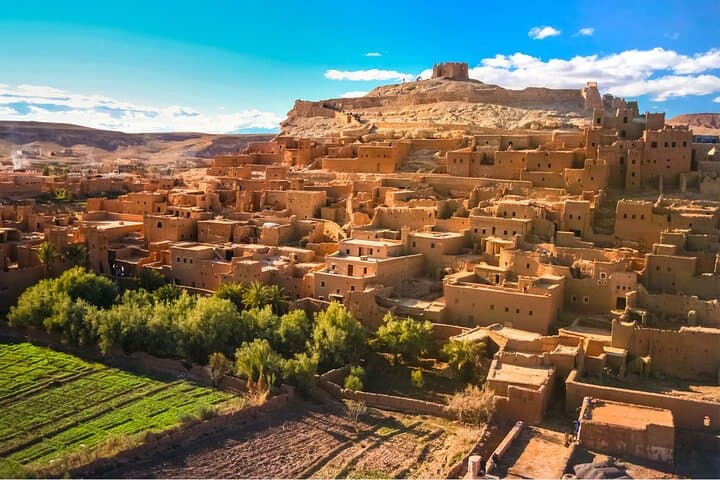
The convoy leaves Marrakech before the medina wakes, headlights cutting across ochre walls as the High Atlas rises like a shoulder against the sky. The road climbs Tizi n’Tichka; switchbacks reveal Berber villages clinging to ridgelines while the mountains dare you to look away. Ait Ben Haddou appears later — a mud‑brick fortress sitting on the riverbank, its towers catching late light like a citadel paused between desert and cinema.
The convoy leaves Marrakech before the medina wakes, headlights cutting across ochre walls as the High Atlas rises like a shoulder against the sky. The road climbs Tizi n’Tichka; switchbacks reveal Berber villages clinging to ridgelines while the mountains dare you to look away. Ait Ben Haddou appears later — a mud‑brick fortress sitting on the riverbank, its towers catching late light like a citadel paused between desert and cinema.
This route threads history and geology: the High Atlas is young tectonic uplift, Todgha’s limestone cliffs were sculpted by millennia of water, and Erg Chebbi’s dunes are wind‑carved hills of sand once crossed by caravan traders. Cities provide cultural punctuation — Fes’s medina preserves medieval crafts and theological scholarship, Chefchaouen’s painted streets reflect Andalusian and Rif Mountain influences, and Casablanca’s Hassan II Mosque points to modern Morocco’s outward gaze.
Expect long driving segments balanced by hands‑on moments: a sunset camel trek and a night in a traditional desert camp, walking tours through car‑free lanes of Fes, and short hikes beside the Todgha Gorges. Practical tips: plan around heat — Sahara evenings are cold despite daytime heat, carry local cash for small markets, and wear shoes that handle dusty alleys and rocky paths. Guided logistics cover transport and accommodations, but bring patience for market bargaining and unpaved stops.
For travelers who want landscape variety in a single itinerary — mountains, gorges, desert, and historic medinas — this eight‑day loop is a compact, revealing way to read Morocco’s layers while staying mobile and well supported.