THE ADVENTURE COLLECTIVE® · Independent discovery and booking for outdoor travel

Traverse Morocco from imperial cities to wind-sculpted dunes on an eight-day circuit that mixes medina walking, mountain passes, and a camel-led night in the Sahara. Expect long driving days, cultural depth, and dramatic landscapes from Volubilis to Erg Chebbi.
Traverse Morocco from imperial cities to wind-sculpted dunes on an eight-day circuit that mixes medina walking, mountain passes, and a camel-led night in the Sahara. Expect long driving days, cultural depth, and dramatic landscapes from Volubilis to Erg Chebbi.
The sun edges over the Kasbahs as your driver pulls out of Marrakech, the city shrinking behind a wake of ochre rooftops and the road unspooling toward the High Atlas.
Verified experiences and guided adventures in the surrounding area.
Operated by Marrakech Activities Expert · Marrakech, Marrakech-Safi
The sun edges over the Kasbahs as your driver pulls out of Marrakech, the city shrinking behind a wake of ochre rooftops and the road unspooling toward the High Atlas.
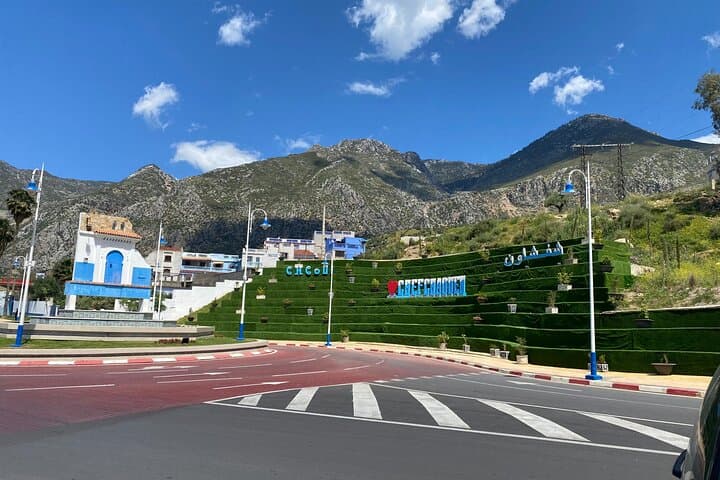
Across eight days you’ll move between landscapes that argue with one another: the Atlantic coast’s steady pull, the High Atlas that holds the mountain passes, fertile river valleys, and the Sahara’s dunes that dare you to leave footprints at their crest. Expect long days on the road—several transfers of three to six hours—but each stretch reveals a new geological chapter: folded granites and schists in the Atlas, fertile alluvial fans in the Ziz Valley, and wind-sculpted erg fields at Erg Chebbi.
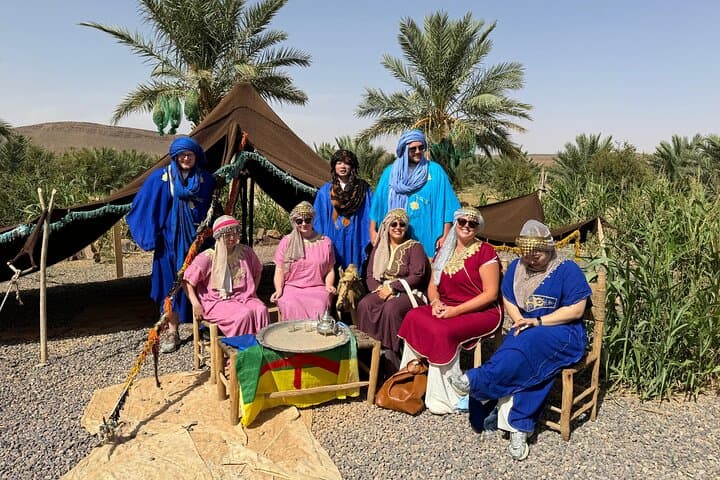
History arrives in monuments: Roman mosaics at Volubilis, the fortified ksar of Ait Ben Haddou, and the medieval medina of Fes with its ancient university. Culture is immediate—Berber (Amazigh) villages, riads serving mint tea, souks where spices and leather define the senses. Locals trade in craft and hospitality; seasonal rose-harvesters and the cinema crews of Ouarzazate add modern chapters.
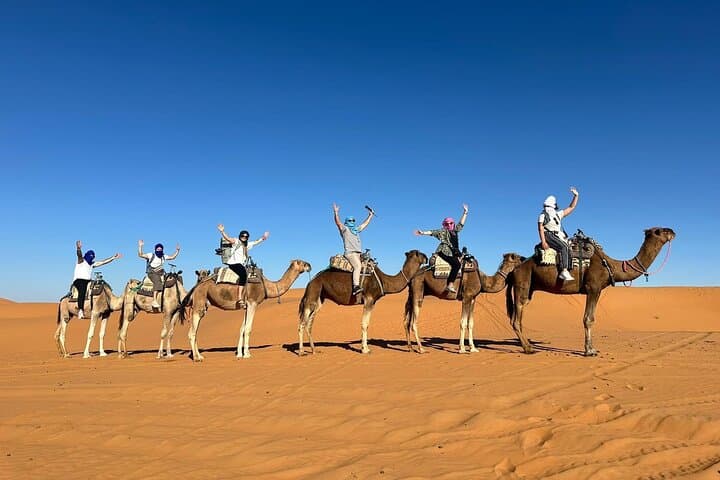
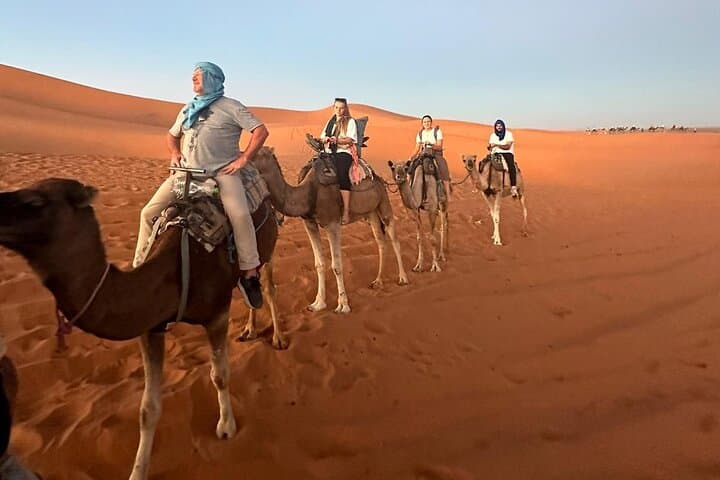
Practical guidance: pack layers for high-pass mornings (Tizi n’Tichka climbs above 2,200 m), sun protection for desert days, and sturdy shoes for walking medinas and short canyon trails. Hydrate on long drives and time your desert camel trek to hit sunset and sunrise—the light changes the dunes’ colors.
This is a travel rhythm of driving, short hikes, and cultural stops—ideal for travelers who want a compact, varied cross-section of Morocco’s landscapes and histories without extensive backcountry skills.
moderate.
8 days.
Good for travelers who can handle multiple full travel days, short walks, and a camel trek; minimal continuous hiking required.
The itinerary begins in Marrakech or Casablanca (pickup arranged) and finishes with transfer back to Casablanca; many travelers choose Marrakech as their base.
The camel ride is short and non-technical; you should be able to mount/dismount with minimal assistance and tolerate sleeping in a tented camp with ensuite options available.
The tour includes riad and camp accommodations as listed, with select meals at camps and riads; check the itinerary details for specifics on which meals are provided.
The tour is rated suitable for most fitness levels, but long drives and uneven surfaces in medinas and gorges can be challenging—contact the operator about wheelchair accessibility and vehicle options.
The route threads Morocco’s imperial legacy—from Roman Volubilis to the Alaouite palaces of Meknes—and the southern ksour that guarded trans-Saharan trade routes.
Respect fragile desert ecosystems by minimizing campfire impact, avoiding driving on dunes, and using local guides who support sustainable practices and community tourism.
Marrakech Activities Expert operates guided outdoor trips and adventures with an emphasis on safety, stewardship, and memorable experiences.
The sun edges over the Kasbahs as your driver pulls out of Marrakech, the city shrinking behind a wake of ochre rooftops and the road unspooling toward the High Atlas.
The sun edges over the Kasbahs as your driver pulls out of Marrakech, the city shrinking behind a wake of ochre rooftops and the road unspooling toward the High Atlas.
Across eight days you’ll move between landscapes that argue with one another: the Atlantic coast’s steady pull, the High Atlas that holds the mountain passes, fertile river valleys, and the Sahara’s dunes that dare you to leave footprints at their crest. Expect long days on the road—several transfers of three to six hours—but each stretch reveals a new geological chapter: folded granites and schists in the Atlas, fertile alluvial fans in the Ziz Valley, and wind-sculpted erg fields at Erg Chebbi.
History arrives in monuments: Roman mosaics at Volubilis, the fortified ksar of Ait Ben Haddou, and the medieval medina of Fes with its ancient university. Culture is immediate—Berber (Amazigh) villages, riads serving mint tea, souks where spices and leather define the senses. Locals trade in craft and hospitality; seasonal rose-harvesters and the cinema crews of Ouarzazate add modern chapters.
Practical guidance: pack layers for high-pass mornings (Tizi n’Tichka climbs above 2,200 m), sun protection for desert days, and sturdy shoes for walking medinas and short canyon trails. Hydrate on long drives and time your desert camel trek to hit sunset and sunrise—the light changes the dunes’ colors.
This is a travel rhythm of driving, short hikes, and cultural stops—ideal for travelers who want a compact, varied cross-section of Morocco’s landscapes and histories without extensive backcountry skills.