THE ADVENTURE COLLECTIVE® · Independent discovery and booking for outdoor travel

An 8-day Machame Route trek gives you rainforest, moorland, alpine desert and a pre-dawn summit push to Uhuru Peak. This guide covers terrain, daily effort, and practical tips to prepare for high-altitude hiking on Kilimanjaro.
An 8-day Machame Route trek gives you rainforest, moorland, alpine desert and a pre-dawn summit push to Uhuru Peak. This guide covers terrain, daily effort, and practical tips to prepare for high-altitude hiking on Kilimanjaro.
You step off the jeep at Machame Gate, the forest breathing cool and wet around you, and a line of porters rearranges canvas and gear under an open sky. The trail climbs through thick mountain rainforest, opens into heather and moorland, then carves across alpine desert before the last lunar slog to Uhuru Peak at 5,895 m.
Verified experiences and guided adventures in the surrounding area.
Operated by KUBWA FIVE SAFARIS LIMITED · Moshi, Kilimanjaro Region
You step off the jeep at Machame Gate, the forest breathing cool and wet around you, and a line of porters rearranges canvas and gear under an open sky. The trail climbs through thick mountain rainforest, opens into heather and moorland, then carves across alpine desert before the last lunar slog to Uhuru Peak at 5,895 m.
Kilimanjaro is a free-standing volcanic massif—three cones stacked by ancient eruptions—and its glaciers and crater rim tell a short geological story of fire and ice. The Machame route, favored for its gradual ascent profile, was developed in the late 20th century to improve summit success by ‘climb high, sleep low’ rotation. Culturally, the Chagga towns on the southern slopes have long been gateway communities; many guides and porters come from Moshi and nearby villages.
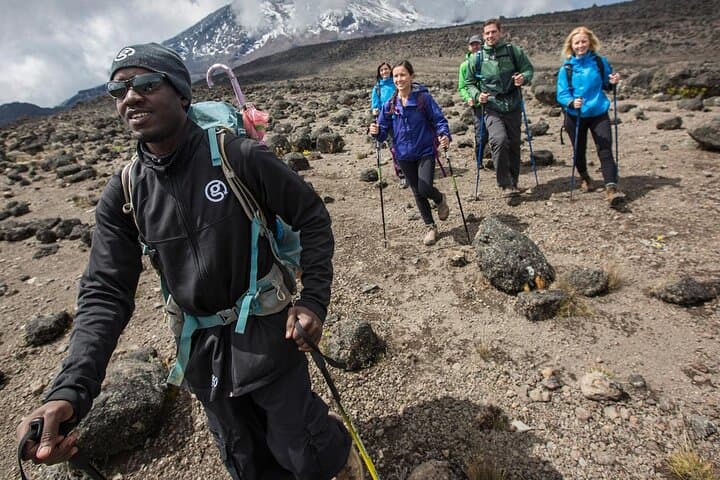
Expect varied terrain: muddy, root-strewn rainforest trails, eroded volcanic scree on high slopes, and a cold, wind-swept summit ridge. Daily hiking averages 4–8 hours, with summit day often 10–14 hours; total elevation gain from Machame Gate (~1,650–1,800 m) to Uhuru Peak is roughly 4,100 m.
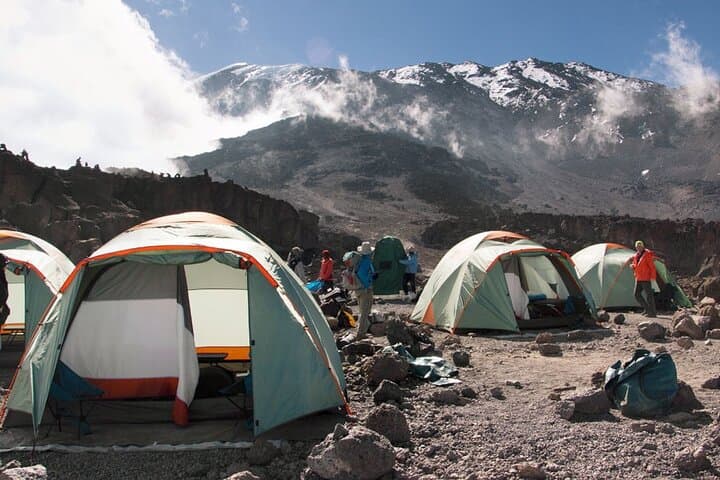
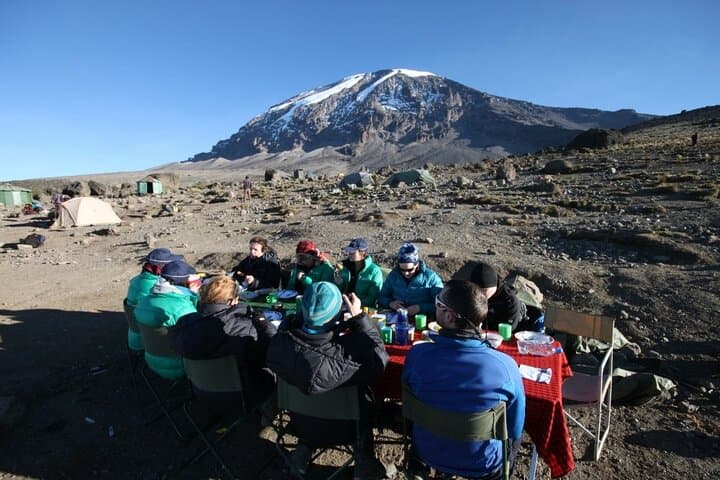
Practical guidance: build in aerobic training and back-to-back long hikes, practice using trekking poles, and prioritize layered clothing and a 0°C or lower-rated sleeping bag. Hydrate constantly—altitude amplifies dehydration—and listen to guides on acclimatization; they monitor symptoms and make conservative decisions. The route relies on porters and tent camps; permits and trained guides are required. An 8-day Machame itinerary gives a better acclimatization profile than shorter plans and raises your chances of summiting while keeping the experience immersive and community-driven.
challenging.
8 days.
Good aerobic fitness with experience on multiday hikes; able to handle long days and high altitude.
No technical climbing skills are required, but experience with multiday hikes and high-altitude trekking improves comfort and summit chances.
Summit day is the longest and steepest: expect 10–14 hours roundtrip with heavy altitude exposure and very cold conditions.
Yes—on standard Machame treks porters carry tents and organizers usually supply sleeping bags; confirm sleeping bag temperature rating before departure.
Dry months (June–October and late December–February) offer more stable conditions and higher summit success rates, while rainy seasons add mud and cloud cover.
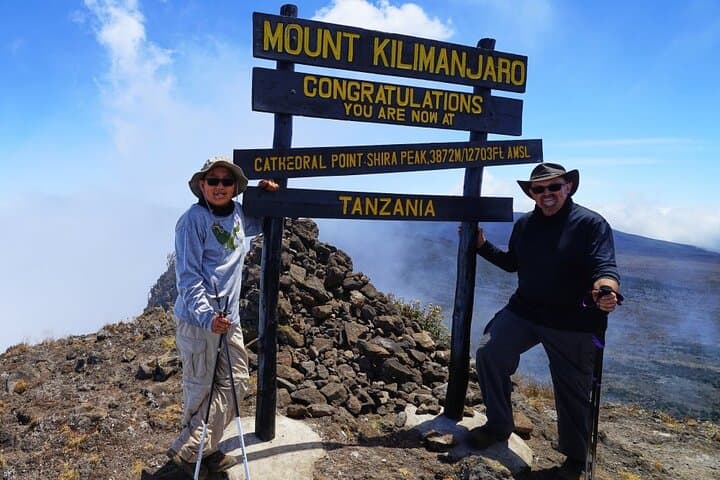
Kilimanjaro has long been part of Chagga culture and became a focus for European exploration in the late 19th century; Uhuru Peak was first reached in 1889 (Hans Meyer and Ludwig Purtscheller).
Kilimanjaro National Park manages permits to control numbers; stick to marked trails, pack out waste, and choose operators that follow porter welfare and sustainable practices.
KUBWA FIVE SAFARIS LIMITED operates guided outdoor trips and adventures with an emphasis on safety, stewardship, and memorable experiences.
You step off the jeep at Machame Gate, the forest breathing cool and wet around you, and a line of porters rearranges canvas and gear under an open sky. The trail climbs through thick mountain rainforest, opens into heather and moorland, then carves across alpine desert before the last lunar slog to Uhuru Peak at 5,895 m.
You step off the jeep at Machame Gate, the forest breathing cool and wet around you, and a line of porters rearranges canvas and gear under an open sky. The trail climbs through thick mountain rainforest, opens into heather and moorland, then carves across alpine desert before the last lunar slog to Uhuru Peak at 5,895 m.
Kilimanjaro is a free-standing volcanic massif—three cones stacked by ancient eruptions—and its glaciers and crater rim tell a short geological story of fire and ice. The Machame route, favored for its gradual ascent profile, was developed in the late 20th century to improve summit success by ‘climb high, sleep low’ rotation. Culturally, the Chagga towns on the southern slopes have long been gateway communities; many guides and porters come from Moshi and nearby villages.
Expect varied terrain: muddy, root-strewn rainforest trails, eroded volcanic scree on high slopes, and a cold, wind-swept summit ridge. Daily hiking averages 4–8 hours, with summit day often 10–14 hours; total elevation gain from Machame Gate (~1,650–1,800 m) to Uhuru Peak is roughly 4,100 m.
Practical guidance: build in aerobic training and back-to-back long hikes, practice using trekking poles, and prioritize layered clothing and a 0°C or lower-rated sleeping bag. Hydrate constantly—altitude amplifies dehydration—and listen to guides on acclimatization; they monitor symptoms and make conservative decisions. The route relies on porters and tent camps; permits and trained guides are required. An 8-day Machame itinerary gives a better acclimatization profile than shorter plans and raises your chances of summiting while keeping the experience immersive and community-driven.