THE ADVENTURE COLLECTIVE® · Independent discovery and booking for outdoor travel

An eight-day loop from Lhasa to Everest Base Camp that balances UNESCO cultural sites with high-altitude scenery. Expect long scenic drives, permit logistics, and a critical focus on acclimatization for safe enjoyment of the plateau.
An eight-day loop from Lhasa to Everest Base Camp that balances UNESCO cultural sites with high-altitude scenery. Expect long scenic drives, permit logistics, and a critical focus on acclimatization for safe enjoyment of the plateau.
The road leaves Lhasa beneath the white tiers of the Potala Palace and climbs into an open, wind-scoured world where prayer flags slice the sky. On day one you settle into the thin air; by midweek you’re watching Mt. Everest catch first light over the Rongbuk valley. The itinerary threads cultural highlights—Potala Palace, Jokhang Temple, Barkhor’s circuit—and highland scenery: Yamdrok Yumtso’s turquoise sweep, Karo La Glacier, the Pang La and Gampala passes.
Verified experiences and guided adventures in the surrounding area.
Operated by Samtour of Chengdu OTC Travel · Lhasa, Tibet Autonomous Region
The road leaves Lhasa beneath the white tiers of the Potala Palace and climbs into an open, wind-scoured world where prayer flags slice the sky. On day one you settle into the thin air; by midweek you’re watching Mt. Everest catch first light over the Rongbuk valley. The itinerary threads cultural highlights—Potala Palace, Jokhang Temple, Barkhor’s circuit—and highland scenery: Yamdrok Yumtso’s turquoise sweep, Karo La Glacier, the Pang La and Gampala passes.
History and geology sit side by side here: Lhasa’s sacred sites date to the 7th century and the Potala’s present form evolved under later Dalai Lamas, while the Tibetan Plateau itself is the rising edge of the India–Eurasia collision that created the Himalaya and feeds glaciers like Karo La.
Local culture is overt—monks in saffron robes, villagers spinning mani wheels—and practicalities are strict: a Tibet travel permit and a valid Chinese visa are mandatory; guides typically manage permits and logistics. The days of driving (Lhasa–Gyantse ~370 km; Shigatse–Lhasa ~270 km) are long but scenic; expect simple hotels in towns and dorm or big-tent accommodation near Rongbuk.
Plan for altitude: allow acclimatization days, hydrate, move slowly and carry medications for acute mountain sickness. Dress in layers for strong sun, cold nights and sudden wind. Book at least 15 days ahead for permits and bring photocopies of passport and visa. With the right preparation this route delivers a balanced mix of Tibetan culture and high-mountain spectacle.
challenging.
8 days.
Moderate to fit — able to handle several hours of walking at altitude and long road transfers; prior high-altitude experience helps.
Yes — a Tibet Travel Permit is required in addition to a valid Chinese visa; tour operators generally handle the permit but need passport and visa copies well in advance.
Altitude illness risk is real: Lhasa (~3,700 m) is a mild start but passes and Everest Base Camp exceed 4,500–5,000 m. Slow ascent, hydration, rest days and medications (consult your doctor) reduce risk.
Near Rongbuk accommodations are basic — big tents or dorm-style rooms; towns like Lhasa and Shigatse offer standard 3-star hotels with private bathrooms.
Late spring (May–June) and early autumn (September–October) offer the most stable weather and clearer mountain views, though summer brings warmer temperatures and occasional monsoon haze.
Potala Palace and Jokhang Temple anchor Lhasa’s spiritual history, with foundations reaching back to the 7th century and major expansion under later Dalai Lamas.
The Tibetan Plateau is ecologically fragile; stick to established roads and camps, pack out waste, and minimize single-use plastics to reduce footprint.
Samtour of Chengdu OTC Travel operates guided outdoor trips and adventures with an emphasis on safety, stewardship, and memorable experiences.

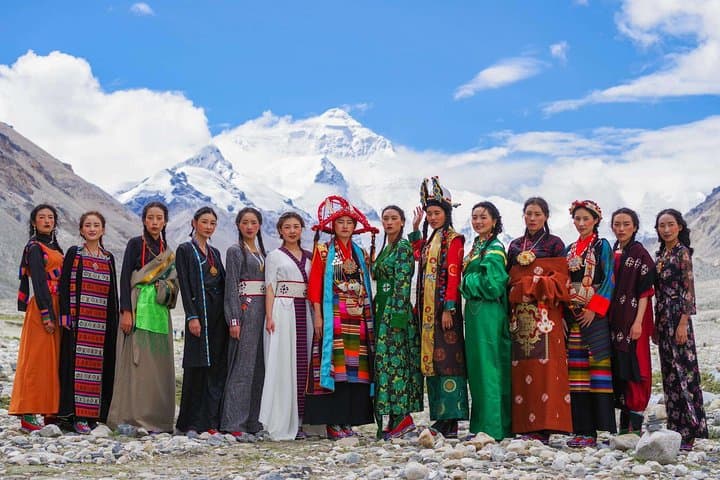


The road leaves Lhasa beneath the white tiers of the Potala Palace and climbs into an open, wind-scoured world where prayer flags slice the sky. On day one you settle into the thin air; by midweek you’re watching Mt. Everest catch first light over the Rongbuk valley. The itinerary threads cultural highlights—Potala Palace, Jokhang Temple, Barkhor’s circuit—and highland scenery: Yamdrok Yumtso’s turquoise sweep, Karo La Glacier, the Pang La and Gampala passes.
The road leaves Lhasa beneath the white tiers of the Potala Palace and climbs into an open, wind-scoured world where prayer flags slice the sky. On day one you settle into the thin air; by midweek you’re watching Mt. Everest catch first light over the Rongbuk valley. The itinerary threads cultural highlights—Potala Palace, Jokhang Temple, Barkhor’s circuit—and highland scenery: Yamdrok Yumtso’s turquoise sweep, Karo La Glacier, the Pang La and Gampala passes.
History and geology sit side by side here: Lhasa’s sacred sites date to the 7th century and the Potala’s present form evolved under later Dalai Lamas, while the Tibetan Plateau itself is the rising edge of the India–Eurasia collision that created the Himalaya and feeds glaciers like Karo La.
Local culture is overt—monks in saffron robes, villagers spinning mani wheels—and practicalities are strict: a Tibet travel permit and a valid Chinese visa are mandatory; guides typically manage permits and logistics. The days of driving (Lhasa–Gyantse ~370 km; Shigatse–Lhasa ~270 km) are long but scenic; expect simple hotels in towns and dorm or big-tent accommodation near Rongbuk.
Plan for altitude: allow acclimatization days, hydrate, move slowly and carry medications for acute mountain sickness. Dress in layers for strong sun, cold nights and sudden wind. Book at least 15 days ahead for permits and bring photocopies of passport and visa. With the right preparation this route delivers a balanced mix of Tibetan culture and high-mountain spectacle.