THE ADVENTURE COLLECTIVE® · Independent discovery and booking for outdoor travel

An 8-day small-group route from Lhasa to Everest Base Camp that pairs UNESCO heritage in Lhasa with high‑altitude scenery at Yamdrok Yumtso, Karola Glacier and Rongbuk. Expect long drives, basic base-camp lodging, and guided acclimatization.
An 8-day small-group route from Lhasa to Everest Base Camp that pairs UNESCO heritage in Lhasa with high‑altitude scenery at Yamdrok Yumtso, Karola Glacier and Rongbuk. Expect long drives, basic base-camp lodging, and guided acclimatization.
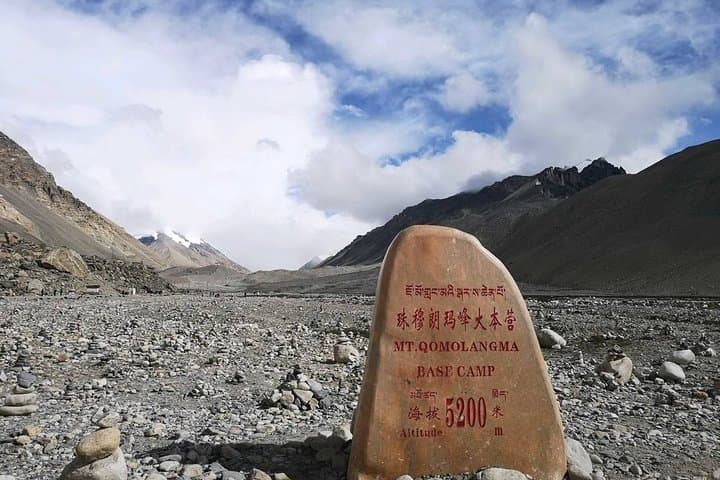
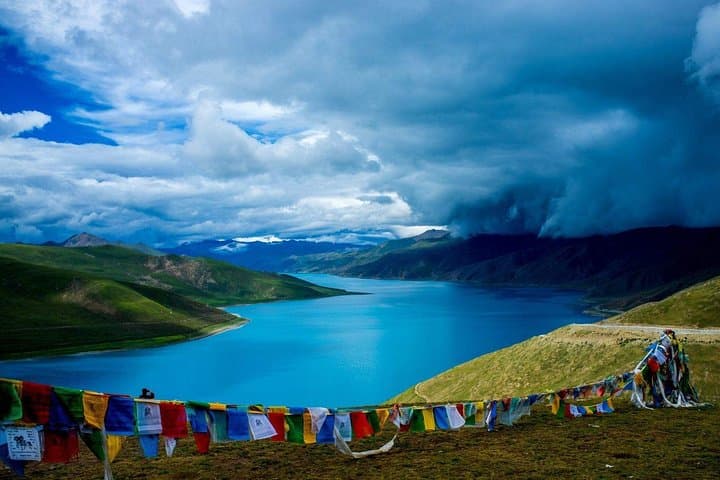
A cold wind moves prayer flags outside the hotel as the group gathers in Lhasa, the city sitting high on a broad plateau under a sky that seems especially thin. Walking toward the Potala Palace, visitors feel the altitude in their breath and the weight of centuries in the stone: clay-white facades stacked in tiers, chapels tucked into angled roofs. Over eight days, the route opens outward — monastery courtyards, a turquoise holy lake, the ragged spires of the Karola Glacier, and finally the broad, wind-scoured plain at Rongbuk where Everest cuts the horizon.
Verified experiences and guided adventures in the surrounding area.
Operated by Samtour of Chengdu OTC Travel · Lhasa, Tibet Autonomous Region
A cold wind moves prayer flags outside the hotel as the group gathers in Lhasa, the city sitting high on a broad plateau under a sky that seems especially thin. Walking toward the Potala Palace, visitors feel the altitude in their breath and the weight of centuries in the stone: clay-white facades stacked in tiers, chapels tucked into angled roofs. Over eight days, the route opens outward — monastery courtyards, a turquoise holy lake, the ragged spires of the Karola Glacier, and finally the broad, wind-scoured plain at Rongbuk where Everest cuts the horizon.
This itinerary follows a classic cultural and high‑altitude arc: Lhasa’s 7th‑century religious core (Potala, Jokhang, Barkhor) and the scholarly monasteries Drepung and Sera, then east and west through Gyantse and Shigatse toward Pang La and Rongbuk. Geologically, the trip traverses the uplifted Himalaya and glacial cirques, with Yamdrok Yumtso as a glacially fed turquoise bowl framed by snow ridges.
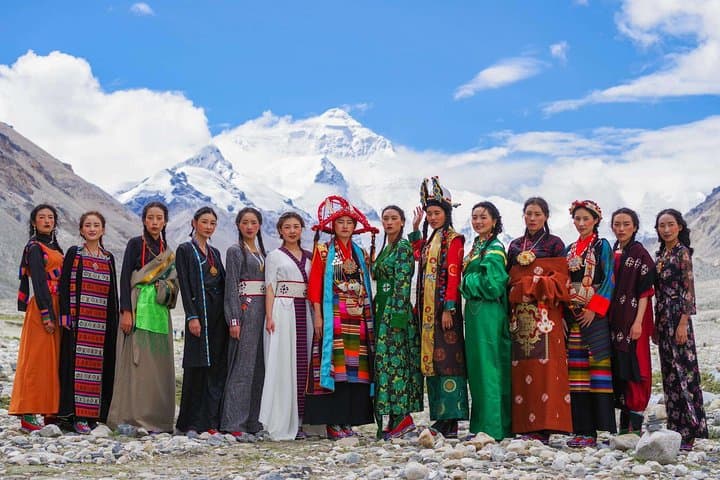
Culturally, Tibetan Buddhism and nomadic life are constant companions — prayer wheels, mani stones and monastery debate. Practically, expect long drives (several 4–6 hour legs), basic mountain accommodation at higher elevations, and mandatory Tibet permit handling by the operator.
Prepare to acclimatize slowly, hydrate, limit exertion on day one, and carry sun and wind protection. Use the guide’s advice about oxygen availability outside Lhasa. With moderate fitness and respect for altitude, travelers can pair deep cultural immersion with some of the most dramatic high‑altitude scenery on earth.
challenging.
8 days.
Moderate to good cardiovascular fitness recommended due to long drives and sustained high altitude; able to walk short uneven trails.
Yes — the tour operator handles the Tibet Travel Permit; travelers must supply passport and Chinese visa details at booking.
The itinerary reaches elevations above 5,000 m; expect breathlessness and require gradual acclimatization, rest and hydration; oxygen is provided outside Lhasa if needed.
Generally 3‑star hotels in cities and basic dorm or big‑tent lodging near Everest Base Camp; upgrades in Lhasa may be possible on request.
Yes — pickup from Lhasa airport or train station is included; coordinate timings with the operator to align with fixed departure dates.
Potala Palace and Jokhang Temple trace back to the 7th century and the rise of Tibetan Buddhist institutions; Gyantse’s Kumbum reflects an important regional art tradition.
The Tibetan Plateau is ecologically fragile; follow leave‑no‑trace, avoid disturbing wildlife, and minimize single‑use plastics during the tour.
Samtour of Chengdu OTC Travel operates guided outdoor trips and adventures with an emphasis on safety, stewardship, and memorable experiences.
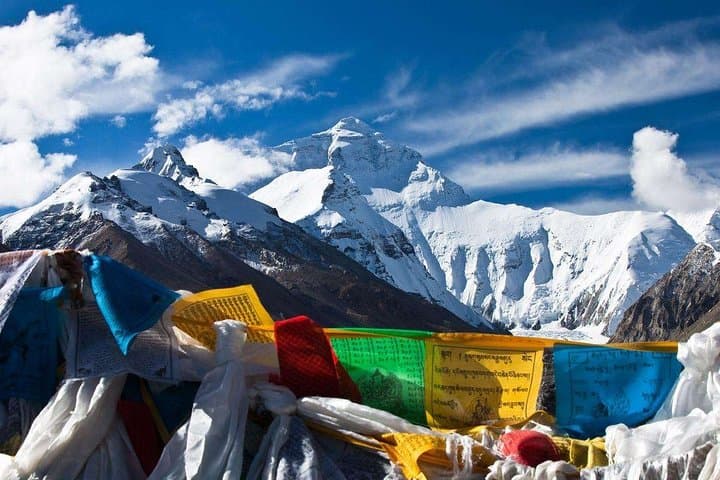
A cold wind moves prayer flags outside the hotel as the group gathers in Lhasa, the city sitting high on a broad plateau under a sky that seems especially thin. Walking toward the Potala Palace, visitors feel the altitude in their breath and the weight of centuries in the stone: clay-white facades stacked in tiers, chapels tucked into angled roofs. Over eight days, the route opens outward — monastery courtyards, a turquoise holy lake, the ragged spires of the Karola Glacier, and finally the broad, wind-scoured plain at Rongbuk where Everest cuts the horizon.
A cold wind moves prayer flags outside the hotel as the group gathers in Lhasa, the city sitting high on a broad plateau under a sky that seems especially thin. Walking toward the Potala Palace, visitors feel the altitude in their breath and the weight of centuries in the stone: clay-white facades stacked in tiers, chapels tucked into angled roofs. Over eight days, the route opens outward — monastery courtyards, a turquoise holy lake, the ragged spires of the Karola Glacier, and finally the broad, wind-scoured plain at Rongbuk where Everest cuts the horizon.
This itinerary follows a classic cultural and high‑altitude arc: Lhasa’s 7th‑century religious core (Potala, Jokhang, Barkhor) and the scholarly monasteries Drepung and Sera, then east and west through Gyantse and Shigatse toward Pang La and Rongbuk. Geologically, the trip traverses the uplifted Himalaya and glacial cirques, with Yamdrok Yumtso as a glacially fed turquoise bowl framed by snow ridges.
Culturally, Tibetan Buddhism and nomadic life are constant companions — prayer wheels, mani stones and monastery debate. Practically, expect long drives (several 4–6 hour legs), basic mountain accommodation at higher elevations, and mandatory Tibet permit handling by the operator.
Prepare to acclimatize slowly, hydrate, limit exertion on day one, and carry sun and wind protection. Use the guide’s advice about oxygen availability outside Lhasa. With moderate fitness and respect for altitude, travelers can pair deep cultural immersion with some of the most dramatic high‑altitude scenery on earth.