THE ADVENTURE COLLECTIVE® · Independent discovery and booking for outdoor travel

An eight-day private climb on the Lemosho Route offers a deliberate, high-success path to Uhuru Peak. Expect rainforest, moorland, volcanic scree and a summit-night that begins in darkness and finishes with sunrise over Kibo’s crater.
An eight-day private climb on the Lemosho Route offers a deliberate, high-success path to Uhuru Peak. Expect rainforest, moorland, volcanic scree and a summit-night that begins in darkness and finishes with sunrise over Kibo’s crater.
You set off from Moshi before dawn, the town lights shrinking behind the Land Cruiser as the road narrows into a bumpy 4x4 track toward Londorossi Gate. Rainforest breathes at the trailhead—lichen-draped trunks, the chatter of Colobus monkeys—and within hours the forest yields to heather plains and a widening sky. On the Lemosho route each day rearranges the mountain: thick green canopies give way to moorland, then a jagged semi-desert, and at last the volcanic dust that feeds the glacier-streaked crater rim.
Verified experiences and guided adventures in the surrounding area.
Operated by Kilimanjaro Heroes Adventures · Moshi, Kilimanjaro Region
You set off from Moshi before dawn, the town lights shrinking behind the Land Cruiser as the road narrows into a bumpy 4x4 track toward Londorossi Gate. Rainforest breathes at the trailhead—lichen-draped trunks, the chatter of Colobus monkeys—and within hours the forest yields to heather plains and a widening sky. On the Lemosho route each day rearranges the mountain: thick green canopies give way to moorland, then a jagged semi-desert, and at last the volcanic dust that feeds the glacier-streaked crater rim.
Kilimanjaro is not a single peak but a volcanic massif with three cones—Kibo, Mawenzi and Shira—Kibo’s Uhuru Peak (5,895 m) the objective of this eight-day itinerary. Geology reads like a slow-motion eruption: ancient lava flows, pumice fields and the brittle, black scoria that forms the final climb. Humans have long lived under its shadow; the Chagga people farm terraced slopes around the mountain, and porters, guides and cooks continue a decades-old culture of mountain life that keeps summit attempts moving.
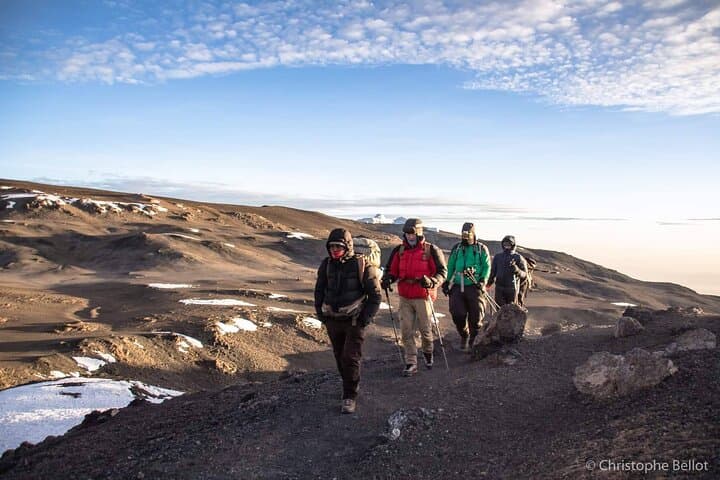
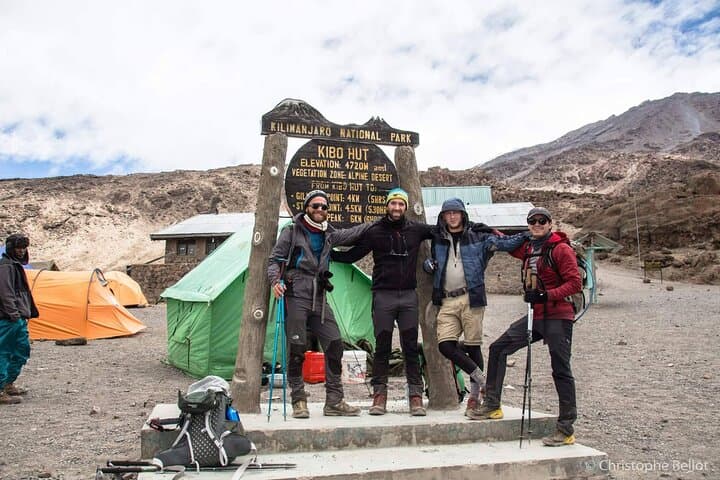
The Lemosho route is prized for its gradual profile and high success rate. Early days through rainforest and Shira Plateau give your body time to acclimatize; the classic day over Lava Tower (4,630 m) followed by a descent to Barranco is deliberate altitude work—climb high, sleep low. Summit night starts around midnight from Barafu Camp (4,600 m); you climb volcanic scree to Stella Point on the rim just as the sun pries itself over the horizon, and then the final ridge to Uhuru Peak.
Practical matters matter here. The itinerary includes full-board meals, tented accommodation, and trained porters who set camp before you arrive. Permit and park fees are handled by operators but confirm what’s included and whether guides carry pulse oximeters or basic first-aid kits. Train with long uphill hikes and back-to-back days of effort; include stair-climbing and weighted pack sessions to simulate summit night fatigue.
On the mountain, layer for wind and cold—temperatures at Barafu and above regularly drop below freezing. Hydration is non-negotiable: aim for 3–4 liters a day, using boiled or treated water from camps. Bring trekking poles, gaiters for dusty scree, and a warm insulated jacket for summit night. Consider prophylactic acetazolamide if you’re prone to altitude illness and listen to your guide: turning back is a smart decision when the body, not ego, speaks.
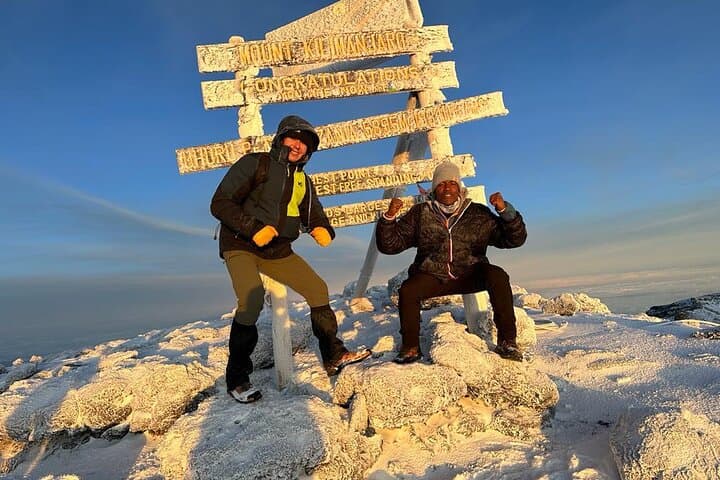
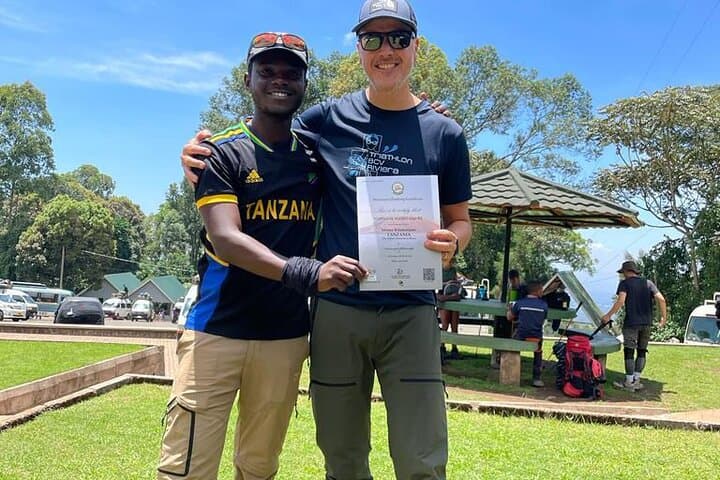
Reaching Uhuru is a physical and quietly emotional finish—photo-documented hugs, a slow descent into the green, a hot shower back in Moshi—and a reminder that large mountains keep their own rules. Respect them, prepare deliberately, and the Lemosho route rewards you with space, changing biomes, and the best possible chance at standing on East Africa’s highest point.
challenging.
8 days.
Good cardiovascular fitness and experience with multi-day trekking; training should include long uphill hikes and a week of back-to-back efforts.
Lemosho has one of the highest success rates due to its gradual profile and extra acclimatization days, but success depends on fitness, acclimatization, and weather.
No technical climbing skills are needed—this is a trek—but prior multi-day trekking experience and good fitness are important.
Temperatures at Uhuru Peak can fall well below freezing, often between -10°C and -20°C with wind chill; appropriate layering is essential.
Yes—this private climb includes full-board meals and two-person tents with porters setting up camp and providing hot water for washing.
Age and fitness limits vary by operator; many require participants to be teenagers or older and medically fit for high-altitude trekking.
Guides monitor symptoms and will administer basic first aid, descend as needed, and seek medical evacuation if severe—priority is safety over summit attempts.
Kilimanjaro’s slopes have long been inhabited by the Chagga people; the mountain also drew early European explorers who documented its glaciers and routes in the 19th century.
Glacial retreat and increased visitor numbers pressure fragile alpine zones; stick to established trails and follow TANAPA guidelines to reduce impact.
Kilimanjaro Heroes Adventures operates guided outdoor trips and adventures with an emphasis on safety, stewardship, and memorable experiences.
You set off from Moshi before dawn, the town lights shrinking behind the Land Cruiser as the road narrows into a bumpy 4x4 track toward Londorossi Gate. Rainforest breathes at the trailhead—lichen-draped trunks, the chatter of Colobus monkeys—and within hours the forest yields to heather plains and a widening sky. On the Lemosho route each day rearranges the mountain: thick green canopies give way to moorland, then a jagged semi-desert, and at last the volcanic dust that feeds the glacier-streaked crater rim.
You set off from Moshi before dawn, the town lights shrinking behind the Land Cruiser as the road narrows into a bumpy 4x4 track toward Londorossi Gate. Rainforest breathes at the trailhead—lichen-draped trunks, the chatter of Colobus monkeys—and within hours the forest yields to heather plains and a widening sky. On the Lemosho route each day rearranges the mountain: thick green canopies give way to moorland, then a jagged semi-desert, and at last the volcanic dust that feeds the glacier-streaked crater rim.
Kilimanjaro is not a single peak but a volcanic massif with three cones—Kibo, Mawenzi and Shira—Kibo’s Uhuru Peak (5,895 m) the objective of this eight-day itinerary. Geology reads like a slow-motion eruption: ancient lava flows, pumice fields and the brittle, black scoria that forms the final climb. Humans have long lived under its shadow; the Chagga people farm terraced slopes around the mountain, and porters, guides and cooks continue a decades-old culture of mountain life that keeps summit attempts moving.
The Lemosho route is prized for its gradual profile and high success rate. Early days through rainforest and Shira Plateau give your body time to acclimatize; the classic day over Lava Tower (4,630 m) followed by a descent to Barranco is deliberate altitude work—climb high, sleep low. Summit night starts around midnight from Barafu Camp (4,600 m); you climb volcanic scree to Stella Point on the rim just as the sun pries itself over the horizon, and then the final ridge to Uhuru Peak.
Practical matters matter here. The itinerary includes full-board meals, tented accommodation, and trained porters who set camp before you arrive. Permit and park fees are handled by operators but confirm what’s included and whether guides carry pulse oximeters or basic first-aid kits. Train with long uphill hikes and back-to-back days of effort; include stair-climbing and weighted pack sessions to simulate summit night fatigue.
On the mountain, layer for wind and cold—temperatures at Barafu and above regularly drop below freezing. Hydration is non-negotiable: aim for 3–4 liters a day, using boiled or treated water from camps. Bring trekking poles, gaiters for dusty scree, and a warm insulated jacket for summit night. Consider prophylactic acetazolamide if you’re prone to altitude illness and listen to your guide: turning back is a smart decision when the body, not ego, speaks.
Reaching Uhuru is a physical and quietly emotional finish—photo-documented hugs, a slow descent into the green, a hot shower back in Moshi—and a reminder that large mountains keep their own rules. Respect them, prepare deliberately, and the Lemosho route rewards you with space, changing biomes, and the best possible chance at standing on East Africa’s highest point.