THE ADVENTURE COLLECTIVE® · Independent discovery and booking for outdoor travel

Eight days on the Lemosho Route move you from tropical rainforest to Africa’s highest summit. This guide covers terrain, daily rhythm, altitude realities and the gear and planning needed to reach Uhuru Peak.
Eight days on the Lemosho Route move you from tropical rainforest to Africa’s highest summit. This guide covers terrain, daily rhythm, altitude realities and the gear and planning needed to reach Uhuru Peak.
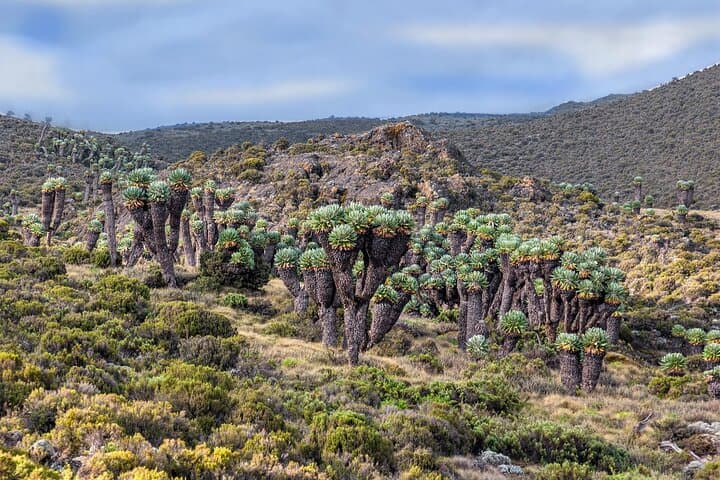
A damp morning in the rainforest greets you as porters shake out tents and steam rises from boiling kettles. Trees close around the trail, and distant blue monkeys chatter; within hours the forest gives way to heath and then a plateau where the mountain’s dome dominates the horizon.
Verified experiences and guided adventures in the surrounding area.
Operated by Jairos Adventure · Moshi, Kilimanjaro Region
A damp morning in the rainforest greets you as porters shake out tents and steam rises from boiling kettles. Trees close around the trail, and distant blue monkeys chatter; within hours the forest gives way to heath and then a plateau where the mountain’s dome dominates the horizon.
The Lemosho Route approaches Kilimanjaro from the west, threading rainforest, moorland, alpine desert and glaciated summit zones over eight days. Geologically Kibo, Mawenzi and Shira are remnants of a once-larger volcanic complex; Kibo’s summit is a dormant volcanic cone ringed by Rebmann and Ratzel glaciers that have been retreating for decades. The Chagga people have lived on Kilimanjaro’s lower slopes for centuries, and modern expeditions follow trails formalized during the late 19th and early 20th century, after the first recorded ascent in 1889.
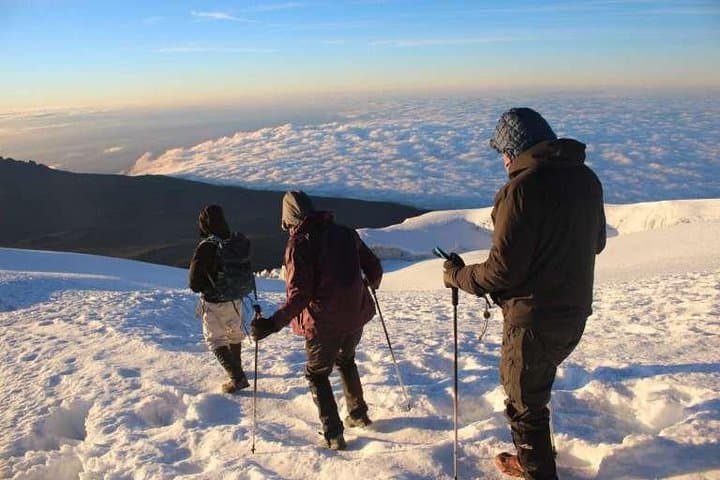
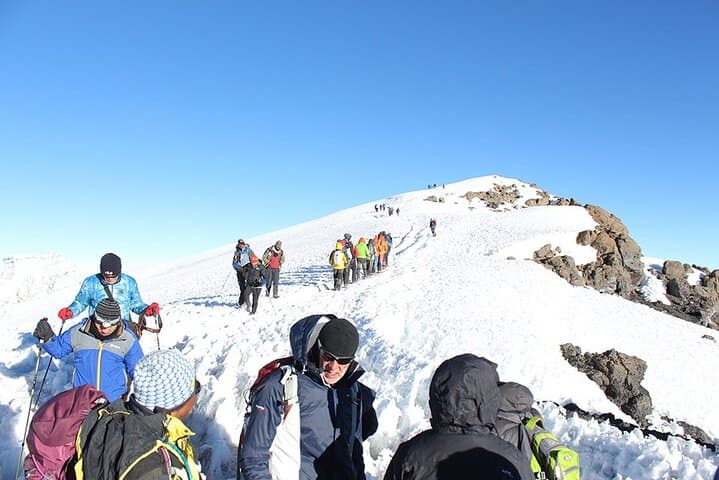
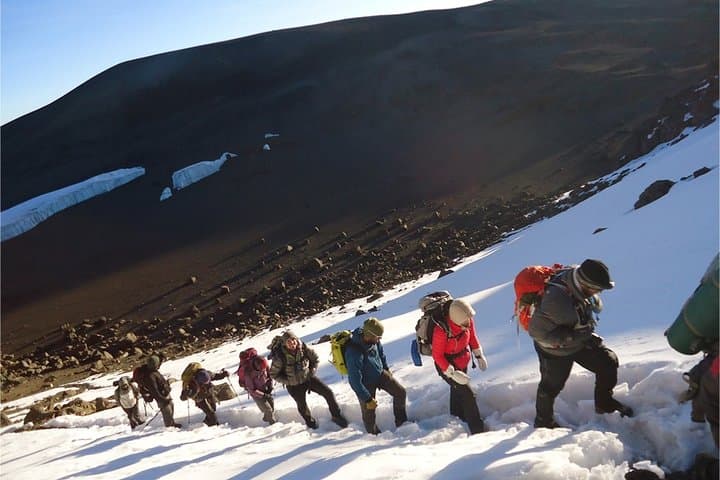
Expect long daily approaches of 4–7 hours, one very long summit push from Barafu that begins near midnight, temperatures from roughly +10°C in the afternoon to −10°C on summit night, and rapidly changing terrain underfoot — mud, scree, rock and snow. Guides, porters and cooks handle logistics and camping; park permits and rescue fees are included in most packages.
Practical tips: prioritize gradual pacing and hydration to reduce altitude sickness, carry layers and a reliable down jacket for summit night, and use trekking poles and good waterproof boots for the scree and descent. Book a route with at least eight days for proper acclimatization, confirm porter welfare practices, and plan Moshi as your base for arrival and departure.
challenging.
8 days.
Good aerobic fitness and endurance for multi-day trekking and a long summit push; previous multi-day hikes recommended
You should have good aerobic fitness and experience with full days of hiking; specific training for endurance, uphill walking and long descents will help your summit chances.
No technical rock-climbing skills are needed — the route is a high-altitude trek, though some sections require basic scrambling and confidence on steep scree.
Expect a midnight start, very low temperatures (often −5 to −10°C), high winds and thin air; pacing, layering and frequent short rests are essential.
Use a gradual itinerary (eight days), maintain hydration, eat regularly, ascend slowly, follow guide instructions and inform staff immediately about symptoms for prompt descent if needed.
Kilimanjaro’s peaks are remnants of volcanic activity; European recorded ascents date to the late 1800s, while the Chagga people have long cultural ties to the mountain’s lower slopes.
Kilimanjaro National Park manages permits and fees to fund conservation; focus on Leave No Trace, minimize single-use plastics and support operators who pay fair wages to porters.
Jairos Adventure operates guided outdoor trips and adventures with an emphasis on safety, stewardship, and memorable experiences.
A damp morning in the rainforest greets you as porters shake out tents and steam rises from boiling kettles. Trees close around the trail, and distant blue monkeys chatter; within hours the forest gives way to heath and then a plateau where the mountain’s dome dominates the horizon.
A damp morning in the rainforest greets you as porters shake out tents and steam rises from boiling kettles. Trees close around the trail, and distant blue monkeys chatter; within hours the forest gives way to heath and then a plateau where the mountain’s dome dominates the horizon.
The Lemosho Route approaches Kilimanjaro from the west, threading rainforest, moorland, alpine desert and glaciated summit zones over eight days. Geologically Kibo, Mawenzi and Shira are remnants of a once-larger volcanic complex; Kibo’s summit is a dormant volcanic cone ringed by Rebmann and Ratzel glaciers that have been retreating for decades. The Chagga people have lived on Kilimanjaro’s lower slopes for centuries, and modern expeditions follow trails formalized during the late 19th and early 20th century, after the first recorded ascent in 1889.
Expect long daily approaches of 4–7 hours, one very long summit push from Barafu that begins near midnight, temperatures from roughly +10°C in the afternoon to −10°C on summit night, and rapidly changing terrain underfoot — mud, scree, rock and snow. Guides, porters and cooks handle logistics and camping; park permits and rescue fees are included in most packages.
Practical tips: prioritize gradual pacing and hydration to reduce altitude sickness, carry layers and a reliable down jacket for summit night, and use trekking poles and good waterproof boots for the scree and descent. Book a route with at least eight days for proper acclimatization, confirm porter welfare practices, and plan Moshi as your base for arrival and departure.