THE ADVENTURE COLLECTIVE® · Independent discovery and booking for outdoor travel

Walk the Lemosho Route to Uhuru Peak on an 8-day private guided trek that blends rainforest approaches, alpine desert traverses, and a tough summit night. Built-in acclimatization and experienced guides make this a strategic choice for serious trekkers.
Walk the Lemosho Route to Uhuru Peak on an 8-day private guided trek that blends rainforest approaches, alpine desert traverses, and a tough summit night. Built-in acclimatization and experienced guides make this a strategic choice for serious trekkers.
A mist-slicked rainforest edges the trail as your group files out of Londorossi Gate — ferns sweep at ankle height and the path climbs into a world that changes with every hundred meters. On the Lemosho Route this first day feels like an invitation: birdcalls puncture the damp air, porters move with practiced calm, and the mountain’s volcanic ridgelines loom through breaks in the canopy.
Verified experiences and guided adventures in the surrounding area.
Operated by Spirit of Kilimanjaro · Moshi, Kilimanjaro Region
A mist-slicked rainforest edges the trail as your group files out of Londorossi Gate — ferns sweep at ankle height and the path climbs into a world that changes with every hundred meters. On the Lemosho Route this first day feels like an invitation: birdcalls puncture the damp air, porters move with practiced calm, and the mountain’s volcanic ridgelines loom through breaks in the canopy.
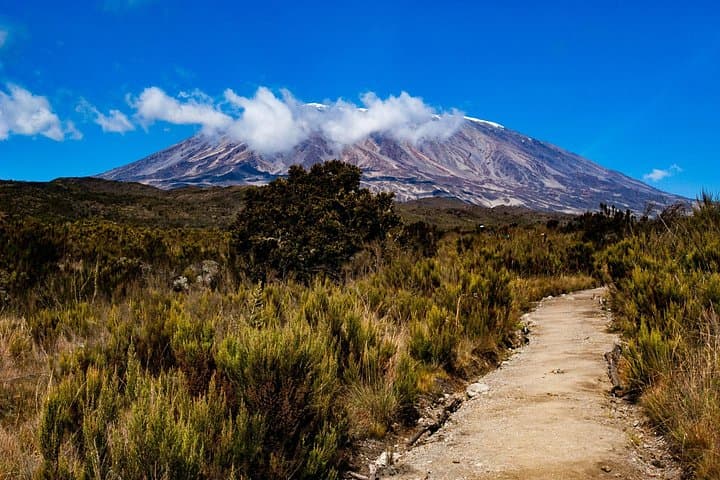
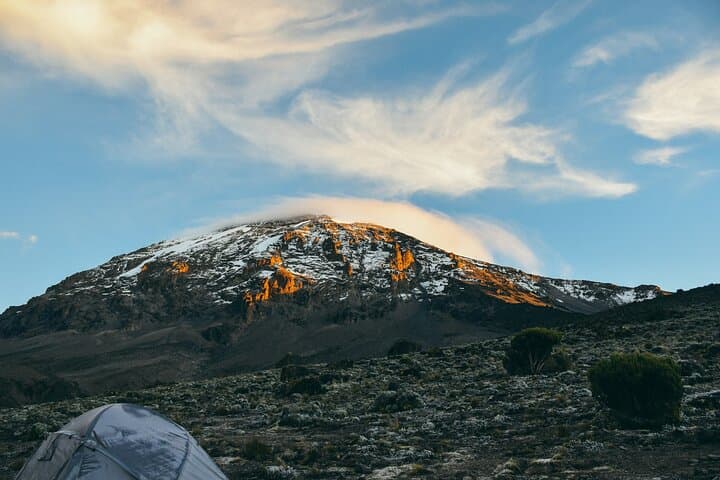
Kilimanjaro is a three-cone massif formed by successive eruptions; Kibo, the central cone that holds Uhuru Peak (5,895 m), dominates the skyline. For centuries the slopes have been part of Chagga cultural landscape — villages, cultivated terraces and trade routes below gave the mountain local significance long before global climbers arrived.
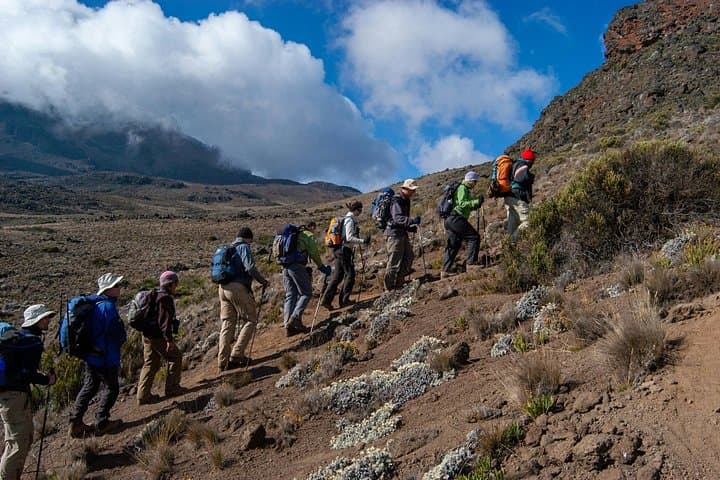
Expect varied terrain: lush rainforest (day 1), rolling moorland and alpine desert (Shira), a crucial acclimatization climb to Lava Tower (~4,600 m), and the exposed lunar scree above Barafu. Daily distances range from short 3–10 km hikes to a summit push that can total ~18 km and 10–16 hours on summit night. Altitude is the primary challenge; the itinerary builds in acclimatization days to improve summit odds.
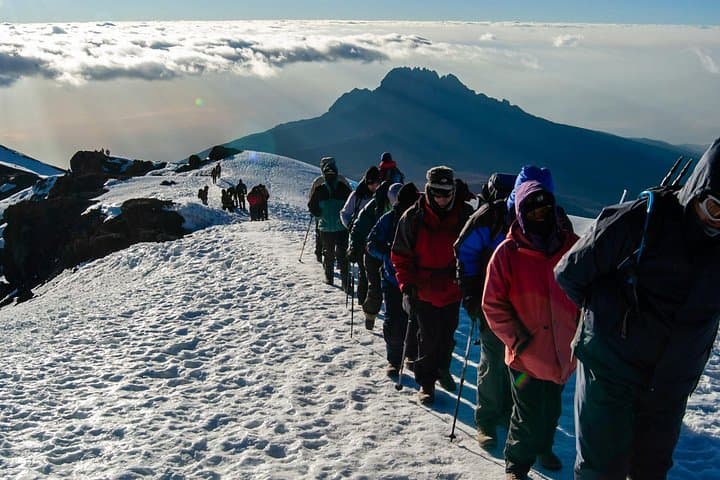
Practical notes: hike steady, hydrate deliberately, and layer for rapid temperature swings — nights on Barafu can be frigid with intense sun the following afternoon. Respect porter guidelines, bring a headlamp and crampon-capable footwear if you’re susceptible to icy steps near the rim. With guided support, nutritious meals and staged camps, Lemosho offers a balanced route to Africa’s roof for prepared trekkers.
challenging.
8 days.
Good aerobic fitness and experience with multi-day hikes; able to walk 5–8 hours on consecutive days and handle long summit push.
Summit day is the longest and steepest: expect 10–16 hours with a pre-dawn start and slow, steady pacing required to reach Uhuru Peak.
Guided packages typically include park fees and permits; confirm specifics with the operator before booking.
Any ascent above 3,000 m carries risk; using the Lemosho route’s acclimatization profile reduces but does not eliminate the chance — notify guides of symptoms immediately.
The driest windows are late June–October and January–February; weather can still be variable and guides adapt schedules accordingly.
Kilimanjaro’s three volcanic cones (Kibo, Mawenzi, Shira) reflect a geological history of eruptions; the mountain has long been central to local Chagga communities.
Kilmanjaro National Park fees support conservation and porter welfare programs; practice Leave No Trace and follow guide instructions to protect fragile alpine soils.
Spirit of Kilimanjaro operates guided outdoor trips and adventures with an emphasis on safety, stewardship, and memorable experiences.
A mist-slicked rainforest edges the trail as your group files out of Londorossi Gate — ferns sweep at ankle height and the path climbs into a world that changes with every hundred meters. On the Lemosho Route this first day feels like an invitation: birdcalls puncture the damp air, porters move with practiced calm, and the mountain’s volcanic ridgelines loom through breaks in the canopy.
A mist-slicked rainforest edges the trail as your group files out of Londorossi Gate — ferns sweep at ankle height and the path climbs into a world that changes with every hundred meters. On the Lemosho Route this first day feels like an invitation: birdcalls puncture the damp air, porters move with practiced calm, and the mountain’s volcanic ridgelines loom through breaks in the canopy.
Kilimanjaro is a three-cone massif formed by successive eruptions; Kibo, the central cone that holds Uhuru Peak (5,895 m), dominates the skyline. For centuries the slopes have been part of Chagga cultural landscape — villages, cultivated terraces and trade routes below gave the mountain local significance long before global climbers arrived.
Expect varied terrain: lush rainforest (day 1), rolling moorland and alpine desert (Shira), a crucial acclimatization climb to Lava Tower (~4,600 m), and the exposed lunar scree above Barafu. Daily distances range from short 3–10 km hikes to a summit push that can total ~18 km and 10–16 hours on summit night. Altitude is the primary challenge; the itinerary builds in acclimatization days to improve summit odds.
Practical notes: hike steady, hydrate deliberately, and layer for rapid temperature swings — nights on Barafu can be frigid with intense sun the following afternoon. Respect porter guidelines, bring a headlamp and crampon-capable footwear if you’re susceptible to icy steps near the rim. With guided support, nutritious meals and staged camps, Lemosho offers a balanced route to Africa’s roof for prepared trekkers.