THE ADVENTURE COLLECTIVE® · Independent discovery and booking for outdoor travel

An eight-day Lemosho climb gives you the best acclimatization and scenery on Kilimanjaro’s western flank. This guide covers the route’s terrain, what to expect from summit night, and practical gear and pacing advice to improve your chances of success.
An eight-day Lemosho climb gives you the best acclimatization and scenery on Kilimanjaro’s western flank. This guide covers the route’s terrain, what to expect from summit night, and practical gear and pacing advice to improve your chances of success.
Night on the lower slopes smells of damp earth and wood smoke as headlamps bob through the rainforest—this is the first evening of the Lemosho Route, an eight-day approach that eases you up Kilimanjaro’s western flank before circling the summit.
Verified experiences and guided adventures in the surrounding area.
Operated by MORAKA AFRICA SAFARIS · Moshi, Kilimanjaro Region
Night on the lower slopes smells of damp earth and wood smoke as headlamps bob through the rainforest—this is the first evening of the Lemosho Route, an eight-day approach that eases you up Kilimanjaro’s western flank before circling the summit.
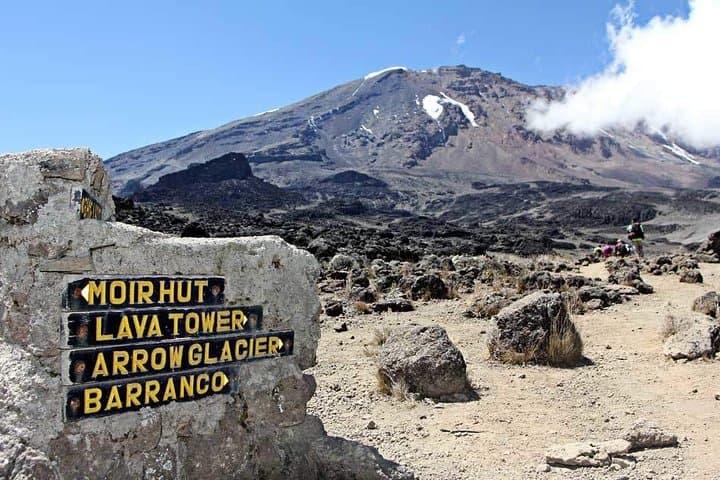
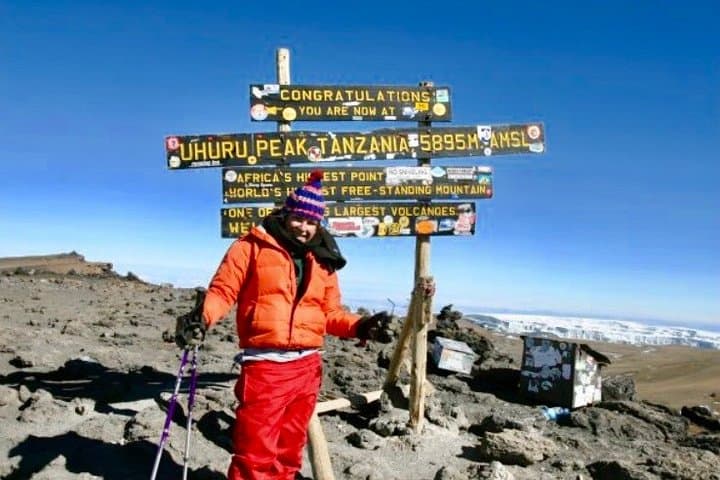
The route threads through dense montane forest into moorland and across the broad Shira Plateau, then joins the Machame corridor at Lava Tower before swinging south across Barranco and up to Barafu. Geologically Kilimanjaro is a three-peaked stratovolcano—Shira, Mawenzi and Kibo—with Uhuru Peak crowning the ash-and-ice summit at 5,895 m. The area sits within Kilimanjaro National Park, and the climb passes landscapes shaped by glacial retreat and volcanic flows as well as villages of the Chagga people below.
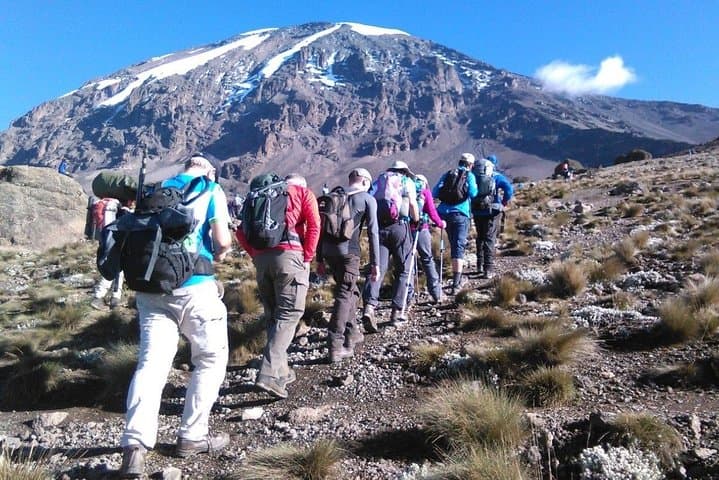
Expect long days of 3–7 hours of walking on mixed surfaces: muddy forest trails, grassy plateaus, rocky scree and alpine desert. Wildlife sightings—elephant or buffalo in lower forest clearings—are possible but rare higher up. Crews camp each night; cooking, tent setup and group briefings are part of the rhythm.
Practical edge: plan for progressive acclimatization—rest days and gentler ascents are built into the Lemosho itinerary. Gaiters, poles and layered insulation matter more than speed. Hydrate, eat regularly and follow your guide’s rotation pace; summit night is a cold, slow push starting around midnight across loose volcanic scree to Stella Point and Uhuru Peak.
This route favors climbers who want more scenery and acclimatization time than shorter lines—bring patience, respect for altitude, and a readiness to move with the mountain’s slow cadence.
challenging.
8 days.
Good cardiovascular fitness with experience on multi-day hikes; able to walk 4–8 hours daily and handle a long summit push at high altitude.
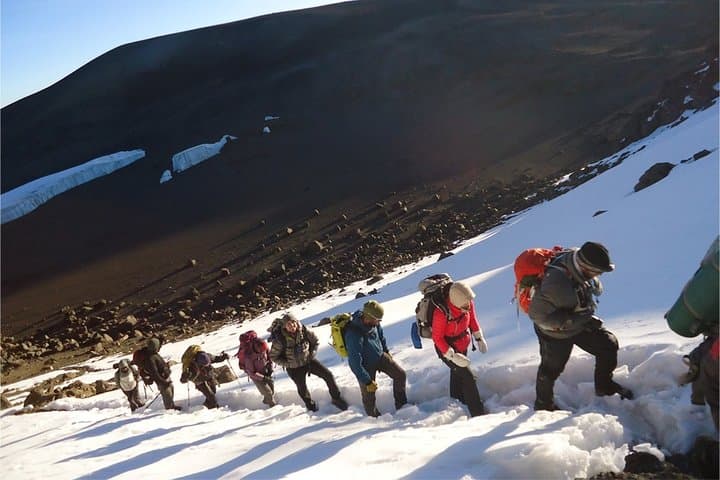
Summit night is the most demanding: expect a 6–8 hour ascent from Barafu mostly at a slow, steady pace across loose scree and possible snow—mental endurance and pacing matter more than speed.
Prior experience at moderate altitude helps but isn’t mandatory; the route’s extra days improve acclimatization—follow guide instructions and report symptoms early.
Kilimanjaro National Park fees, camping and rescue fees are required and are typically included by reputable operators; guides handle permits and group paperwork.
June–September and December–February offer the driest, most stable weather; shoulder months can work but expect more rain and muddier lower trails.
Kilimanjaro sits within Kilimanjaro National Park (est. 1977) and has long been part of Chagga cultural life; the mountain’s volcanic peaks record ancient eruptions and glacial retreat.
Stay on established trails, carry out waste, and use operators that contribute to porter welfare and park fees—these practices reduce impact and fund conservation.
MORAKA AFRICA SAFARIS operates guided outdoor trips and adventures with an emphasis on safety, stewardship, and memorable experiences.
Night on the lower slopes smells of damp earth and wood smoke as headlamps bob through the rainforest—this is the first evening of the Lemosho Route, an eight-day approach that eases you up Kilimanjaro’s western flank before circling the summit.
Night on the lower slopes smells of damp earth and wood smoke as headlamps bob through the rainforest—this is the first evening of the Lemosho Route, an eight-day approach that eases you up Kilimanjaro’s western flank before circling the summit.
The route threads through dense montane forest into moorland and across the broad Shira Plateau, then joins the Machame corridor at Lava Tower before swinging south across Barranco and up to Barafu. Geologically Kilimanjaro is a three-peaked stratovolcano—Shira, Mawenzi and Kibo—with Uhuru Peak crowning the ash-and-ice summit at 5,895 m. The area sits within Kilimanjaro National Park, and the climb passes landscapes shaped by glacial retreat and volcanic flows as well as villages of the Chagga people below.
Expect long days of 3–7 hours of walking on mixed surfaces: muddy forest trails, grassy plateaus, rocky scree and alpine desert. Wildlife sightings—elephant or buffalo in lower forest clearings—are possible but rare higher up. Crews camp each night; cooking, tent setup and group briefings are part of the rhythm.
Practical edge: plan for progressive acclimatization—rest days and gentler ascents are built into the Lemosho itinerary. Gaiters, poles and layered insulation matter more than speed. Hydrate, eat regularly and follow your guide’s rotation pace; summit night is a cold, slow push starting around midnight across loose volcanic scree to Stella Point and Uhuru Peak.
This route favors climbers who want more scenery and acclimatization time than shorter lines—bring patience, respect for altitude, and a readiness to move with the mountain’s slow cadence.