THE ADVENTURE COLLECTIVE® · Independent discovery and booking for outdoor travel

Take the Lemosho Route to Mount Kilimanjaro’s summit over eight days—an approach that eases acclimatization with quiet early days on Shira Plateau, a dramatic summit push from Barafu, and a descent through rainforest to Mweka. This guide covers terrain, logistics and what to pack.
Take the Lemosho Route to Mount Kilimanjaro’s summit over eight days—an approach that eases acclimatization with quiet early days on Shira Plateau, a dramatic summit push from Barafu, and a descent through rainforest to Mweka. This guide covers terrain, logistics and what to pack.
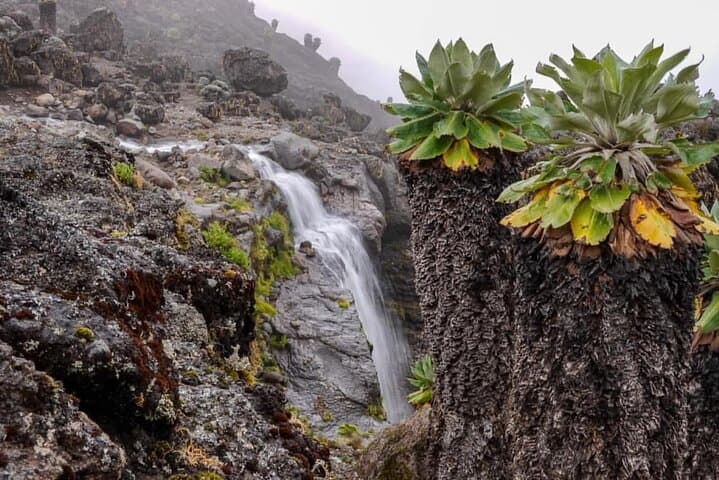
The first morning in Moshi tastes of strong coffee and nervous anticipation. A short drive through banana groves and coffee farms delivers you to Londorossi Gate at 2,360 m, where the trail slips into a cathedral of rainforest—ferns and lianas drip with condensation as the path climbs out of the lowlands. On the Lemosho Route you don’t just ascend; you travel through Kilimanjaro’s stacked ecosystems: rain forest to heath, moorland to the stark alpine desert beneath Kibo’s glaciers. The mountain moves around you.
Verified experiences and guided adventures in the surrounding area.
Operated by Kilitwende Adventures · Moshi, Kilimanjaro Region
The first morning in Moshi tastes of strong coffee and nervous anticipation. A short drive through banana groves and coffee farms delivers you to Londorossi Gate at 2,360 m, where the trail slips into a cathedral of rainforest—ferns and lianas drip with condensation as the path climbs out of the lowlands. On the Lemosho Route you don’t just ascend; you travel through Kilimanjaro’s stacked ecosystems: rain forest to heath, moorland to the stark alpine desert beneath Kibo’s glaciers. The mountain moves around you.
Geology and history are plain on the trail. Kibo and the jagged Mawenzi are volcanic siblings; Kibo’s broad caldera and the flattened Shira Plateau are the result of old eruptions and collapse. Hans Meyer reached the inner rim in 1889; modern climbers follow established paths under the watch of the Kilimanjaro National Park. The Chagga people have for generations read weather and water across these slopes—Moshi below remains the logistical hub for guides, porters and climbers.
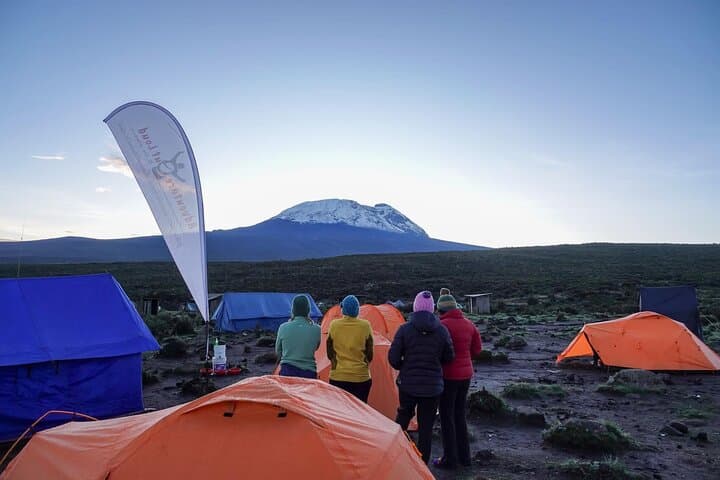
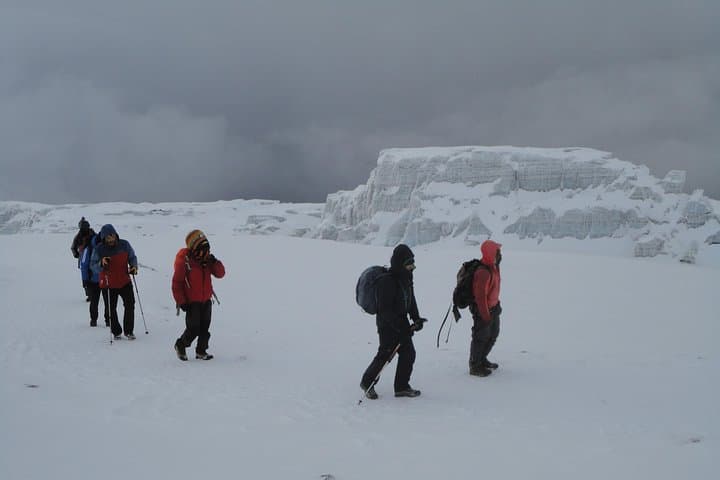
The Lemosho Route approaches from the west, giving quieter early days on the Shira Ridge and time to acclimatize on the high plateau near Shira Cathedral. Highlights are the volcanic outcrop of Lava Tower at 4,785 m, the steep but non-technical Barranco Wall, and the final alpine slog from Barafu Camp (4,646 m) with a midnight push to Stella Point and Uhuru Peak (5,895 m). On summit night the wind becomes a character of its own—cold, insistent, and oddly motivating as you chase sunrise above the crater.
Practical edge: the itinerary spreads elevation gain across eight days to improve summit probability—key distances and elevations are in the itinerary: Day 2 starts at ~2,360 m and reaches Mti Mkubwa (~2,878 m); Day 4 crosses Shira Plateau to ~3,485 m; Day 5 gains to Lava Tower and later descends to Barranco ~3,953 m; Day 7 reaches Barafu ahead of the summit attempt. The descent via Mweka Gate returns you through rainforest to ~1,630 m in a long 10 km drop.
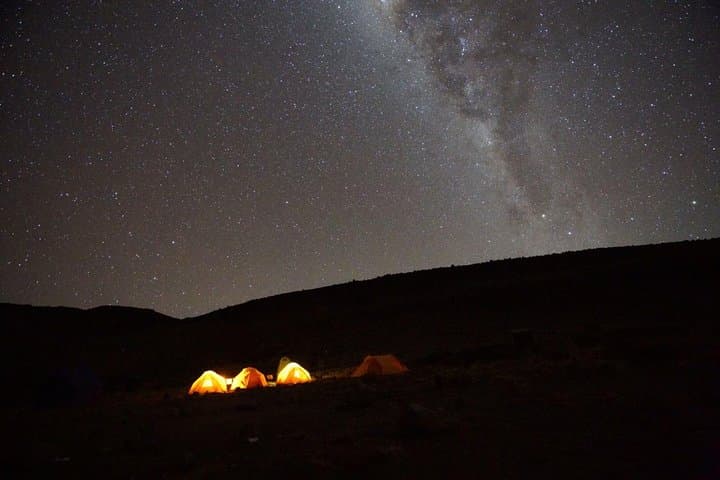
Plan for boots with good ankle support, layered insulation for arctic conditions above 4,000 m, and a steady hydration and salt routine—altitude affects everyone differently. Travel with a licensed operator who provides sleeping tents, a mess tent, portable flush toilets, oxygen for emergencies and a professional crew; fair wages for porters are listed in the inclusion. Nighttime temperatures can drop well below freezing on summit night, so a warm bag and insulated sleeping pad are non-negotiable.
If you respect the pace, honor altitude, and bring patience, Lemosho is a route that gives space to acclimatize and time to absorb Kilimanjaro’s shifting landscapes—rewarding in views, and in the quiet triumph at the roof of Africa.
challenging.
8 days.
Good aerobic fitness with experience in multi-day hikes; ability to handle consecutive days of 4–8 hours of uphill walking.
No technical climbing skills are required on the Lemosho Route, but prior multi-day trekking experience and good cardiovascular fitness make success far more likely.
Altitude affects everyone; spreading the climb over eight days improves acclimatization but monitoring symptoms and following guides’ instructions are essential.
Yes—sleeping tents, dining tents, mattresses, and a portable flush toilet are provided by the operator as listed in the inclusions.
Expect sub-zero temperatures and strong winds above 4,500 m—dress in layered insulated clothing and use a proper sleeping bag rated for cold alpine conditions.
Yes—pick up and drop off to Kilimanjaro International Airport and one night’s hotel before and after the trek are included in this package.
Yes—Moshi has rental shops for items like down jackets, sleeping bags and crampons if needed; arrive early for a gear check with your guide.
Kilimanjaro’s first recorded ascent to the inner crater rim was in 1889; the mountain is central to Chagga culture and long used for grazing and water collection.
Park fees fund management and rescue services; traveling with licensed operators who pay fair porter wages reduces environmental and social impacts.
Kilitwende Adventures operates guided outdoor trips and adventures with an emphasis on safety, stewardship, and memorable experiences.
The first morning in Moshi tastes of strong coffee and nervous anticipation. A short drive through banana groves and coffee farms delivers you to Londorossi Gate at 2,360 m, where the trail slips into a cathedral of rainforest—ferns and lianas drip with condensation as the path climbs out of the lowlands. On the Lemosho Route you don’t just ascend; you travel through Kilimanjaro’s stacked ecosystems: rain forest to heath, moorland to the stark alpine desert beneath Kibo’s glaciers. The mountain moves around you.
The first morning in Moshi tastes of strong coffee and nervous anticipation. A short drive through banana groves and coffee farms delivers you to Londorossi Gate at 2,360 m, where the trail slips into a cathedral of rainforest—ferns and lianas drip with condensation as the path climbs out of the lowlands. On the Lemosho Route you don’t just ascend; you travel through Kilimanjaro’s stacked ecosystems: rain forest to heath, moorland to the stark alpine desert beneath Kibo’s glaciers. The mountain moves around you.
Geology and history are plain on the trail. Kibo and the jagged Mawenzi are volcanic siblings; Kibo’s broad caldera and the flattened Shira Plateau are the result of old eruptions and collapse. Hans Meyer reached the inner rim in 1889; modern climbers follow established paths under the watch of the Kilimanjaro National Park. The Chagga people have for generations read weather and water across these slopes—Moshi below remains the logistical hub for guides, porters and climbers.
The Lemosho Route approaches from the west, giving quieter early days on the Shira Ridge and time to acclimatize on the high plateau near Shira Cathedral. Highlights are the volcanic outcrop of Lava Tower at 4,785 m, the steep but non-technical Barranco Wall, and the final alpine slog from Barafu Camp (4,646 m) with a midnight push to Stella Point and Uhuru Peak (5,895 m). On summit night the wind becomes a character of its own—cold, insistent, and oddly motivating as you chase sunrise above the crater.
Practical edge: the itinerary spreads elevation gain across eight days to improve summit probability—key distances and elevations are in the itinerary: Day 2 starts at ~2,360 m and reaches Mti Mkubwa (~2,878 m); Day 4 crosses Shira Plateau to ~3,485 m; Day 5 gains to Lava Tower and later descends to Barranco ~3,953 m; Day 7 reaches Barafu ahead of the summit attempt. The descent via Mweka Gate returns you through rainforest to ~1,630 m in a long 10 km drop.
Plan for boots with good ankle support, layered insulation for arctic conditions above 4,000 m, and a steady hydration and salt routine—altitude affects everyone differently. Travel with a licensed operator who provides sleeping tents, a mess tent, portable flush toilets, oxygen for emergencies and a professional crew; fair wages for porters are listed in the inclusion. Nighttime temperatures can drop well below freezing on summit night, so a warm bag and insulated sleeping pad are non-negotiable.
If you respect the pace, honor altitude, and bring patience, Lemosho is a route that gives space to acclimatize and time to absorb Kilimanjaro’s shifting landscapes—rewarding in views, and in the quiet triumph at the roof of Africa.