THE ADVENTURE COLLECTIVE® · Independent discovery and booking for outdoor travel

An eight-day private climb of Kilimanjaro via the scenic Lemosho Route that balances slow acclimatization with dramatic terrain—from rainforest to Arctic summit. Ideal for trekkers seeking a guided, multi-day ascent with strong summit odds.
An eight-day private climb of Kilimanjaro via the scenic Lemosho Route that balances slow acclimatization with dramatic terrain—from rainforest to Arctic summit. Ideal for trekkers seeking a guided, multi-day ascent with strong summit odds.
You step from the land cruiser into a cool, dripping rainforest and the mountain closes around you like a living wall—moss clings to trunks, and streams cut clear ribbons through the understory. That first day on the Lemosho Route moves through Londorossi Gate to Big Tree Camp, a gentle 6 km that eases you into altitude and into the rhythm of the mountain: slow steps, steady breath, and the soft clank of porters' loads.
Verified experiences and guided adventures in the surrounding area.
Operated by Africa Exhibition Safari Agency · Moshi, Kilimanjaro Region
You step from the land cruiser into a cool, dripping rainforest and the mountain closes around you like a living wall—moss clings to trunks, and streams cut clear ribbons through the understory. That first day on the Lemosho Route moves through Londorossi Gate to Big Tree Camp, a gentle 6 km that eases you into altitude and into the rhythm of the mountain: slow steps, steady breath, and the soft clank of porters' loads.
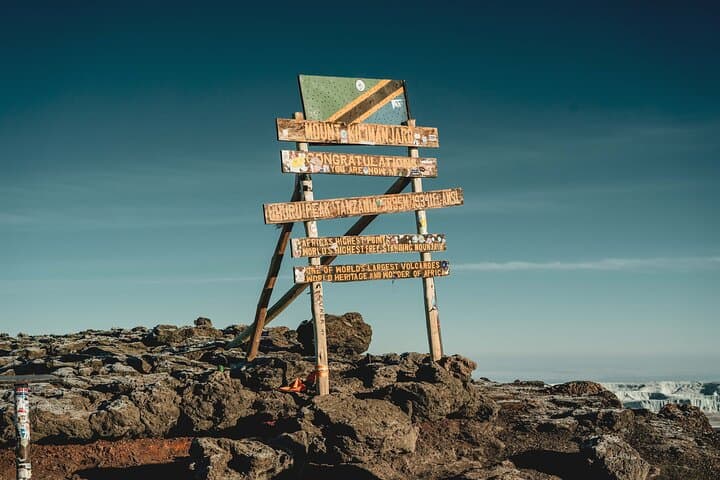
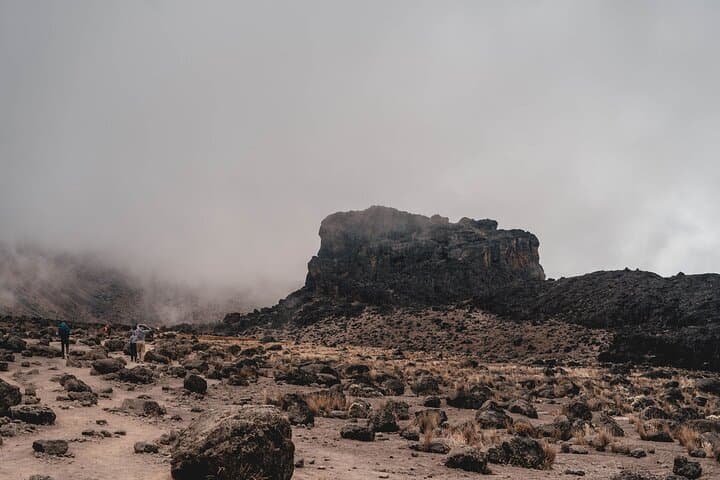
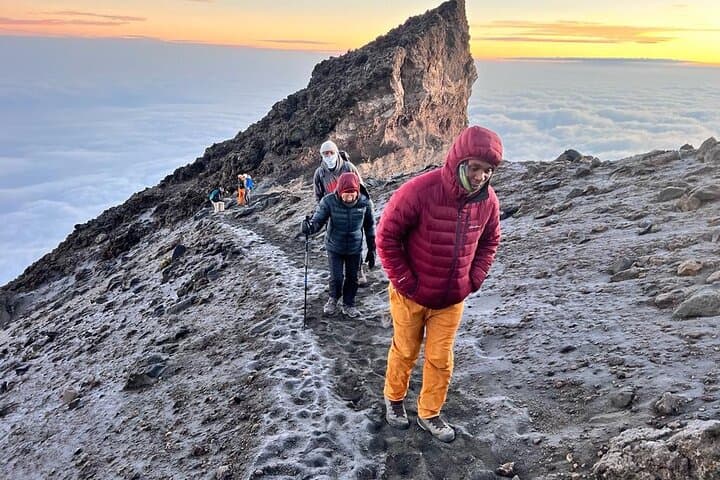
Over eight days the landscape rewrites itself. The trail opens from dense montane forest to moorland fields dotted with giant lobelias on the Shira Plateau, then climbs over volcanic scree past the basalt Shark’s Tooth at Lava Tower. You cross semi-desert ridges and scale the Barranco Wall, sleep under a high desert sky at Barafu, and finally begin the midnight push to Stella Point and Uhuru Peak—19,345 ft above sea level—watching the sunrise spill over the rim.
Kilimanjaro is a dormant stratovolcano made up of three peaks—Kibo, Mawenzi, and Shira—and its layers tell a geological story of eruptions and ice. Human history here is equally layered: the Chagga people have farmed the lower slopes for centuries, and the mountain’s routes developed as trade and hunting paths before modern trekking began. The Lemosho Route is prized for its scenery and a gentler acclimatization profile; its west-side approach allows a gradual elevation gain that increases summit success.
Practical guide: this is non-technical high-altitude trekking. Expect daily hikes ranging from 4–14 km with elevation gains that take you from roughly 2,250 m to 5,895 m. Key days: Shira 1→Shira 2 (14 km, 11,500–13,800 ft), Lava Tower→Barranco (10 km, critical acclimatization), and the summit push from Barafu to Uhuru and down to Mweka Hut (midnight start; 7–8 hours up, 4–6 hours down). Porters and a private guide manage camp logistics; tents are provided.
Gear and pacing matter: layer for cold summit nights, use trekking poles and gaiters for scree and muddy descents, and pack a hydration system—altitude dries you quickly. Allow the route’s acclimatization days to work; don’t rush the summit. Check vaccinations and consult a physician about altitude medication. Respect local culture: tipping for porters and guides is customary and supports mountain communities.
The Lemosho Route delivers varied biomes, long views of Kibo’s glaciers (shrinking but still dramatic), and a real sense of traveling from tropical foothills to an alpine Arctic at the roof of Africa. With preparation, measured pacing, and respect for the mountain, it’s an eight-day climb that rewards endurance with a horizon you can truly stand on.
difficult.
8 days.
Good aerobic fitness and experience with multi-day hikes; ability to carry a daypack for 6–8 hour days at altitude
No—Lemosho via the standard route is non-technical; you need endurance and acclimatization, not mountaineering techniques.
Success varies by fitness and acclimatization, but the 8-day itinerary increases odds compared to shorter itineraries—many operators report higher success with this route.
Yes—this private package includes tented camping, three meals a day while on the mountain, and support from guides and porters.
Summit temperatures can drop well below freezing—wind chill can make it feel much colder; a warm down jacket, gloves, and hat are essential.
Acute mountain sickness can occur; gradual ascent, hydration, rest days, and speaking with a doctor about prophylactic medication like acetazolamide can reduce risk.
Park permits and conservation fees are required and usually arranged by the operator—confirm what's included in your booking and keep ID for registration.
The mountain has long been significant to the Chagga and Maasai peoples; colonial-era explorers named routes that evolved into modern trekking paths.
Kilimanjaro National Park manages permits and fees to fund conservation; stick to trails and support local porters ethically—tipping and minimal-waste practices reduce impact.
Africa Exhibition Safari Agency operates guided outdoor trips and adventures with an emphasis on safety, stewardship, and memorable experiences.
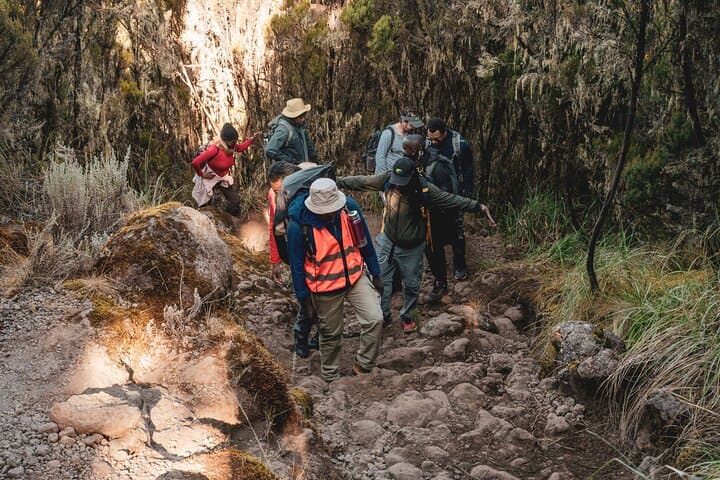
You step from the land cruiser into a cool, dripping rainforest and the mountain closes around you like a living wall—moss clings to trunks, and streams cut clear ribbons through the understory. That first day on the Lemosho Route moves through Londorossi Gate to Big Tree Camp, a gentle 6 km that eases you into altitude and into the rhythm of the mountain: slow steps, steady breath, and the soft clank of porters' loads.
You step from the land cruiser into a cool, dripping rainforest and the mountain closes around you like a living wall—moss clings to trunks, and streams cut clear ribbons through the understory. That first day on the Lemosho Route moves through Londorossi Gate to Big Tree Camp, a gentle 6 km that eases you into altitude and into the rhythm of the mountain: slow steps, steady breath, and the soft clank of porters' loads.
Over eight days the landscape rewrites itself. The trail opens from dense montane forest to moorland fields dotted with giant lobelias on the Shira Plateau, then climbs over volcanic scree past the basalt Shark’s Tooth at Lava Tower. You cross semi-desert ridges and scale the Barranco Wall, sleep under a high desert sky at Barafu, and finally begin the midnight push to Stella Point and Uhuru Peak—19,345 ft above sea level—watching the sunrise spill over the rim.
Kilimanjaro is a dormant stratovolcano made up of three peaks—Kibo, Mawenzi, and Shira—and its layers tell a geological story of eruptions and ice. Human history here is equally layered: the Chagga people have farmed the lower slopes for centuries, and the mountain’s routes developed as trade and hunting paths before modern trekking began. The Lemosho Route is prized for its scenery and a gentler acclimatization profile; its west-side approach allows a gradual elevation gain that increases summit success.
Practical guide: this is non-technical high-altitude trekking. Expect daily hikes ranging from 4–14 km with elevation gains that take you from roughly 2,250 m to 5,895 m. Key days: Shira 1→Shira 2 (14 km, 11,500–13,800 ft), Lava Tower→Barranco (10 km, critical acclimatization), and the summit push from Barafu to Uhuru and down to Mweka Hut (midnight start; 7–8 hours up, 4–6 hours down). Porters and a private guide manage camp logistics; tents are provided.
Gear and pacing matter: layer for cold summit nights, use trekking poles and gaiters for scree and muddy descents, and pack a hydration system—altitude dries you quickly. Allow the route’s acclimatization days to work; don’t rush the summit. Check vaccinations and consult a physician about altitude medication. Respect local culture: tipping for porters and guides is customary and supports mountain communities.
The Lemosho Route delivers varied biomes, long views of Kibo’s glaciers (shrinking but still dramatic), and a real sense of traveling from tropical foothills to an alpine Arctic at the roof of Africa. With preparation, measured pacing, and respect for the mountain, it’s an eight-day climb that rewards endurance with a horizon you can truly stand on.