THE ADVENTURE COLLECTIVE® · Independent discovery and booking for outdoor travel

From Edinburgh to the windswept cliffs of Skye and the stone circles of Orkney, this eight-day guided loop along the North Coast 500 stitches geology, history and local flavor into a compact, hassle-free road trip. Expect long drives, ferry crossings and a steady stream of iconic stops.
From Edinburgh to the windswept cliffs of Skye and the stone circles of Orkney, this eight-day guided loop along the North Coast 500 stitches geology, history and local flavor into a compact, hassle-free road trip. Expect long drives, ferry crossings and a steady stream of iconic stops.
The bus pulls away from the Royal Mile while Edinburgh’s stone façades fade into a wet, open horizon. For eight days the road becomes the map and the guide’s voice the steady compass: stop for coffee in Dunkeld, stand where clans met at Culloden, cross to Orkney and walk among houses older than written history. The pace is deliberate — long drives between extraordinary sites, short, precise windows at the moments that matter.
Verified experiences and guided adventures in the surrounding area.
Operated by Highland Explorer Tours Ltd · Edinburgh, Scotland
The bus pulls away from the Royal Mile while Edinburgh’s stone façades fade into a wet, open horizon. For eight days the road becomes the map and the guide’s voice the steady compass: stop for coffee in Dunkeld, stand where clans met at Culloden, cross to Orkney and walk among houses older than written history. The pace is deliberate — long drives between extraordinary sites, short, precise windows at the moments that matter.
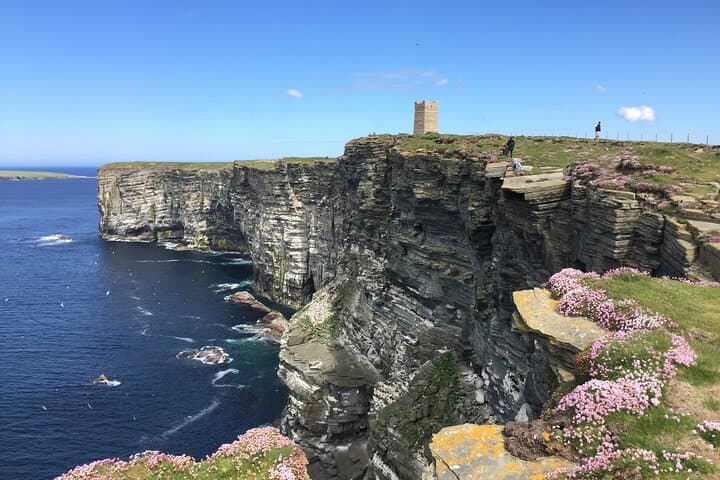
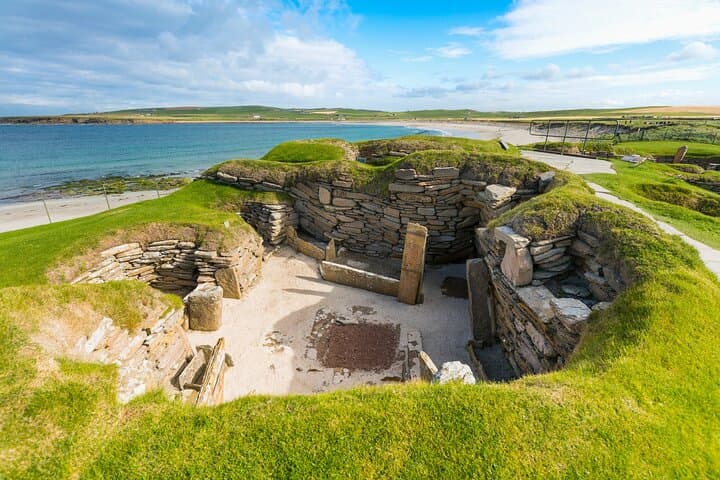
This tour stitches together Scotland’s layered past and raw geology. In Orkney the soil remembers the Neolithic: Skara Brae’s stone rooms and the Ring of Brodgar hold a silence that predates Gaelic and Norse names. On the mainland, Culloden’s peat-reddened ground recalls the Jacobite uprisings of 1746; farther west, the Glenfinnan Viaduct and the Jacobite Steam Train thread cinematic curves across loch and glen. Skye reads like a geology primer — landslips, basalt ribs, cliffs that seem to have grown out of the sea. Smoo Cave, Corrieshalloch Gorge and Kilt Rock show a northern landscape shaped by glaciers, tides and time.
Culture arrives in small things: a plate of fresh crab in Oban, a Gaelic place name on a weathered sign, the falconry display at Dunrobin Castle, or the Italian Chapel on Orkney — built inside Nissen huts by POWs — where human craft pushed against hardship. Guides translate these sites into context, not just dates and names, so travelers leave with a sense of why these places still matter to local communities.
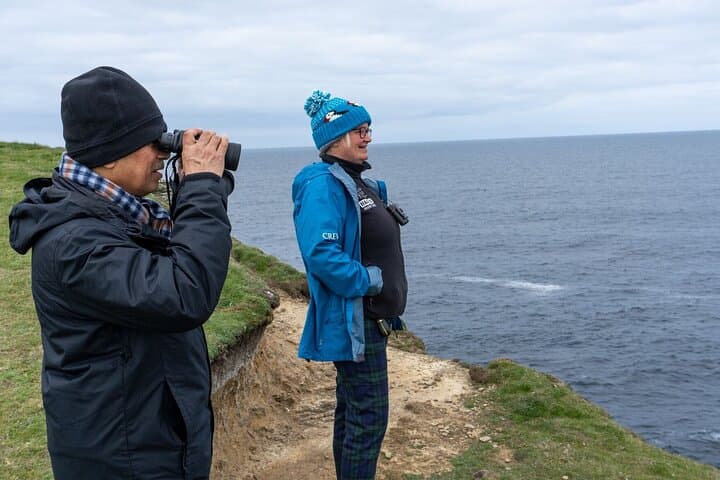
Practicalities are blunt and simple. The tour runs from Edinburgh, departs at 8:30 a.m., and includes seven B&B nights; space is limited to 16 people. Ferries and a steam train ride are part of the route; luggage is restricted to one 15 kg suitcase plus a carry-on. Expect long coach stints — plan for motion comfort, chargers and a good audiobook. Weather is volatile: thermal layers, a waterproof shell and sturdy walking shoes matter more than style. Photography demands patience: mornings and evenings offer cleaner light, but the landscape can surprise at any hour. Note that some attractions are sensitive — Skara Brae and the Ring of Brodgar are archaeological sites and require respectful behavior.
For anyone wanting an efficient, thoughtfully guided run through northern Scotland, this itinerary balances spectacle and context. It isn’t a wilderness trek or a luxury cruise; it’s a paced, interpretive roadtrip that hands you a route full of big views, bigger histories, and the practical scaffolding to see them—without the guesswork.
easy.
8 days.
Suitable for travelers with basic mobility; involves short walks at sites and boarding ferries, but no technical hiking.
Yes—this itinerary includes the Jacobite Steam Train experience; note services can be altered or cancelled at short notice.
Each traveler is allowed one suitcase up to about 15 kg (33 lbs) and one carry-on bag; collapsible wheelchairs with assistance can be accommodated.
Ferries used as part of the itinerary are included; local transfers between listed stops are handled by the tour operator.
The tour is rated easy and accepts children from age 5, but it’s not recommended for people with serious back or heart problems; some walking is required at sites.
Travel insurance is recommended to cover cancellations, delays, or medical needs, especially given weather-dependent ferry and train segments.
Yes—order of stops may change due to weather, ferry timetables or operational reasons; return times are approximate to allow for conditions.
Orkney and Caithness retain deep Neolithic and Norse legacies—Skara Brae and the Ring of Brodgar date back ~5,000 years and Orkney spent centuries under Norse rule before joining Scotland.
Many sites are fragile archaeology or sensitive coastal habitats; stick to marked paths, avoid touching fragile stones and use local guides to minimise impact.
Highland Explorer Tours Ltd operates guided outdoor trips and adventures with an emphasis on safety, stewardship, and memorable experiences.
The bus pulls away from the Royal Mile while Edinburgh’s stone façades fade into a wet, open horizon. For eight days the road becomes the map and the guide’s voice the steady compass: stop for coffee in Dunkeld, stand where clans met at Culloden, cross to Orkney and walk among houses older than written history. The pace is deliberate — long drives between extraordinary sites, short, precise windows at the moments that matter.
The bus pulls away from the Royal Mile while Edinburgh’s stone façades fade into a wet, open horizon. For eight days the road becomes the map and the guide’s voice the steady compass: stop for coffee in Dunkeld, stand where clans met at Culloden, cross to Orkney and walk among houses older than written history. The pace is deliberate — long drives between extraordinary sites, short, precise windows at the moments that matter.
This tour stitches together Scotland’s layered past and raw geology. In Orkney the soil remembers the Neolithic: Skara Brae’s stone rooms and the Ring of Brodgar hold a silence that predates Gaelic and Norse names. On the mainland, Culloden’s peat-reddened ground recalls the Jacobite uprisings of 1746; farther west, the Glenfinnan Viaduct and the Jacobite Steam Train thread cinematic curves across loch and glen. Skye reads like a geology primer — landslips, basalt ribs, cliffs that seem to have grown out of the sea. Smoo Cave, Corrieshalloch Gorge and Kilt Rock show a northern landscape shaped by glaciers, tides and time.
Culture arrives in small things: a plate of fresh crab in Oban, a Gaelic place name on a weathered sign, the falconry display at Dunrobin Castle, or the Italian Chapel on Orkney — built inside Nissen huts by POWs — where human craft pushed against hardship. Guides translate these sites into context, not just dates and names, so travelers leave with a sense of why these places still matter to local communities.
Practicalities are blunt and simple. The tour runs from Edinburgh, departs at 8:30 a.m., and includes seven B&B nights; space is limited to 16 people. Ferries and a steam train ride are part of the route; luggage is restricted to one 15 kg suitcase plus a carry-on. Expect long coach stints — plan for motion comfort, chargers and a good audiobook. Weather is volatile: thermal layers, a waterproof shell and sturdy walking shoes matter more than style. Photography demands patience: mornings and evenings offer cleaner light, but the landscape can surprise at any hour. Note that some attractions are sensitive — Skara Brae and the Ring of Brodgar are archaeological sites and require respectful behavior.
For anyone wanting an efficient, thoughtfully guided run through northern Scotland, this itinerary balances spectacle and context. It isn’t a wilderness trek or a luxury cruise; it’s a paced, interpretive roadtrip that hands you a route full of big views, bigger histories, and the practical scaffolding to see them—without the guesswork.