THE ADVENTURE COLLECTIVE® · Independent discovery and booking for outdoor travel

Traverse Morocco’s imperial cities across coastlines, mountains and medinas on an eight-day private tour. Expect blue alleys in Chefchaouen, Fes’ labyrinthine souks, Meknes’ grand gates and Marrakech’s storied squares.
Traverse Morocco’s imperial cities across coastlines, mountains and medinas on an eight-day private tour. Expect blue alleys in Chefchaouen, Fes’ labyrinthine souks, Meknes’ grand gates and Marrakech’s storied squares.
A salt wind meets the road as travelers step out at Tangier’s port, the Mediterranean and Atlantic flirting at Cap Spartel. The first day routes through coastal panoramas and the Hercules Caves before the lane climbs into the Rif to reveal Chefchaouen’s steep, narrow alleys painted in that intense blue that makes sunlight feel thinner and older.
Verified experiences and guided adventures in the surrounding area.
Operated by Xauen Tours · Tangier, Tangier-Tetouan-Al Hoceima
A salt wind meets the road as travelers step out at Tangier’s port, the Mediterranean and Atlantic flirting at Cap Spartel. The first day routes through coastal panoramas and the Hercules Caves before the lane climbs into the Rif to reveal Chefchaouen’s steep, narrow alleys painted in that intense blue that makes sunlight feel thinner and older.
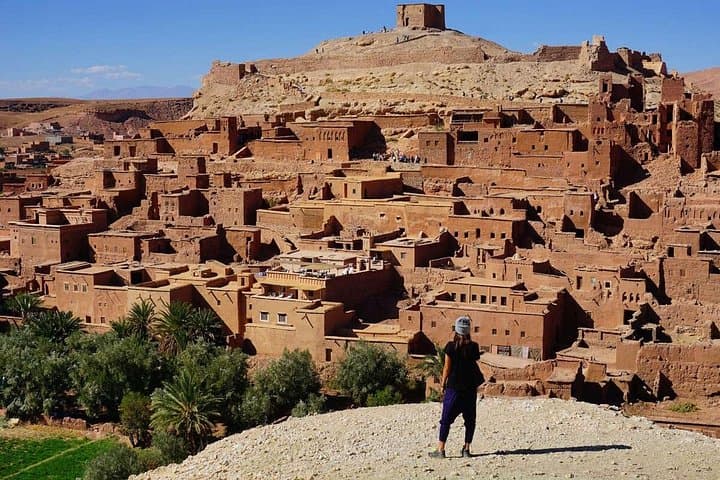
This eight-day loop threads Morocco’s imperial cities—Fes, Meknes, Marrakech—across geological thresholds: the rugged Rif, the forested ridges of the Middle Atlas, and the red sands approaching the High Atlas foothills. Each city carries layers of history: Roman and Berber foundations, Andalusian migrations, and dynastic architecture visible in madrasahs, grand gates and the geometric gardens of Majorelle.
Culturally, the trip is a study in sensory contrasts—spice-scented souks, tiled courtyards, the chorus of tanneries—and a practical introduction to Moroccan rhythms, from marketplace bargaining to the etiquette of mosques and hammams. Drivers cover long stretches; walking tours concentrate in medinas where streets narrow and vehicles stop.
For planning: expect multiple moderate walking sessions on uneven cobbles and many short uphill stairways. Best travel times are spring and fall for milder days; summer brings hot inland afternoons, winter cool nights. Carry small bills for market purchases, bring a lightweight daypack, sturdy shoes, and a water bottle with a filter for longer transfers. Allow extra time for photography and detours—this itinerary rewards slow exploration as much as the main sights.
easy.
8 days.
Suitable for travelers comfortable with multiple short walking tours per day and long vehicle transfers; minimal sustained fitness required.
Some admissions are included per the itinerary, but guests should confirm with the operator which specific sites require separate tickets.
The tour involves uneven cobbles, narrow medina alleys and staircases; travelers with limited mobility should check specific site access and contact the operator before booking.
Guides typically speak English and French; confirm language preference at booking to ensure a matched guide.
Tipping is customary: small tips for local guides, drivers and service staff; carry small bills in dirhams for convenience.
The route links Morocco’s imperial capitals—Fes, Meknes, Marrakech—cities shaped by Berber kingdoms, Arab-Andalusian influence and later dynastic expansions from the 8th–17th centuries.
Water is scarce in parts of Morocco and historic medinas are sensitive to over-tourism; minimize plastic, respect local waste rules and stick to marked paths and streets.
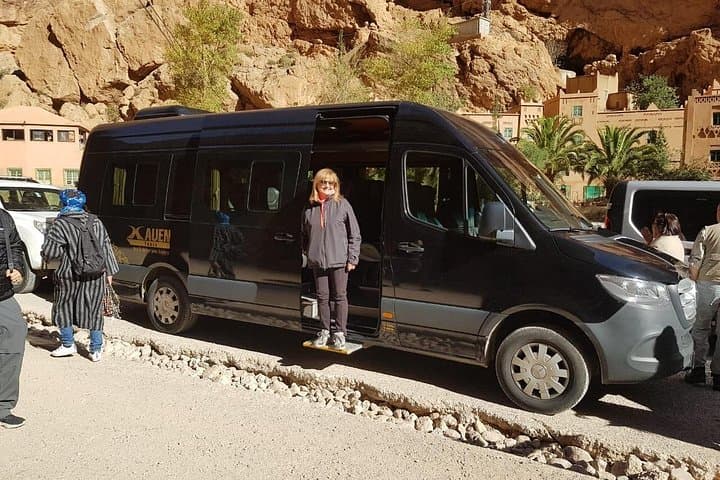
Xauen Tours operates guided outdoor trips and adventures with an emphasis on safety, stewardship, and memorable experiences.
A salt wind meets the road as travelers step out at Tangier’s port, the Mediterranean and Atlantic flirting at Cap Spartel. The first day routes through coastal panoramas and the Hercules Caves before the lane climbs into the Rif to reveal Chefchaouen’s steep, narrow alleys painted in that intense blue that makes sunlight feel thinner and older.
A salt wind meets the road as travelers step out at Tangier’s port, the Mediterranean and Atlantic flirting at Cap Spartel. The first day routes through coastal panoramas and the Hercules Caves before the lane climbs into the Rif to reveal Chefchaouen’s steep, narrow alleys painted in that intense blue that makes sunlight feel thinner and older.
This eight-day loop threads Morocco’s imperial cities—Fes, Meknes, Marrakech—across geological thresholds: the rugged Rif, the forested ridges of the Middle Atlas, and the red sands approaching the High Atlas foothills. Each city carries layers of history: Roman and Berber foundations, Andalusian migrations, and dynastic architecture visible in madrasahs, grand gates and the geometric gardens of Majorelle.
Culturally, the trip is a study in sensory contrasts—spice-scented souks, tiled courtyards, the chorus of tanneries—and a practical introduction to Moroccan rhythms, from marketplace bargaining to the etiquette of mosques and hammams. Drivers cover long stretches; walking tours concentrate in medinas where streets narrow and vehicles stop.
For planning: expect multiple moderate walking sessions on uneven cobbles and many short uphill stairways. Best travel times are spring and fall for milder days; summer brings hot inland afternoons, winter cool nights. Carry small bills for market purchases, bring a lightweight daypack, sturdy shoes, and a water bottle with a filter for longer transfers. Allow extra time for photography and detours—this itinerary rewards slow exploration as much as the main sights.