THE ADVENTURE COLLECTIVE® · Independent discovery and booking for outdoor travel

An eight-day circuit from Tunis that pairs Mediterranean coastlines with some of Tunisia’s best-preserved Roman and Islamic sites. Expect long scenic drives, guided archaeological visits, and mornings best spent exploring before the heat rises.
An eight-day circuit from Tunis that pairs Mediterranean coastlines with some of Tunisia’s best-preserved Roman and Islamic sites. Expect long scenic drives, guided archaeological visits, and mornings best spent exploring before the heat rises.
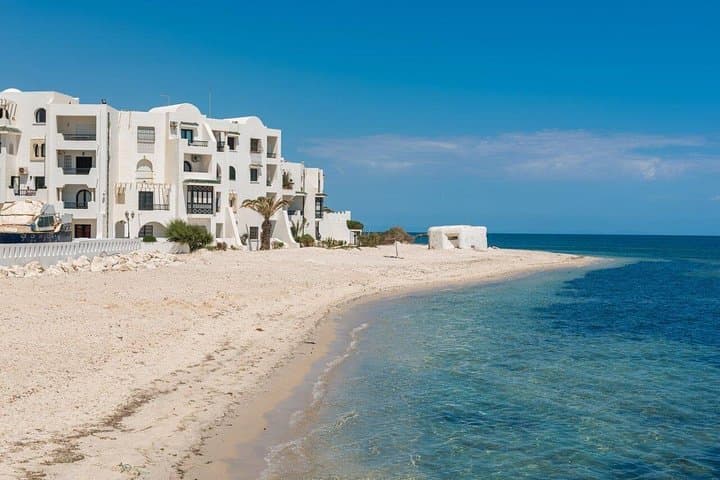
You arrive in Tunis just as the late-afternoon light leans toward the Mediterranean; the sea seems to push light up onto whitewashed walls while the city exhales the smell of citrus and roasting coffee. Over eight days this loop pulls you from coastal clifftops to inland ruins—Sidi Bou Said’s cobalt doors frame sea views, while the theatre at Dougga opens like a stone window onto Roman civic life.
Verified experiences and guided adventures in the surrounding area.
Operated by TUI Tunisia S.A. · Tunis, Tunis Governorate
You arrive in Tunis just as the late-afternoon light leans toward the Mediterranean; the sea seems to push light up onto whitewashed walls while the city exhales the smell of citrus and roasting coffee. Over eight days this loop pulls you from coastal clifftops to inland ruins—Sidi Bou Said’s cobalt doors frame sea views, while the theatre at Dougga opens like a stone window onto Roman civic life.
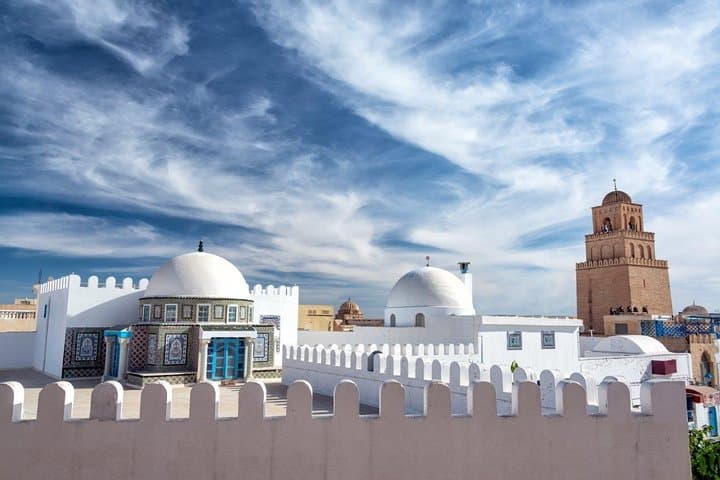
The route is a compact timeline of North African history: Carthage’s Punic foundations, Roman forums at Sbeitla and El Djem’s amphitheatre, and Kairouan’s 7th-century mosque that shaped Islamic learning. Geology here is part of the story—limestone cliffs and terraces hold ancient cisterns, and Bulla Regia’s semi-subterranean houses speak to strategies for beating the heat.
Local culture is vivid and practical: medina souks in Tunis hum with trade, coastal harbors serve fresh fish, and cafe culture is the best currency for people-watching. Guides point out mosaics, waterworks and the agricultural terraces of Cap Bon.
Plan for long drives between sites (several days include 3–6 hour transfers), comfortable walking on uneven archaeological stone, and variable coastal winds. Pack sturdy shoes, sun protection, and a light jacket for evenings in spring or winter. Start major visits in the morning to avoid heat and crowds, carry water, and keep to marked paths to protect fragile ruins. With decent planning, this itinerary balances relaxed hotel nights with full, discovery-rich days—an accessible tour that rewards curiosity and sensible preparation.
easy.
8 days.
Suitable for travellers with basic fitness who can walk on uneven ground and handle several hours of walking or standing per day
Daily activity ranges from short city strolls to 1–3 hours of walking at archaeological sites on uneven ground; most time is spent on guided site visits with transfers by coach.
Yes—it's marketed as suitable for all fitness levels, but travellers should be comfortable boarding coaches and walking on uneven terrain; inform the operator about mobility needs.
French and Arabic are common across Tunisia; English is widely used in tourism—confirm your language preference when booking.
This itinerary includes breakfasts, most lunches and dinners listed, plus entrance fees indicated in the program—verify specifics at booking for any optional extras.
The loop stitches Punic, Roman and Islamic layers: Carthage dominated Mediterranean trade, Roman colonies like Dougga left civic monuments, and Kairouan became a center of Islamic scholarship from the 7th century onward.
Archaeological sites are fragile—remain on marked paths, avoid touching mosaics, and support local guides and conservation fees where offered to help preserve monuments and local water resources.
TUI Tunisia S.A. operates guided outdoor trips and adventures with an emphasis on safety, stewardship, and memorable experiences.
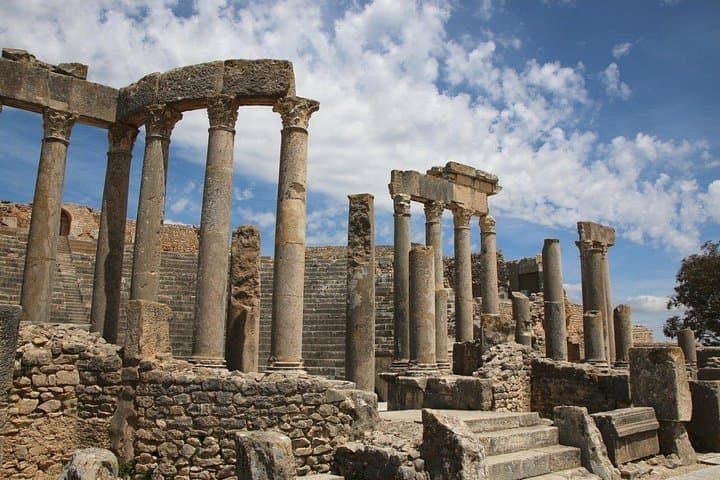
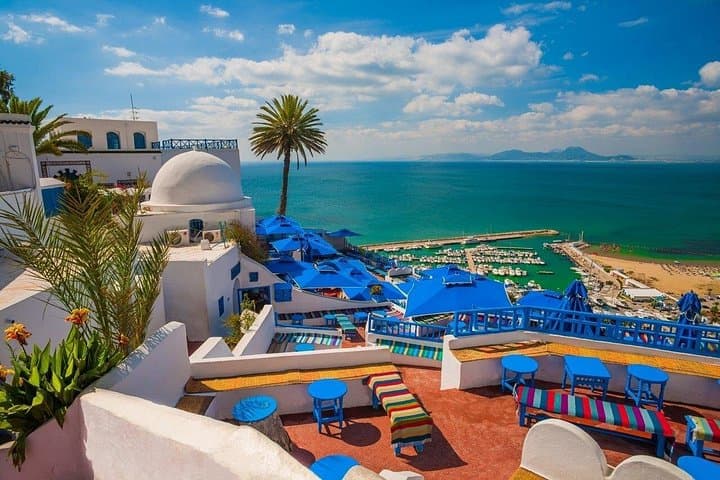
You arrive in Tunis just as the late-afternoon light leans toward the Mediterranean; the sea seems to push light up onto whitewashed walls while the city exhales the smell of citrus and roasting coffee. Over eight days this loop pulls you from coastal clifftops to inland ruins—Sidi Bou Said’s cobalt doors frame sea views, while the theatre at Dougga opens like a stone window onto Roman civic life.
You arrive in Tunis just as the late-afternoon light leans toward the Mediterranean; the sea seems to push light up onto whitewashed walls while the city exhales the smell of citrus and roasting coffee. Over eight days this loop pulls you from coastal clifftops to inland ruins—Sidi Bou Said’s cobalt doors frame sea views, while the theatre at Dougga opens like a stone window onto Roman civic life.
The route is a compact timeline of North African history: Carthage’s Punic foundations, Roman forums at Sbeitla and El Djem’s amphitheatre, and Kairouan’s 7th-century mosque that shaped Islamic learning. Geology here is part of the story—limestone cliffs and terraces hold ancient cisterns, and Bulla Regia’s semi-subterranean houses speak to strategies for beating the heat.
Local culture is vivid and practical: medina souks in Tunis hum with trade, coastal harbors serve fresh fish, and cafe culture is the best currency for people-watching. Guides point out mosaics, waterworks and the agricultural terraces of Cap Bon.
Plan for long drives between sites (several days include 3–6 hour transfers), comfortable walking on uneven archaeological stone, and variable coastal winds. Pack sturdy shoes, sun protection, and a light jacket for evenings in spring or winter. Start major visits in the morning to avoid heat and crowds, carry water, and keep to marked paths to protect fragile ruins. With decent planning, this itinerary balances relaxed hotel nights with full, discovery-rich days—an accessible tour that rewards curiosity and sensible preparation.