THE ADVENTURE COLLECTIVE® · Independent discovery and booking for outdoor travel

Travel Morocco in eight active days: Marrakech’s markets, the High Atlas via the Tizi n’Tichka pass, Aït Ben Haddou, Fes’ medina and a camel-led night in the Erg Chebbi dunes. This compact itinerary mixes driving days with guided walks and a desert bivouac for a broad cultural and landscape sampler.
Travel Morocco in eight active days: Marrakech’s markets, the High Atlas via the Tizi n’Tichka pass, Aït Ben Haddou, Fes’ medina and a camel-led night in the Erg Chebbi dunes. This compact itinerary mixes driving days with guided walks and a desert bivouac for a broad cultural and landscape sampler.
The engine of the minibus hums as you leave Casablanca’s broad boulevards and the landscape shifts: red clay walls, ochre kasbahs and the ragged silhouette of the High Atlas rising ahead.
Verified experiences and guided adventures in the surrounding area.
Operated by Marrakeh City Breaks · Marrakech, Marrakesh-Safi
The engine of the minibus hums as you leave Casablanca’s broad boulevards and the landscape shifts: red clay walls, ochre kasbahs and the ragged silhouette of the High Atlas rising ahead.
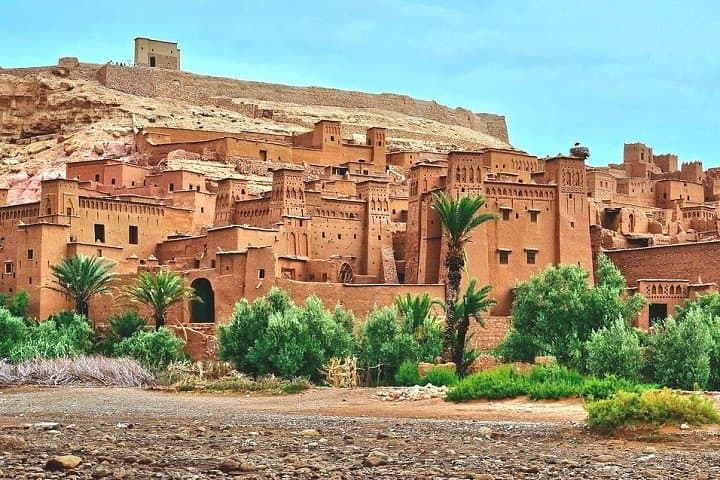
Across eight days the tour threads Marrakech’s frenetic Jamaa el Fna, the Tizi n’Tichka pass (about 2,260 m) over the Atlas, the cinematic ramparts of Aït Ben Haddou, the narrow alleys of Fes’ medina, and the rippling orange of Erg Chebbi where camels lead you to a desert bivouac for sunset.
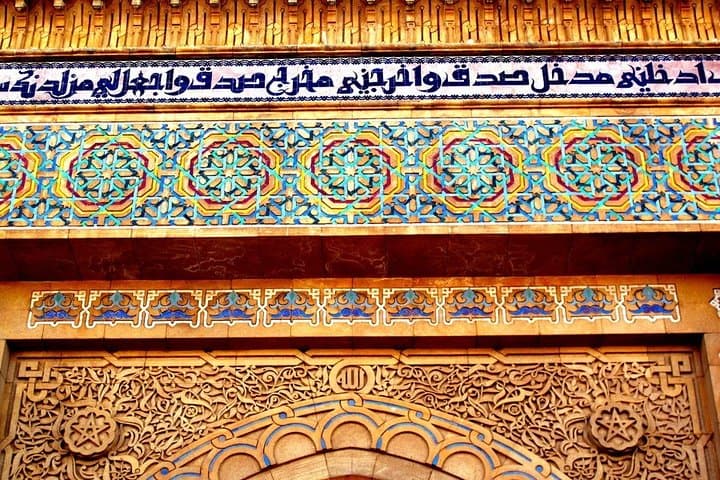
History and geology are visible: Roman ruins at Volubilis recall North Africa’s ancient layers; French protectorate-era Ifrane shows European influence; the Atlas formed by African-Eurasian plate collision shapes dramatic passes and steep river valleys. Culturally the route moves through Amazigh (Berber) villages, imperial city centers and working souks where leather, cedar and rose products are regional pillars.
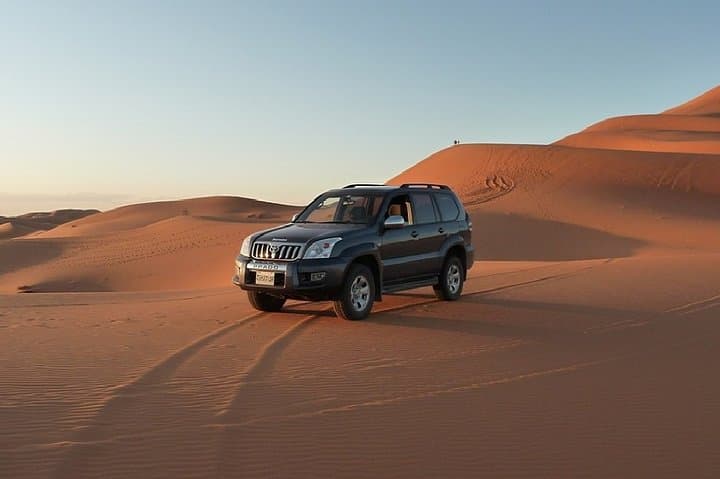
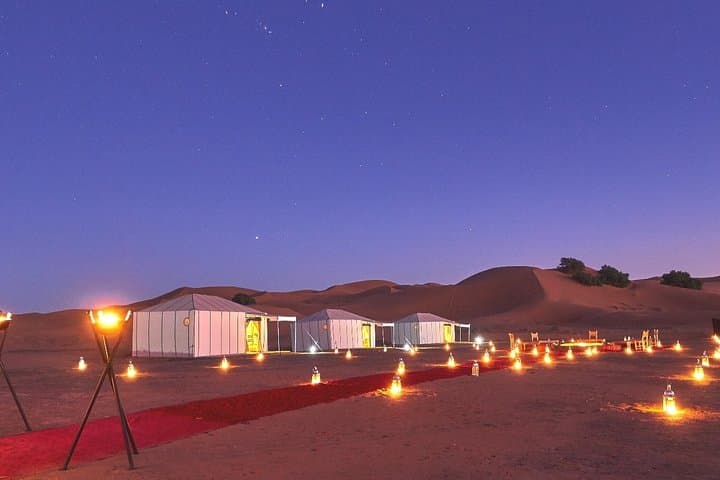
Practical guidance: expect long driving days (several legs exceed 200–400 km) and a mix of paved roads and short 4x4 transfers into desert approaches. Temperatures vary widely—hot in inland plains and nights that cool sharply in the desert. Bring layered clothing, sturdy walking shoes for medina cobbles and canyon viewpoints, sun protection and a reusable water bottle. Cash (dirham) is useful in smaller towns; modest dress is recommended in religious sites. The desert bivouac offers basic facilities—pack a headlamp and earplugs for wind and communal camp noise.
Timings: aim for sunrise or sunset at dunes and kasbahs for the best light and cooler conditions. Respect local customs, avoid single-use plastics in fragile oases, and choose licensed guides to support local economies.
moderate.
8 days.
Suitable for travelers in average fitness: most movement is short walks and transfers by vehicle, with one overnight camel trek to a desert bivouac.
Camel rides are short (typically 30–90 minutes) and paced for comfort; the bivouac is basic—expect sleeping mats and communal facilities, with significant night cooling.
Medina walks involve uneven cobbles and narrow passages; children and people with mobility limitations should plan for a slower pace and may need assistance—wheelchair access is limited inside old medinas.
Moroccan dirham (MAD) is local currency; tip drivers, guides and hotel staff modestly—small cash notes in dirhams are preferred for market purchases and services.
No special vaccines are required for short visits, but bring a basic first-aid kit, routine prescriptions, and stay hydrated; consult your healthcare provider for personalized advice.
The route links Morocco’s imperial cities and Amazigh communities, with Roman Volubilis and French protectorate-era towns marking layered cultural influences.
Water is scarce in many stops—minimize consumption and avoid single-use plastics; support local guides and riads that follow sustainable practices.
Marrakeh City Breaks operates guided outdoor trips and adventures with an emphasis on safety, stewardship, and memorable experiences.
The engine of the minibus hums as you leave Casablanca’s broad boulevards and the landscape shifts: red clay walls, ochre kasbahs and the ragged silhouette of the High Atlas rising ahead.
The engine of the minibus hums as you leave Casablanca’s broad boulevards and the landscape shifts: red clay walls, ochre kasbahs and the ragged silhouette of the High Atlas rising ahead.
Across eight days the tour threads Marrakech’s frenetic Jamaa el Fna, the Tizi n’Tichka pass (about 2,260 m) over the Atlas, the cinematic ramparts of Aït Ben Haddou, the narrow alleys of Fes’ medina, and the rippling orange of Erg Chebbi where camels lead you to a desert bivouac for sunset.
History and geology are visible: Roman ruins at Volubilis recall North Africa’s ancient layers; French protectorate-era Ifrane shows European influence; the Atlas formed by African-Eurasian plate collision shapes dramatic passes and steep river valleys. Culturally the route moves through Amazigh (Berber) villages, imperial city centers and working souks where leather, cedar and rose products are regional pillars.
Practical guidance: expect long driving days (several legs exceed 200–400 km) and a mix of paved roads and short 4x4 transfers into desert approaches. Temperatures vary widely—hot in inland plains and nights that cool sharply in the desert. Bring layered clothing, sturdy walking shoes for medina cobbles and canyon viewpoints, sun protection and a reusable water bottle. Cash (dirham) is useful in smaller towns; modest dress is recommended in religious sites. The desert bivouac offers basic facilities—pack a headlamp and earplugs for wind and communal camp noise.
Timings: aim for sunrise or sunset at dunes and kasbahs for the best light and cooler conditions. Respect local customs, avoid single-use plastics in fragile oases, and choose licensed guides to support local economies.