THE ADVENTURE COLLECTIVE® · Independent discovery and booking for outdoor travel

An eight-day loop from New Delhi through Agra, Ranthambore, Udaipur and Jaipur that pairs sunrise at the Taj Mahal with two tiger safaris in Ranthambore. Expect long drives, early starts and a mix of Mughal and Rajput sites plus wildlife viewing.
An eight-day loop from New Delhi through Agra, Ranthambore, Udaipur and Jaipur that pairs sunrise at the Taj Mahal with two tiger safaris in Ranthambore. Expect long drives, early starts and a mix of Mughal and Rajput sites plus wildlife viewing.
Morning light in Old Delhi mixes with the diesel hum of a private coach as travelers set out on an eight-day loop through northern India — a route that moves from imperial monuments to dry deciduous forests and glinting lakes.
Verified experiences and guided adventures in the surrounding area.
Operated by Julie International Tours · New Delhi, Delhi
Morning light in Old Delhi mixes with the diesel hum of a private coach as travelers set out on an eight-day loop through northern India — a route that moves from imperial monuments to dry deciduous forests and glinting lakes.
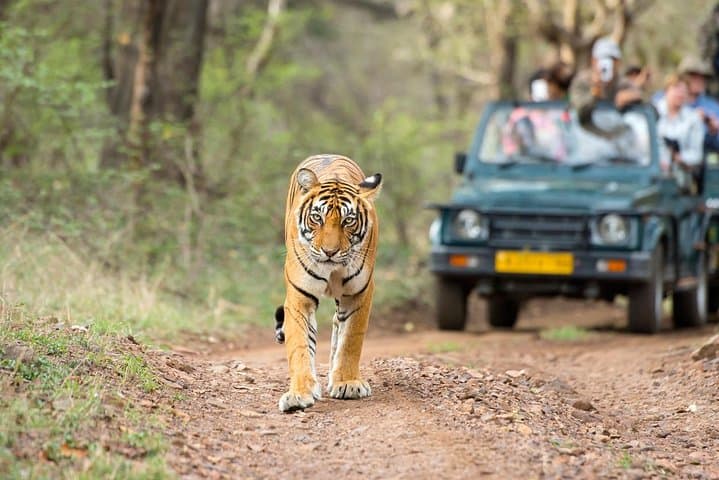
The itinerary threads Mughal Agra, Rajput Jaipur and lakeside Udaipur with two full safaris in Ranthambore National Park. Visitors watch the Taj Mahal at sunrise, walk through Agra Fort’s red-sandstone chambers, and scan the scrub for a tiger’s silhouette against termite mounds and ruins. Udaipur’s City Palace and Sahelion Ki Bari show Rajput refinement; Jaipur’s Amber Fort and Jantar Mantar illustrate military architecture and astronomical ingenuity.
Geology and landscape shift fast: the Gangetic plain around Delhi and Agra gives way to the Vindhyan outcrops and the low Aravalli ridges that shape Rajasthan’s scrub forests. Cultural patterns — Mughal gardens, Rajput courts, and lively bazaars — map onto a history of empire, trade and regional kingship.
Practically, expect early mornings for the Taj and game drives, long transfers by air-conditioned vehicle (several 4–7 hour drives), and short walks at sites. Carry water, sun protection and comfortable walking shoes; binoculars improve safari sightings. Respect temple dress codes and follow park rules: stays are lodge-based, not camping, and guides handle permits for Ranthambore drives.
This tour balances city monuments and wildlife viewing: plan light layers for dusty roads, keep essential documents (passport, permits) handy, and schedule a recovery day after arrival or before departure. The rhythm is steady — monuments by daylight, forests listening for a tiger’s movement by dawn and dusk.
moderate.
8 days.
Suitable for travelers in average fitness — involves several hours of walking at monuments, early starts, and multi-hour vehicle transfers.
Sightings depend on luck, season and park sector; early morning and late afternoon drives increase chances, but there is no guaranteed sighting.
October to March offers cooler temperatures and higher tiger-spotting odds as animals concentrate around water; avoid the intense heat of April–June.
This tour includes two game drives; the operator typically handles permits and park fees as part of the package, but confirm at booking.
Major hotels and vehicles may be accessible, but some historical sites and safari vehicles have steps — advise the operator about mobility needs in advance.
The route traces Mughal-era monuments and Rajput palaces; forts and observatories reflect centuries of imperial architecture and regional rule.
Ranthambore is a designated tiger reserve focused on habitat protection and anti-poaching; visitors should follow park rules, avoid flash photography and minimize waste.
Julie International Tours operates guided outdoor trips and adventures with an emphasis on safety, stewardship, and memorable experiences.



Morning light in Old Delhi mixes with the diesel hum of a private coach as travelers set out on an eight-day loop through northern India — a route that moves from imperial monuments to dry deciduous forests and glinting lakes.
Morning light in Old Delhi mixes with the diesel hum of a private coach as travelers set out on an eight-day loop through northern India — a route that moves from imperial monuments to dry deciduous forests and glinting lakes.
The itinerary threads Mughal Agra, Rajput Jaipur and lakeside Udaipur with two full safaris in Ranthambore National Park. Visitors watch the Taj Mahal at sunrise, walk through Agra Fort’s red-sandstone chambers, and scan the scrub for a tiger’s silhouette against termite mounds and ruins. Udaipur’s City Palace and Sahelion Ki Bari show Rajput refinement; Jaipur’s Amber Fort and Jantar Mantar illustrate military architecture and astronomical ingenuity.
Geology and landscape shift fast: the Gangetic plain around Delhi and Agra gives way to the Vindhyan outcrops and the low Aravalli ridges that shape Rajasthan’s scrub forests. Cultural patterns — Mughal gardens, Rajput courts, and lively bazaars — map onto a history of empire, trade and regional kingship.
Practically, expect early mornings for the Taj and game drives, long transfers by air-conditioned vehicle (several 4–7 hour drives), and short walks at sites. Carry water, sun protection and comfortable walking shoes; binoculars improve safari sightings. Respect temple dress codes and follow park rules: stays are lodge-based, not camping, and guides handle permits for Ranthambore drives.
This tour balances city monuments and wildlife viewing: plan light layers for dusty roads, keep essential documents (passport, permits) handy, and schedule a recovery day after arrival or before departure. The rhythm is steady — monuments by daylight, forests listening for a tiger’s movement by dawn and dusk.