THE ADVENTURE COLLECTIVE® · Independent discovery and booking for outdoor travel

This eight‑day loop links Delhi’s layered streets with Agra’s Taj Mahal and Ranthambore’s tiger safaris, finishing in Jaipur’s pink palaces. Expect early mornings, long drives, guided city tours and two shared jeep safaris in search of Bengal tigers.
This eight‑day loop links Delhi’s layered streets with Agra’s Taj Mahal and Ranthambore’s tiger safaris, finishing in Jaipur’s pink palaces. Expect early mornings, long drives, guided city tours and two shared jeep safaris in search of Bengal tigers.
Morning light spills over Delhi’s broad boulevards as the tour group assembles, bags in the trunk of a private air‑conditioned car and the city’s layered history sliding past the windows. Streets hum with rickshaws and ritual, and the itinerary moves from Mughal marble in Agra to the scrub forests of Ranthambore where the jungle rules the clock.
Verified experiences and guided adventures in the surrounding area.
Operated by Agra Taj Visit · New Delhi, Delhi
Morning light spills over Delhi’s broad boulevards as the tour group assembles, bags in the trunk of a private air‑conditioned car and the city’s layered history sliding past the windows. Streets hum with rickshaws and ritual, and the itinerary moves from Mughal marble in Agra to the scrub forests of Ranthambore where the jungle rules the clock.
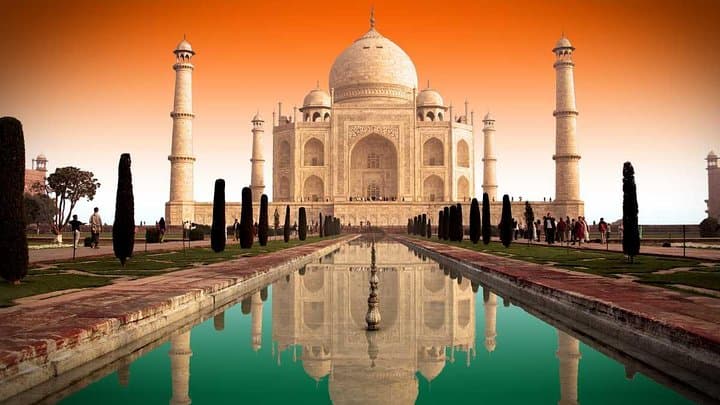
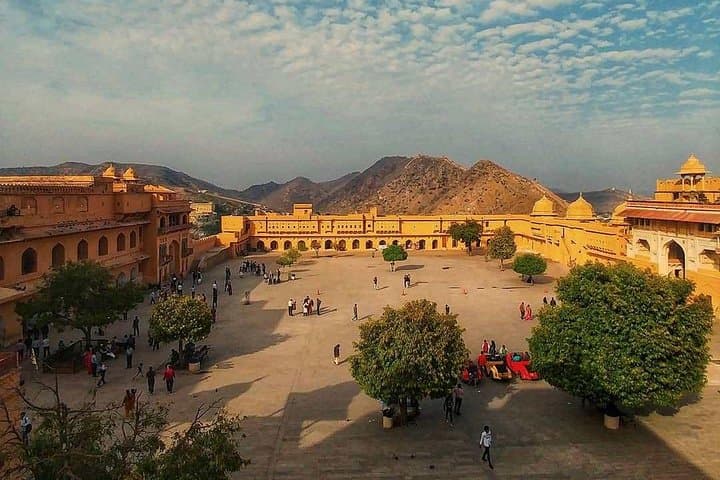
The Golden Triangle—Delhi, Agra and Jaipur—maps three centuries of Mughal and Rajput power: Qutub Minar’s tapering brickwork, the Taj Mahal’s marble geometry and Amber Fort’s pink sandstone courtyards each mark different chapters of north India’s political and aesthetic history. Geologically the region sits on the Indo-Gangetic plains, with Ranthambore an island of dry deciduous forest and granite outcrops that funnel prey and predators into sightlines.
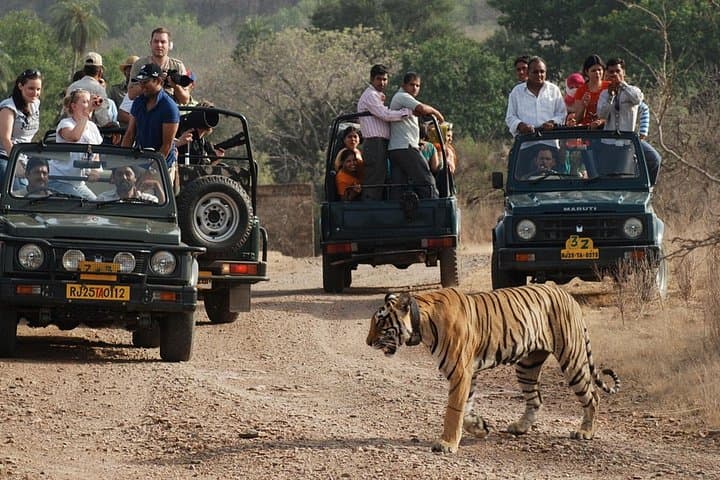
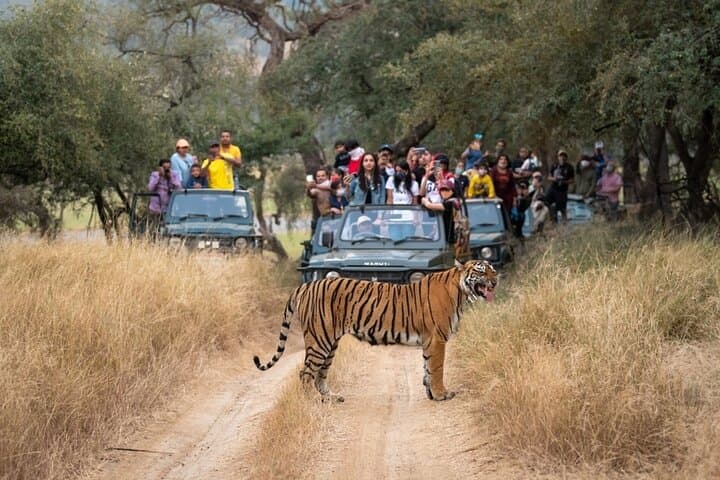
Culture here is kinetic—market calls in Chandni Chowk, dinner rituals in small hotels, and local guides who read architecture as well as street food. On safari, the forest takes agency: tracks appear, birds alarm and a tiger can materialize from shade as if daring you to notice.
Practical guidance: expect early starts for both sunrise at the Taj and morning/afternoon jeep safaris in Ranthambore; drives between cities are long (Delhi–Agra ~3–4 hours, Agra–Ranthambore ~5–6 hours, Ranthambore–Jaipur ~3–4 hours). Dress in neutral colors for safaris, carry binoculars and bottled water (provided), and confirm park permits and jeep-sharing rules in advance. Accommodations range from 3–5 star hotels on twin share; bring layered clothing for cool mornings and sunscreen for hot afternoons.
This itinerary suits travellers who want a mix of cultural landmarks and wildlife focus with minimal trekking but plenty of time on the road.
moderate.
8 days.
Suitable for travellers of average fitness; involves early starts, short walks at monuments and bumpy jeep rides during safaris.
The itinerary includes two shared jeep/canter safaris in Ranthambore on a sharing basis; park permits and vehicle allocations are handled by the operator as part of the package.
Expect multi‑hour transfers: Delhi–Agra ~3–4 hours, Agra–Ranthambore ~5–6 hours, Ranthambore–Jaipur ~3–4 hours, plus local driving for city tours and hotel transfers.
Yes—accommodations and sightseeing are rated as suitable for a range of fitness levels, but safaris and long drives may be tiring for those with limited mobility or cardiovascular issues.
Carry standard travel meds, stay hydrated, avoid raw street food if sensitive, and consult a travel clinic for up‑to‑date vaccine recommendations for India.
The Golden Triangle traces Mughal imperial architecture and Rajput courtly cities—Taj Mahal and Agra Fort are Mughal landmarks while Jaipur’s palaces reflect Rajput urban planning.
Ranthambore is part of India’s Project Tiger network; visitors should follow park rules, avoid littering and keep noise to a minimum to reduce disturbance to wildlife.
Agra Taj Visit operates guided outdoor trips and adventures with an emphasis on safety, stewardship, and memorable experiences.
Morning light spills over Delhi’s broad boulevards as the tour group assembles, bags in the trunk of a private air‑conditioned car and the city’s layered history sliding past the windows. Streets hum with rickshaws and ritual, and the itinerary moves from Mughal marble in Agra to the scrub forests of Ranthambore where the jungle rules the clock.
Morning light spills over Delhi’s broad boulevards as the tour group assembles, bags in the trunk of a private air‑conditioned car and the city’s layered history sliding past the windows. Streets hum with rickshaws and ritual, and the itinerary moves from Mughal marble in Agra to the scrub forests of Ranthambore where the jungle rules the clock.
The Golden Triangle—Delhi, Agra and Jaipur—maps three centuries of Mughal and Rajput power: Qutub Minar’s tapering brickwork, the Taj Mahal’s marble geometry and Amber Fort’s pink sandstone courtyards each mark different chapters of north India’s political and aesthetic history. Geologically the region sits on the Indo-Gangetic plains, with Ranthambore an island of dry deciduous forest and granite outcrops that funnel prey and predators into sightlines.
Culture here is kinetic—market calls in Chandni Chowk, dinner rituals in small hotels, and local guides who read architecture as well as street food. On safari, the forest takes agency: tracks appear, birds alarm and a tiger can materialize from shade as if daring you to notice.
Practical guidance: expect early starts for both sunrise at the Taj and morning/afternoon jeep safaris in Ranthambore; drives between cities are long (Delhi–Agra ~3–4 hours, Agra–Ranthambore ~5–6 hours, Ranthambore–Jaipur ~3–4 hours). Dress in neutral colors for safaris, carry binoculars and bottled water (provided), and confirm park permits and jeep-sharing rules in advance. Accommodations range from 3–5 star hotels on twin share; bring layered clothing for cool mornings and sunscreen for hot afternoons.
This itinerary suits travellers who want a mix of cultural landmarks and wildlife focus with minimal trekking but plenty of time on the road.